Another week of contrasting weather patterns is unfolding across the Greater Horn of Africa (GHA), with forecasts indicating intensified rainfall over parts of Ethiopia, Sudan, Uganda, and South Sudan, while much of the region continues to experience above-average temperatures and elevated heat stress.
The outlook by IGAD Climate Predictions and Applications Center (ICPAC) for 28 July to 04 August 2026 highlights a familiar but increasingly significant pattern: areas vulnerable to flooding are expected to receive even more rain, while large parts of the region remain unusually warm, exposing communities to multiple weather-related risks at the same time.
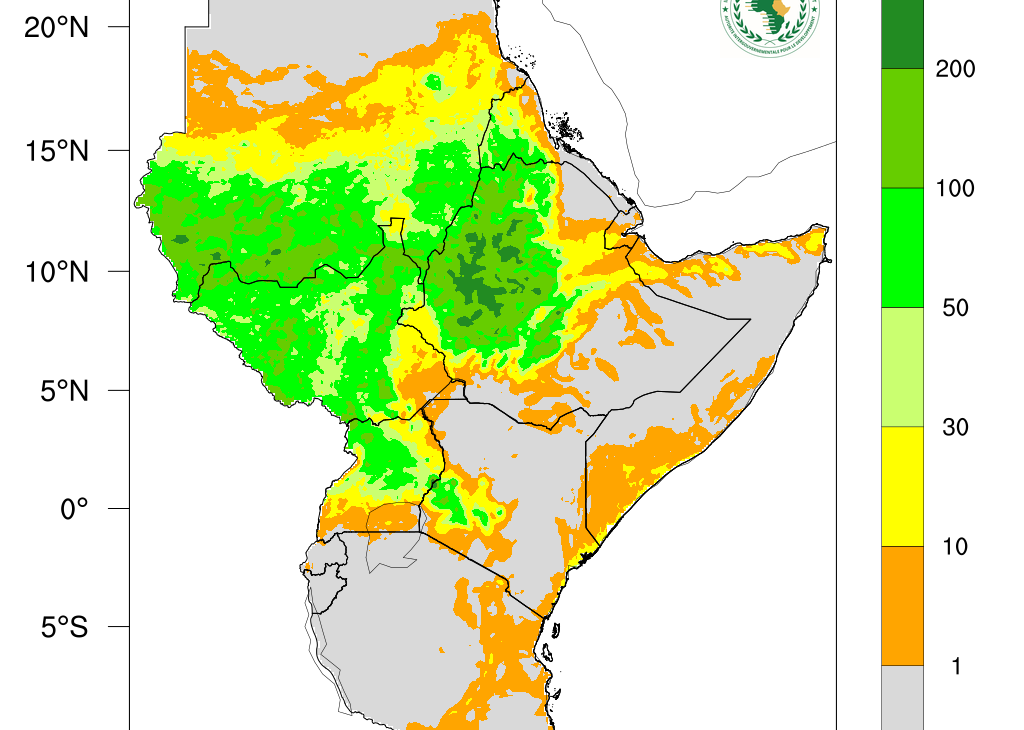
Western Ethiopia is forecast to receive the heaviest downpours, with rainfall expected to exceed 200 millimetres during the week. Similar heavy rainfall is anticipated in isolated areas of south-western Sudan.
Surrounding these hotspots, moderate rainfall of between 50 and 200 millimetres is expected across southern Sudan, most of South Sudan, central to north-western Uganda, western Kenya, western Eritrea and additional areas stretching across western and northern Ethiopia.
Away from these wetter zones, rainfall is expected to be considerably lighter. Less than 50 millimetres is forecast over eastern and southern Tanzania, western and coastal Kenya, southern and northern Somalia, central Sudan and parts of eastern Ethiopia, reflecting the uneven distribution of rainfall across the region.
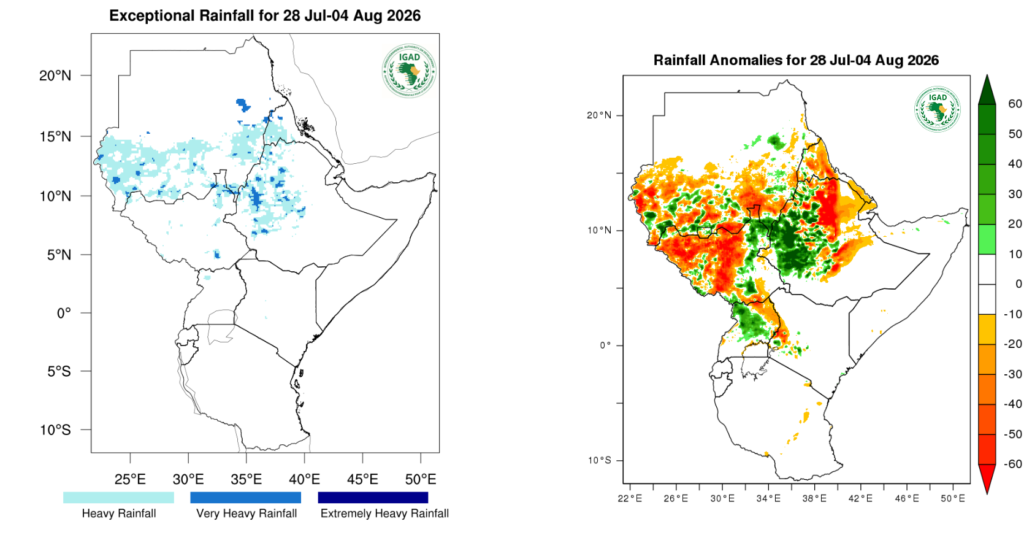
Rainfall anomalies indicate that western to northern Ethiopia, central to north-western Uganda, isolated parts of south-western Sudan and north-eastern and south-eastern South Sudan are likely to receive more rainfall than is typical for this time of year.
In contrast, southern Sudan, central to western South Sudan, Eritrea, central-eastern Ethiopia, north-eastern Uganda and western Kenya are expected to record below-average rainfall.
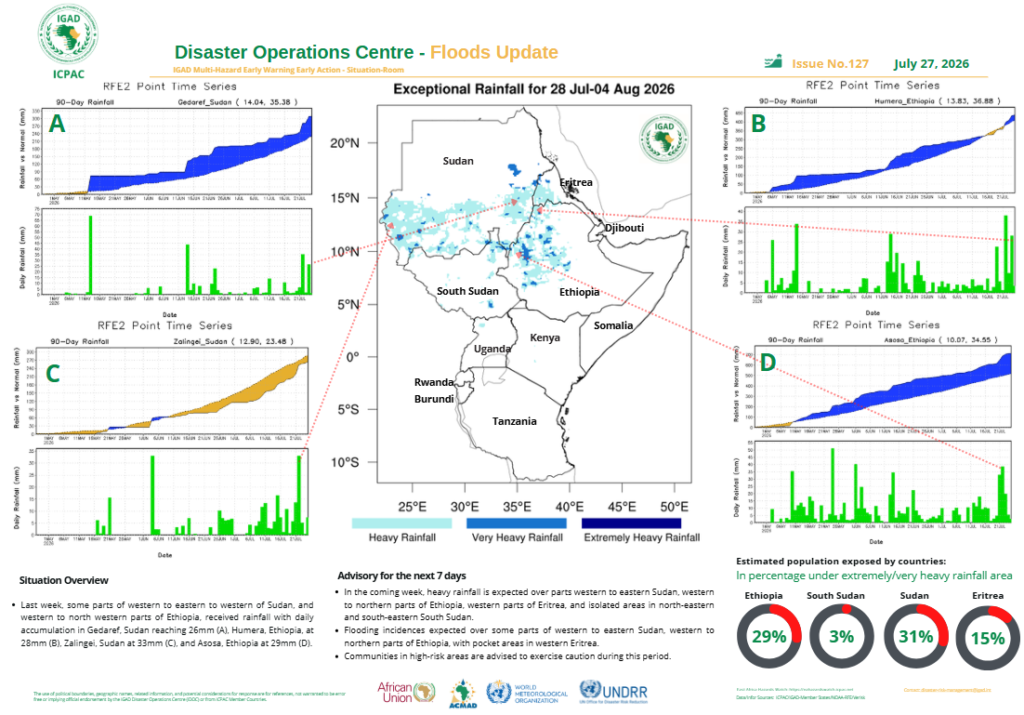
Some of the rainfall is expected to be exceptional. Forecasts show precipitation exceeding the 90th percentile over southern Sudan, western to northern Ethiopia, western Eritrea and isolated areas in north-eastern and southern South Sudan. Such intense rainfall increases the likelihood of flash floods, river overflows and waterlogging, particularly in areas that have already experienced sustained rainfall in recent weeks.
Flooding is therefore anticipated across parts of western to eastern Sudan, western to northern Ethiopia and isolated areas of western Eritrea.
Communities living in flood-prone locations have been advised to remain vigilant as heavy rainfall could disrupt transport, damage infrastructure and affect livelihoods. Alongside the rainfall, heat continues to shape conditions across much of the Greater Horn.
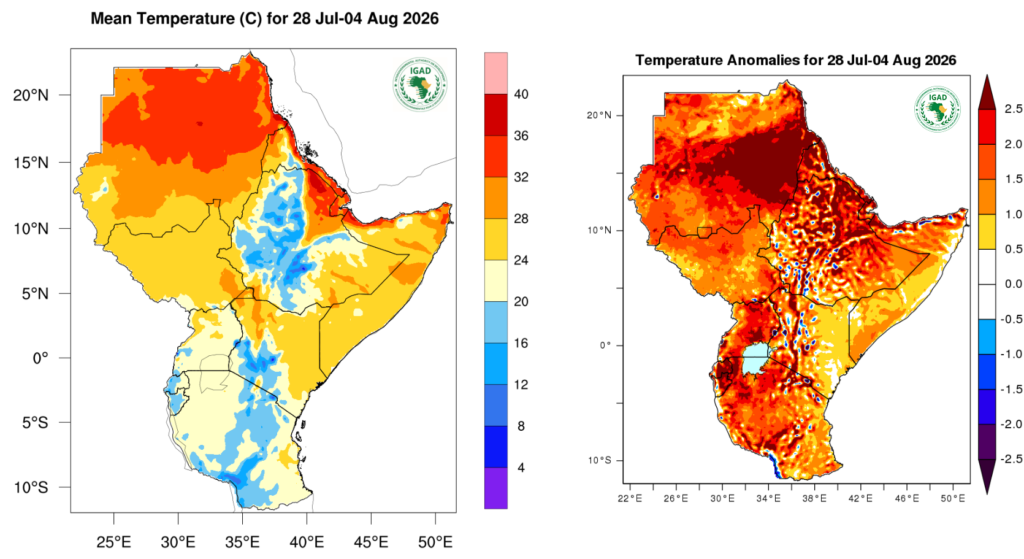
The Greater Horn of Africa will have temperatures above 32°C across Djibouti, northern Sudan, coastal Eritrea, northern coastal Somalia and north-eastern Ethiopia.
Elsewhere, most parts of the region are forecast to experience temperatures ranging between 20°C and 32°C, while cooler conditions below 20°C will be limited to Rwanda, Burundi, central and western Kenya, central to southern Tanzania and parts of central to northern Ethiopia.
The broader outlook points to warmer-than-average temperatures across most of the Greater Horn, with only isolated areas expected to experience cooler-than-normal conditions. This persistent warmth is expected to sustain elevated heat stress across several countries.
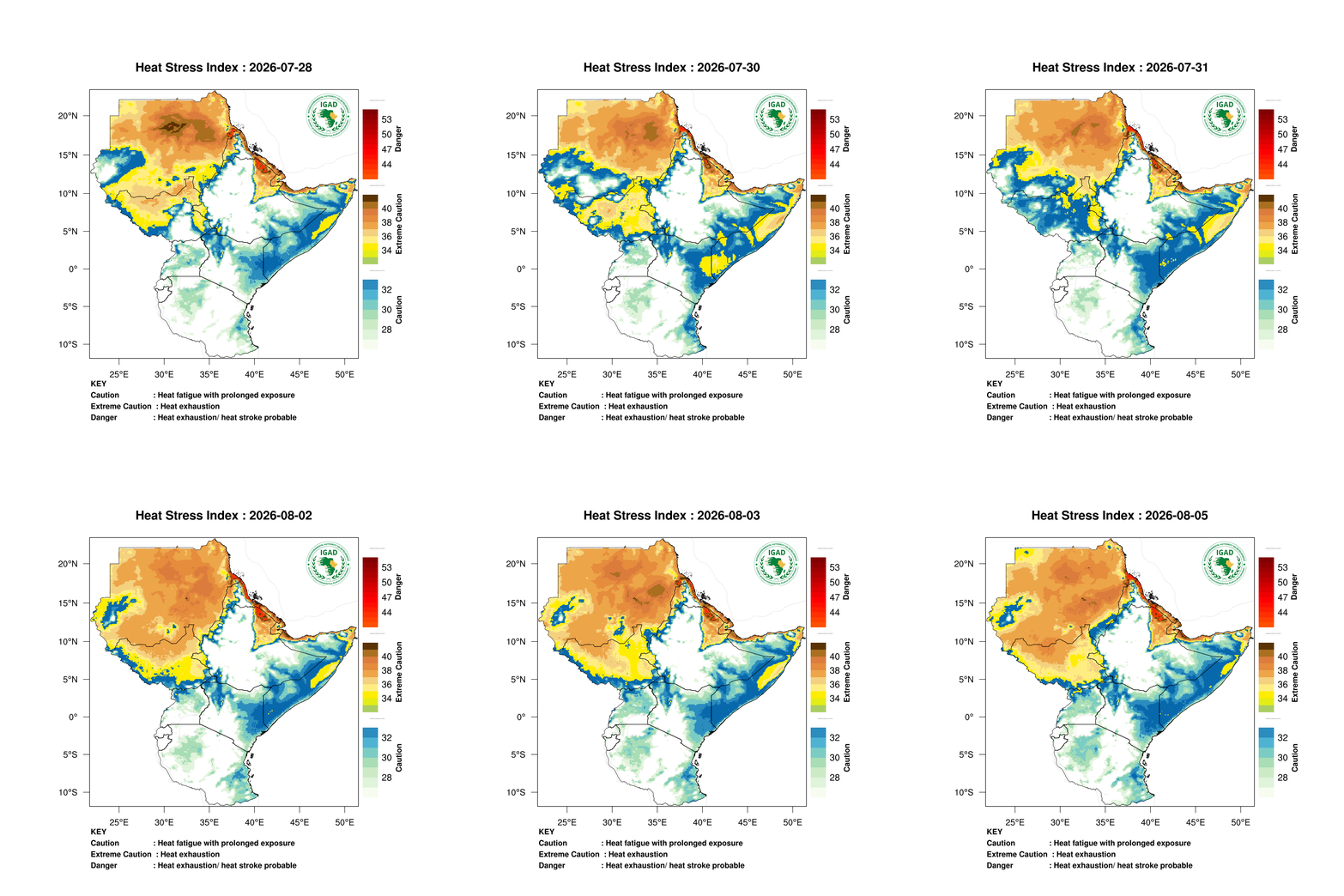
Much of South Sudan, Sudan, Eritrea, Djibouti, central to northern Somalia and north-eastern Ethiopia is forecast to experience heat stress within the ‘Extreme Caution’ category, where prolonged exposure to heat or strenuous outdoor activity can increase the risk of heat-related illnesses.
Conditions are expected to be even more severe in parts of Ethiopia’s Afar region, extending into central Eritrea, isolated stretches of Eritrea’s coastline and pockets of northern Sudan, where heat stress is forecast to reach the ‘Danger’ category.
In these areas, the combination of high temperatures and prolonged exposure significantly raises health risks, particularly for outdoor workers, children, older people and those with limited access to cooling and water.
The latest forecast illustrates the increasingly complex weather picture across the Greater Horn of Africa. While enhanced rainfall may benefit agriculture and replenish water resources in some locations, it also heightens the risk of flooding in already vulnerable areas.
At the same time, persistent above-average temperatures continue to place pressure on public health, livestock and livelihoods, underscoring the need for early preparedness as the region navigates another week of overlapping weather hazards.