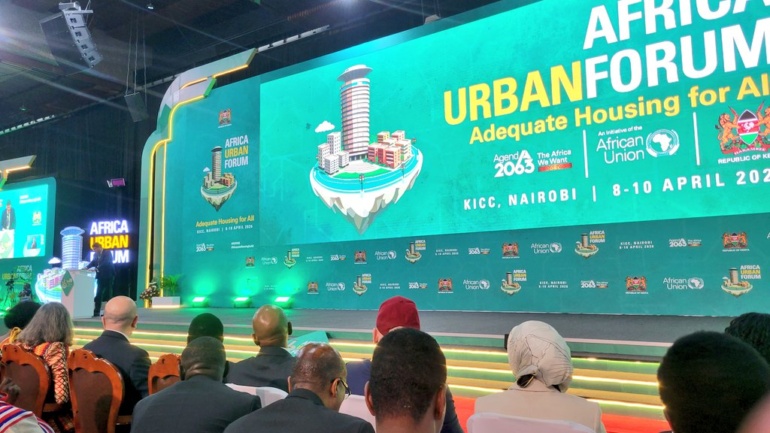
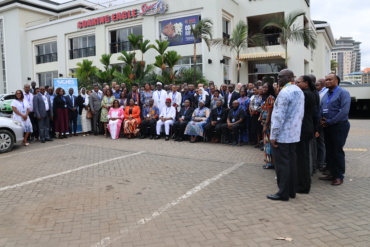
The celebration that unfolded alongside the Zamba Heritage Congress, shared meals, conversations, and connections, became a fitting metaphor for Africa’s forests. Delegates described the moment as a reminder of humanity’s relationship with nature: communities gathering around ecosystems that quietly sustain their lives.
For many speakers, indigenous peoples and smallholder communities embody that relationship, having safeguarded forests for generations through lived knowledge and cultural stewardship.
Globally, indigenous peoples make up about 6.2 percent of the world’s population across 19 countries, yet they contribute to the protection and management of at least 11 percent of global forests. With their territories safeguarding nearly 80 percent of the world’s biodiversity.
In Africa, an estimated 4 to 5 percent of the population is classified as indigenous, marking a significant constituency whose ecological contribution is often under-recognized.
Annah Agasha, Deputy Director at FSC, noted that local communities collectively protect up to 11 percent of global forests. She highlighted the organization’s strengthening of Free, Prior, and Informed Consent (FPIC) frameworks to ensure community voices shape forest governance from the outset.
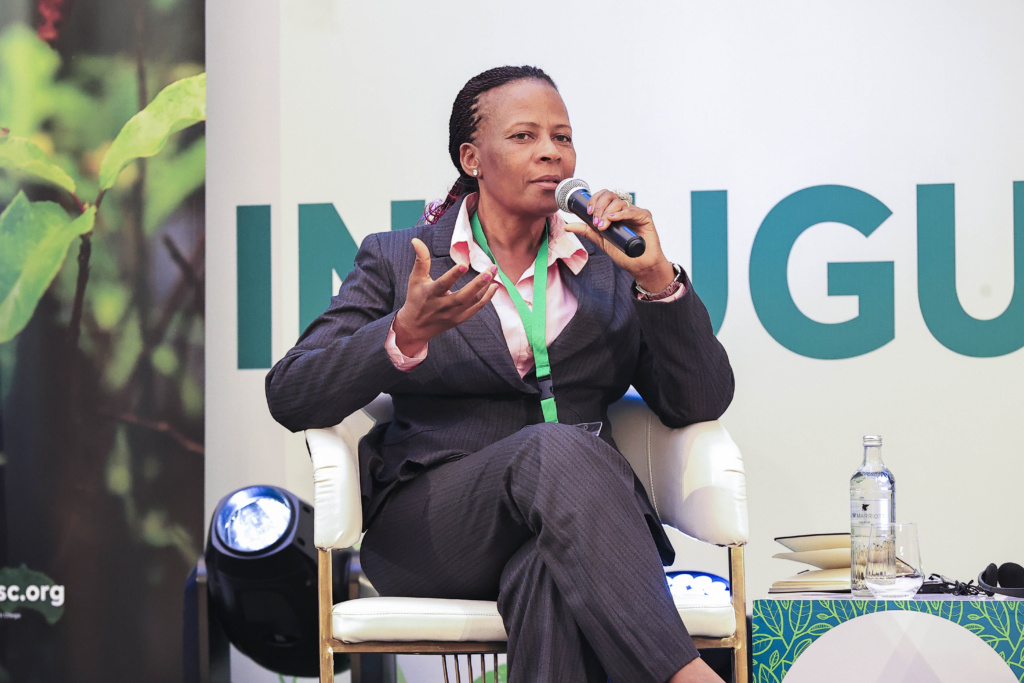
Drawing from United Nations documentation, Annah captured the significance: indigenous peoples are not merely custodians of heritage but central partners in conserving Africa’s landscapes, culture,s and future.
Zamba Heritage Congress: From Custodians to Decision-Makers
In a panelists’ discussion at Zamba Heritage Congress, participants stressed that indigenous communities must evolve from a consultative presence to active decision-makers in forest governance to attain a successful, sustainable forest management (SFM) system.
Professor James Ole Kiyiapi, a forestry academic and FSC Africa advisory member, emphasized that awareness and organization are essential for effective participation. Sustainable governance, he argued, requires a whole-community approach that integrates youth, women, and elders.
Drawing from his experience assessing a community-managed forest in southwestern Kenya, “forest of the lost child” that’s fully owned and operated by residents. Prof. Kiyiapi reveals the imperative of understanding indigenous communities and realizing they often view forests as both economic lifelines and spiritual spaces.

“They see the forest as a source of life,” he noted, explaining that such deep cultural investment fosters long-term stewardship.
However, participation depends heavily on clear regulatory frameworks governing land tenure and access. Whether forests are state-owned or community-owned shapes how benefits are distributed and how communities engage in conservation. Evictions of forest-dependent communities, he warned, frequently undermine both livelihoods and conservation goals.
Civil society organizations play a critical bridging role by mobilizing communities, building local capacity, and linking grassroots action to national policymaking.
In Kenya, sustained advocacy has helped embed community participation within forest and wildlife legislation, enabling the creation of community forest associations and conservancies.
Rights, Recognition, and Economic Inclusion
For indigenous rights advocates, meaningful participation must be matched by structural reform.
Cindy Kobei, an indigenous human rights lawyer representing Kenya’s Ogiek community, welcomed the Zamba initiative’s efforts to formalize indigenous engagement.

She urged African governments to accelerate legal recognition of indigenous groups, including the Baka in Central Africa and the Ogiek in East Africa, arguing that formal recognition is essential to protecting land rights and strengthening conservation partnerships.
Mr. Moussele Disseke Guy, representing the Indigenous Peoples Network of Central Africa (RAPALEAC), argued that indigenous peoples must also be integrated into forest value chains as economic actors.
He stressed that combining scientific and traditional knowledge offers the most effective approach to conservation, but warned that Free, Prior and Informed Consent is often treated as a procedural formality rather than a genuine participatory process.
Among his recommendations were stronger requirements for equitable benefit-sharing, support for community enterprises, promotion of bioeconomy initiatives, and expanded access to training and legal assistance.
He also called for independent grievance mechanisms that allow communities to report abuses without fear of reprisal.

When indigenous rights and knowledge systems are respected, Disseke said, forests become more resilient and management outcomes more durable.
Bridging Policy and Practice
Despite progress in several African countries, panelists acknowledged persistent gaps between policy commitments and on-the-ground implementation.
Some nations have begun recognizing community ownership within legal frameworks, particularly in parts of the Congo Basin, but enforcement remains uneven. Disseke noted that reforms acknowledging collective forest rights are emerging, yet progress varies widely across the region.
Prof. Kiyiapi added that governance challenges can also arise within communities, urging the embrace of effective engagement with transparent processes that represent entire communities rather than a small dominant group.
“Participation must be inclusive,” he emphasized, stressing the importance of ensuring women, youth, and marginalized voices are represented in decision-making.
As the Zamba Heritage Congress comes to a close, a consistent theme emerges: indigenous peoples are not peripheral to Africa’s forest agenda; they are central to its success.
From safeguarding biodiversity to sustaining livelihoods and cultural heritage, indigenous communities hold knowledge systems refined over centuries.
Notably, integrating those systems into modern conservation frameworks is increasingly seen as essential to achieving lasting environmental and social outcomes.
The metaphor of shared celebration that opened the discussions lingered as a quiet reminder: forests, like communal spaces, thrive when the people who depend on them are not only invited to participate, but empowered to lead.
Author Profile

-
Seeker.
Inspire AFRIKA.
Latest entries
 Corporate15 October 2026Water, Sanitation and Digital Learning at the Centre of Garissa School Upgrade
 Agriculture14 October 2026Africa’s Food Systems Future Depends on Listening to Farmers
 Weather Forecasts13 October 2026Rain and Rising Temperatures Forecast Across the Greater Horn of Africa
 Climate9 October 2026Beyond Negotiations: Africa Expects Concrete Outcomes from Antalya