

At the 20th anniversary Africa Food Systems Forum in Kigali, economists, energy entrepreneurs and a former head of state argued that Africa’s vegetable gap is not simply a farming problem, but an investment challenge exposed by weak cold chains, unreliable energy and fragmented policy.
In a session called “Power the Plate, Energy for Nutrition,” that happened on the pre-summit day of the Africa Food Systems Forum (AFS Forum), held in Kigali to mark two decades of food-systems transformation on the continent under the theme “Nurturing Nations, Growing Jobs, Building Resilience.”
The forum brought together a broad coalition of organisations working across food, agriculture, development and finance, including the Food and Agriculture Organisation of the United Nations (FAO), the Gates Foundation, IFAD, Bayer, Mastercard Foundation, One Acre Fund, the World Food Programme and lead organiser Welthungerhilfe.
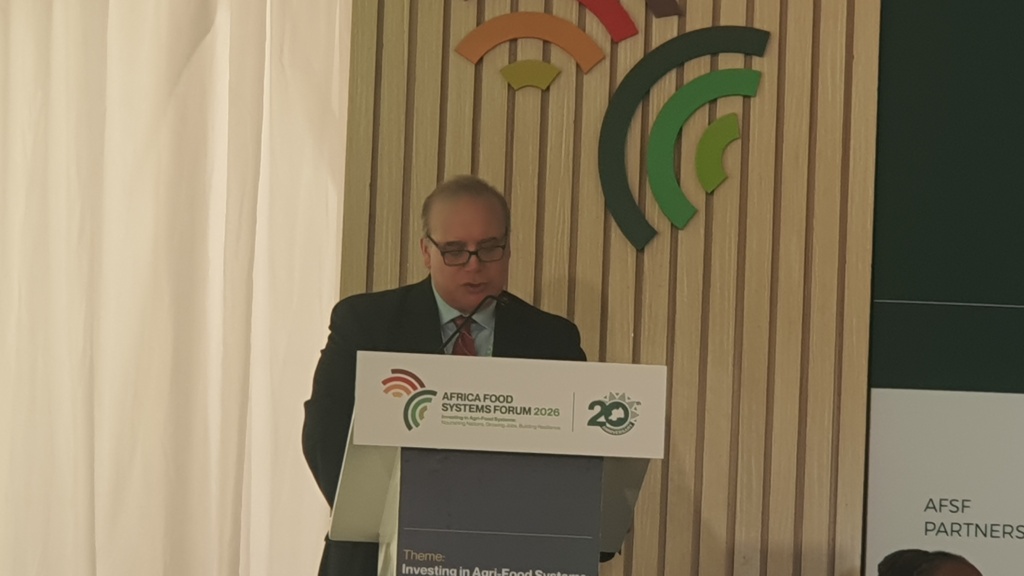
One detail that was flagged before it commenced was the remark that captured the direction of the discussion: for the first time in the AFS Forum’s 20-year history, the event logo carries a solar panel.
The symbolism was deliberate as the panellists argued that energy has for years been treated as a peripheral issue in agriculture, even though it determines whether food can be irrigated, cooled, stored, processed and transported before it reaches consumers.
The hour that followed made a broader case: closing Africa’s vegetable gap will require investment beyond the farm itself.
The Keynote: A Continent Falling Behind
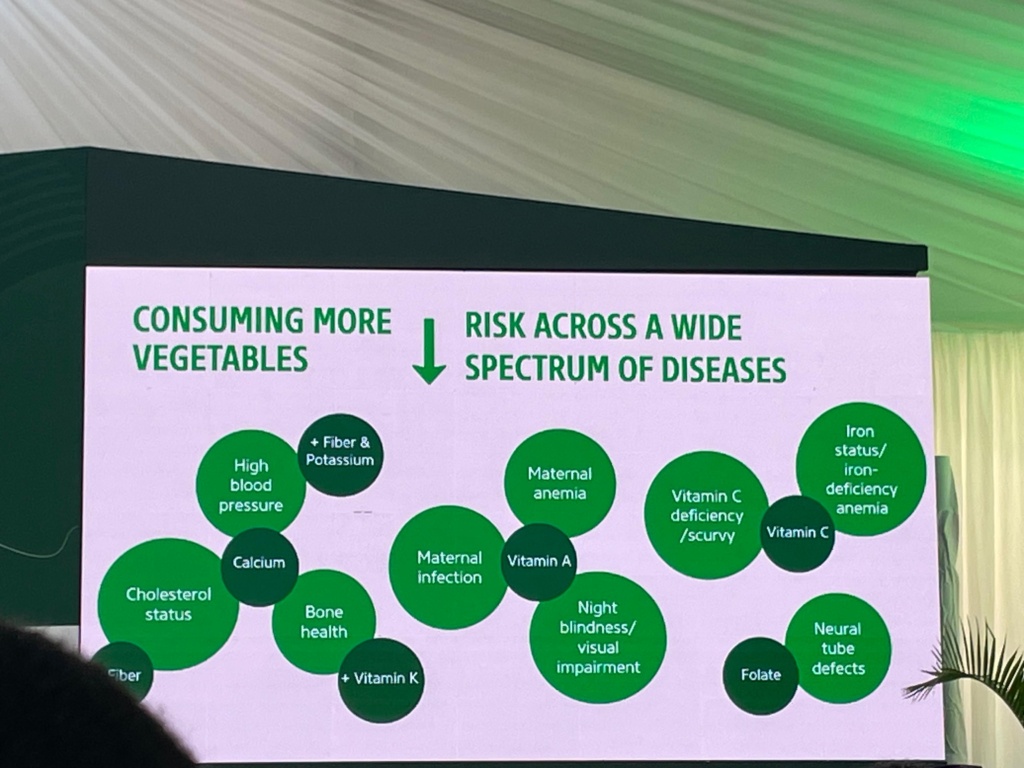
Dr Maximo Torero, FAO’s Chief Economist, opened with a deliberately blunt framing: if Africa wants healthier diets, it needs to invest directly in the foods that make those diets possible, particularly fruits and vegetables, rather than assuming broad agricultural investment will automatically deliver them.
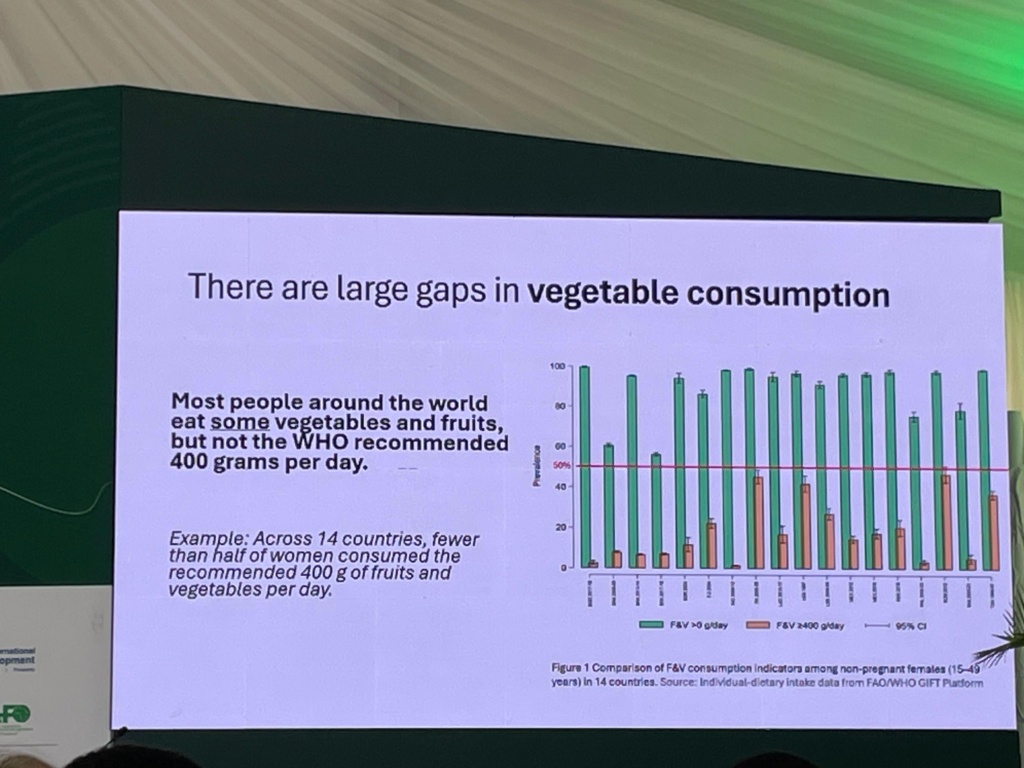
His data illustrated the scale of the challenge. Pointing out how, across 14 countries presented in his keynote, most people consume some fruits and vegetables, but fewer than half of women of reproductive age reach the recommended daily intake of 400 grams of fruits and vegetables.
In Kenya, Torero noted, almost half of children aged 6–23 months had eaten no fruit or vegetables the previous day. Across African settings more broadly, the proportion of young children reporting no consumption ranged from 45 to 69 per cent.
“This is not a question of inadequate quality,” he said. “We are talking about zero consumption.”
Notably, the supply tells a similar story. Between 2000 and 2017, fruit and vegetable availability increased in most regions of the world but remained essentially flat in Africa, leaving availability at less than half the level needed to support recommended intake.
An example from Tanzania provides a stark reminder. The vegetable supply required to meet national dietary guidelines rose from about 4.4 million tonnes in 2010 to 6.6 million tonnes by 2023. Actual available supply, meanwhile, increased only from around 1.5 million tonnes to about 2 million tonnes, meeting roughly 30 per cent of the estimated requirement by 2023.
Pakistan, presented during the session as a comparison case, faces a similar structural shortfall.
Then the other measure is affordability. Fruits and vegetables account for about 40 per cent of the cost of a least-cost healthy diet globally and around 31 per cent in Africa. Among the poorest households in low-income countries, vegetables can cost roughly five times as much per calorie as starchy staples.
That price difference matters when household budgets are under pressure.
Torero argued that vegetables are often among the first foods families cut when prices rise, or incomes fall, creating a cycle in which limited purchasing power reinforces poor diets.
Welthungerhilfe’s modelling, presented later in the session, illustrated the potential impact of changing that equation. A 25 per cent reduction in vegetable prices could increase consumption by an estimated 15–2 per cent. Yet under current trends, vegetable prices could rise by around 32 per cent by 2050.
The question, then, is not simply how to persuade people to eat more vegetables, but how to make those vegetables available and affordable in the first place, a case that brought the discussion to energy.
The Hidden Energy Problem
Torero put the connection simply: irrigation requires energy, cooling requires energy, storage requires energy, and transport requires energy.
Without reliable energy across those stages, food produced on the farm can become food lost before it reaches the consumer, reducing supply and putting further pressure on prices.
The issue is particularly important for vegetables because they are highly perishable.
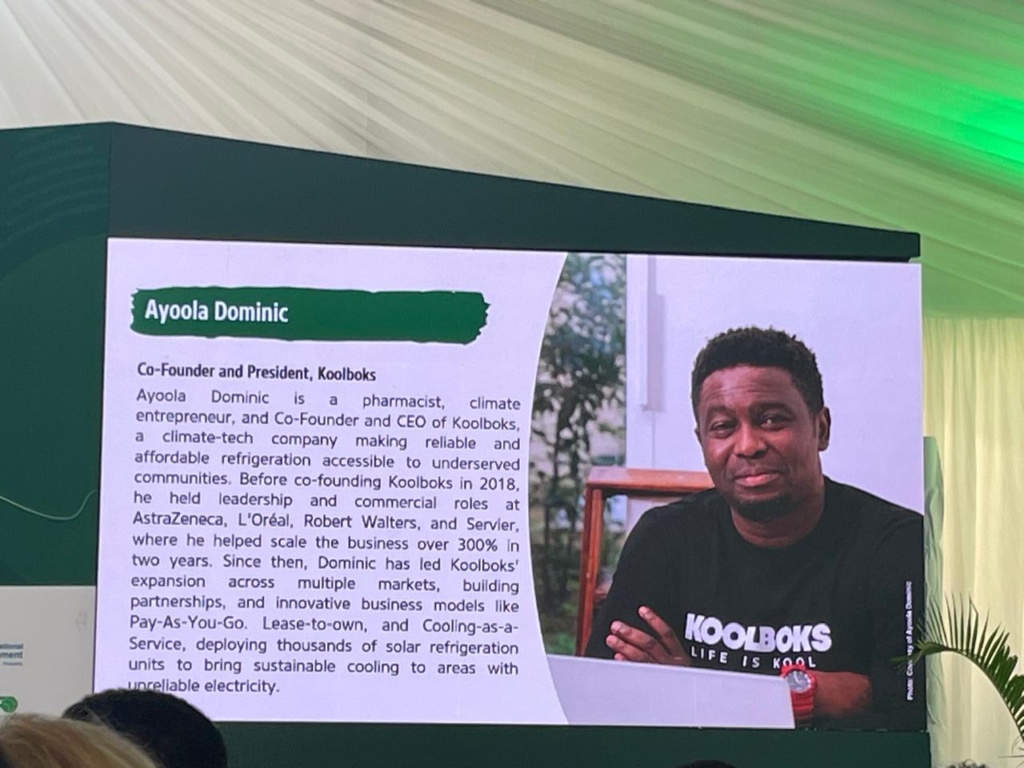
For Ayoola Dominic, Co-Founder and President of Koolboks, a climate-tech company deploying solar-powered refrigeration, the problem can be understood through what happens when a farmer has no reliable cooling.
“Imagine a farmer who doesn’t have reliable cooling,” Dominic said. “The time clicks,s and it’s just a matter of time before it all spoils.”
That perishability translates directly into economic losses for the farmer and lost nutrition for consumers.
Dominic said that three years ago, he and his co-founder began developing refrigeration that uses water and solar energy, resources widely available across sub-Saharan Africa, to generate cooling, including when sunlight is unavailable.
The technology is designed around a pay-as-you-go model, allowing smallholder farmers to access solar refrigeration at payments as low as about a dollar a day.
Dominic said the objective is bigger than selling refrigerators.
“The question for us is not necessarily about just cooling or selling more refrigerators,” he said. “It’s more about how do we prolong the life of that food?”
That shift, from selling equipment to extending the useful life of food, is at the heart of the investment argument.
A cooling system can mean the difference between a farmer being forced to sell produce immediately and having enough time to find a better market. It can reduce losses, improve the amount of food reaching consumers and potentially give farmers more control over when and where they sell.
In that sense, refrigeration becomes more than an energy technology. It becomes part of the nutrition and food-security infrastructure.
The Investment Gap Beyond the Farm
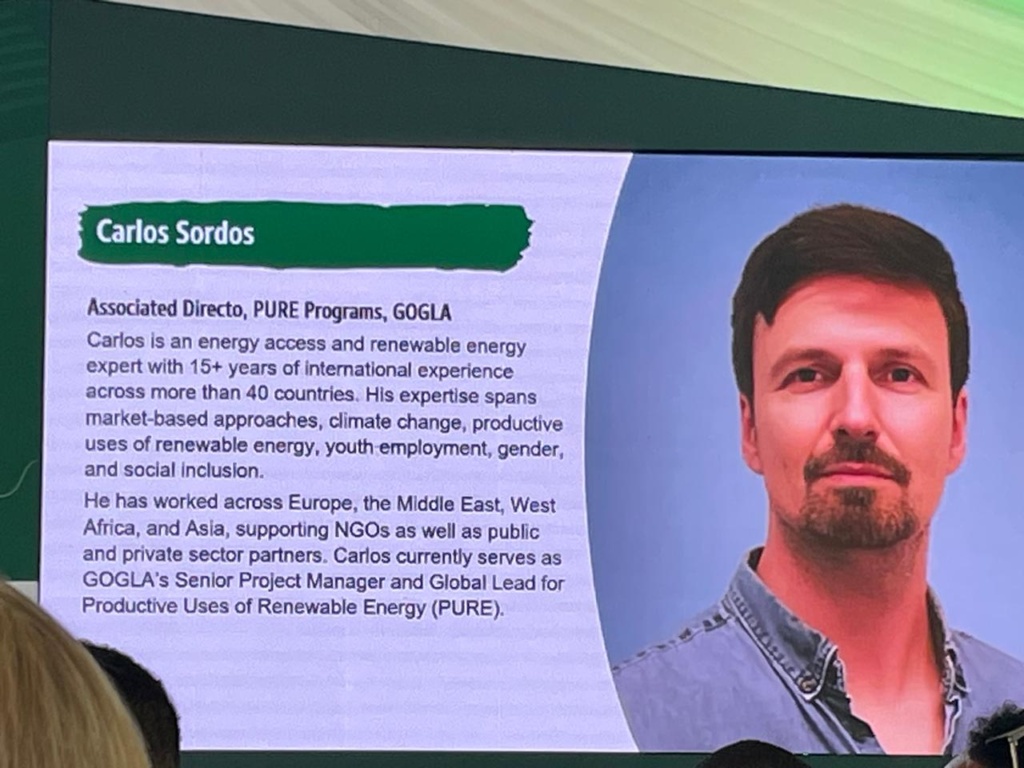
Carlos Sordos, Associate Director of GOGLA’s PURE (Productive Uses of Renewable Energy) programme, argued that energy has historically been treated by governments and companies as a cost line rather than a strategic investment.
He distilled the challenge into what he called the “AAA” awareness, accessibility and affordability.
The technology to bring solar power to farmers already exists, Sordos said. The bigger gap is extending energy solutions beyond the farm gate to transporters, off-takers, retailers and other businesses that determine whether food survives the journey to consumers.
Financing is another obstacle.
Small solar pumps can fit relatively easily into pay-as-you-go financing models. Larger investments such as cold rooms, processing facilities and other productive infrastructure require considerably more capital and longer repayment periods.
Sordos illustrated the institutional disconnect with an anecdote about an impact investor that, through two separate internal investment vehicles, was simultaneously backing solar energy in one portfolio while advising diesel power in an agriculture-focused portfolio.
The contradiction, he argued, reflects a broader problem at development banks and within governments, where agriculture and energy policies and investment decisions too often operate separately.
For the vegetable economy, that fragmentation can have practical consequences. Investment in agricultural production without corresponding investment in energy, storage and transport risks increasing the amount of food produced without ensuring that more of it reaches consumers.
From Nutrition to Finance
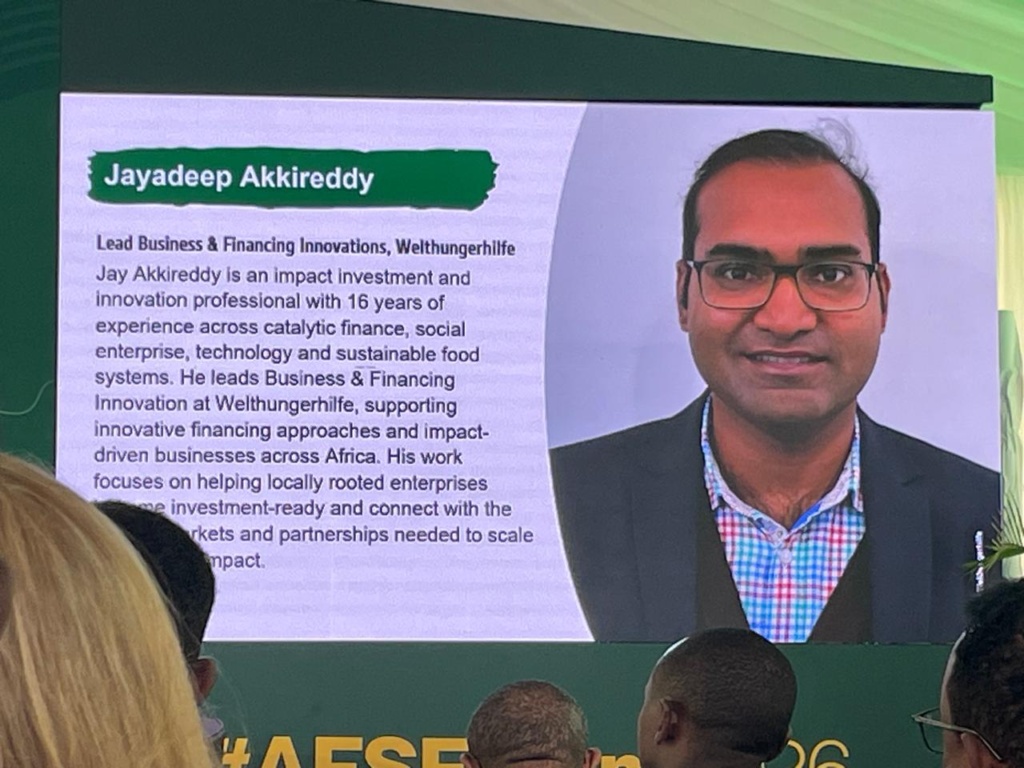
Jayadeep “Jay” Akkireddy, who leads Business & Financing Innovations at Welthungerhilfe, approached the problem from the finance side, urging attendees of the Africa Food Systems Forum to be deliberate regarding finance for its vitality.
Vegetables are, he noted, both highly nutritious and highly perishable. Every tonne lost because of inadequate storage or cooling is therefore not only an economic loss but also a loss of potential nutrition.
Citing development-finance research, Jay said investment in nutrition can generate roughly $23 in returns for every dollar invested, making nutrition not only a social priority but also an economic proposition.
However, getting commercial capital into the vegetable sector requires overcoming the risks associated with small and medium-sized enterprises, he argued.
That is where catalytic or patient capital comes in, as Foundations, NGOs and public finance institutions can help absorb some of the early risks, build the capacity of smaller businesses and demonstrate viable models before commercial investors step in.
The argument is therefore not that governments or development partners should permanently subsidise the vegetable economy.
It is that early investment can help build the market conditions under which private capital becomes willing to participate at scale.
Closing the Loop, From Farm to Plate
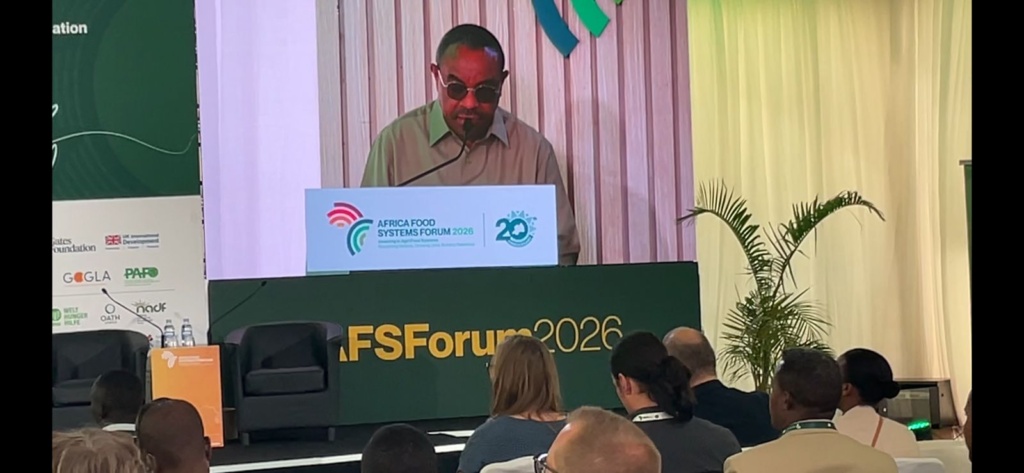
The session closed with remarks from Hailemariam Desalegn, Ethiopia’s former prime minister and current board chair of the partner foundation working with Welthungerhilfe.
Africa’s challenge, he argued, is not a shortage of ideas. “Africa does not lack ideas, entrepreneurs or innovation,” he said. “The challenge is not simply to generate more ideas; it is to identify what works and create the conditions for those solutions to scale.”
He pointed to Ethiopia’s “bounty baskets” programme as an example of an approach linking investment in fruit and vegetables with renewable energy. “Bounty of the Basket” (known locally as Yelemat Tirufat) is a nationwide agricultural program launched by Prime Minister Abiy Ahmed in October 2022 to boost food production, improve household nutrition, and achieve food self-sufficiency.
He also called for governments to coordinate policy across agriculture and energy ministries while creating the regulatory conditions needed to scale proven solutions.
Before the session ended, the panel put a question to the room through response cards:
If you had $100 million to strengthen Africa’s vegetable economy, where would you invest first, and why?
One audience response identified weak national policy prioritisation at the local-government level and the underused role of women in vegetable value chains as among the most urgent gaps.
The responses reflected the wider argument running through the session: money alone will not close Africa’s vegetable gap if it continues to be invested in disconnected parts of the food system.
Across the four speakers, the message was unusually consistent for a conference panel. Africa’s vegetable deficit cannot be explained simply by consumer preference. It is also a supply-chain, infrastructure, energy and finance challenge.
A farmer may have the capacity to grow more vegetables, but without irrigation, reliable electricity or solar power, production can be constrained. Without cooling and storage, produce can spoil before reaching the market. Without transport and processing infrastructure, the market remains fragmented. And without patient capital, businesses providing those services may struggle to scale.
Torero’s distinction between the “hardware” and “software” of the food system captures the challenge: Africa needs investment in the physical infrastructure, irrigation, cold storage, and transport, but also in the policies, regulations, and coordination that enable those investments to work together.
The solar panel on the Africa Food Systems Forum logo may be a small symbol. Although the argument behind it is much larger: powering the plate starts long before food reaches the plate.


