
For much of the past decade, Africa’s carbon market was better known for what it promised than for what it delivered. There were memoranda of understanding, framework agreements, pilot registries and repeated projections of billions of dollars in climate finance. But few of those plans translated into completed transactions.
That began to change, unevenly, over the past 18 months. Kenya moved to limit the amount of carbon it can authorise for export. Zimbabwe issued what it described as the first privately developed credits to receive a corresponding adjustment. Ghana established a national carbon registry and began processing projects through it.
Then, in February, the United Nations issued the first credits under Article 6.4 of the Paris Agreement, the mechanism intended to replace the much-criticised Clean Development Mechanism.
The credits came from a cookstove project in Myanmar. That detail says a lot about where Africa’s carbon market stands. African countries have spent years building rules, signing agreements and positioning themselves for the new market. But when the UN issued the first Article 6.4 credits, none came from the continent.
Africa is still waiting for its own project to cross that line. More than 500 delegates are expected in Kigali from October 13 to 15 for the Carbon Markets Africa Summit.
The organisers say the meeting is intended to move the discussion beyond whether Africa can participate in carbon markets and toward whether it can develop projects capable of attracting capital at scale.
Rwanda has made a similar case for hosting the summit. Environment Minister Bernadette Arakwiye has said the country sees carbon markets as a way to mobilise investment and support long-term development, rather than simply as an environmental initiative.
There is plenty of activity to support that ambition. By June, African countries had signed 35 bilateral cooperative agreements under Article 6.2, involving 12 countries, according to the UN Environment Programme’s Article 6 pipeline tracker. Kenya, Ghana, Zambia, Senegal, Tunisia, Rwanda and Morocco each have multiple agreements.
Ghana has moved quickly. By July, it had recorded 44 Article 6.2 activities. Its 2024 progress report listed 69 project requests, 17 of which had been fully onboarded onto the national Carbon Registry. Three mitigation activities had also been authorised, representing 5.9 million tonnes of carbon dioxide equivalent.
Kenya has taken a more cautious approach to the accounting behind those transactions.
In August, it published its National Carbon Registry Rule Book and set a ceiling of 10 million tonnes of carbon dioxide equivalent for international transfers through 2030. The amount will be released in annual tranches of 1.67 million tonnes.
The concern is straightforward. When Kenya authorises a carbon credit for international transfer under Article 6, it has to account for that reduction in its national emissions inventory through what is known as a corresponding adjustment. The reduction can no longer be counted toward Kenya’s own climate target.
That creates a difficult calculation for a country trying to meet its Paris Agreement commitments. If too many reductions leave the country, Kenya could have fewer emissions reductions available to count toward its own target.
The collapse of KOKO Networks has made that debate more immediate. The clean-cooking company, which had operated in Kenya and India and built a business around bioethanol stoves, collapsed in March after the government declined to issue the Letter of Authorisation required for it to sell carbon credits into compliance markets.

Trade Cabinet Secretary Lee Kinyanjui defended the decision; he questioned what the government would tell other companies seeking access to the same national carbon quota if one company took most of it.
KOKO’s investors had a different view. The company had based its business on a 2024 government framework agreement. Its collapse led to a claim against the World Bank’s Multilateral Investment Guarantee Agency, which provides political-risk insurance for investments and can cover situations involving a government failing to honour certain commitments.
MIGA is expected to pay about $180 million to KOKO investors, according to reports. If that happens, the episode will add another cost to Kenya’s difficult effort to establish rules for an emerging carbon market.
Zimbabwe presents a different story. Harare has spent the past two years trying to restore confidence after a series of controversial carbon deals.
In 2023, the government threatened to cancel existing carbon-credit projects and proposed taking 50 per cent of future revenues. The move followed controversy around the Kariba REDD+ project and a separate Blue Carbon land deal in which a Dubai-based company signed an agreement reportedly worth $1.5 billion covering 7.5 million hectares.
The scale of those agreements drew international scrutiny, with similar arrangements emerging across Africa as a new form of land grab.
Zimbabwe subsequently began rebuilding its carbon-market framework. It published an Article 6 strategy and advanced a Climate Change Management Bill.
In October 2025, a cookstove project operated by Cicada Carbon, a member of the Zimbabwe Carbon Association, became the first private-sector project to receive a corresponding-adjustment designation from the Gold Standard registry.
The designation covered about 112,000 credits, with as many as 3 million projected over five years.
Zimbabwe’s regulations also require one-third of the proceeds to go toward state levies. But establishing rules has not removed the disputes surrounding existing projects.
The decision came despite a 2025 court ruling that found two conservancies associated with the project, including Biliqo Bulesa, had been established unconstitutionally. Biliqo Bulesa accounts for roughly one-fifth of the project’s credits.
Verra relied on a ratification process carried out in one community while an appeal by the Northern Rangelands Trust was still pending.
The project has also faced wider questions from pastoralist communities. The disputes are in Kajiado and Narok counties, where pastoralist leaders said restrictions linked to carbon projects had interfered with traditional grazing and livestock-mobility systems.
Researchers have also pointed to limited community awareness and weak regulation as factors that can deepen mistrust around carbon projects.
These disputes matter because the carbon market ultimately depends on more than registries and government approvals. Projects need communities to accept the arrangements, investors to trust the rules and buyers to believe that the credits represent real emissions reductions.

The UN’s new Article 6.4 system is taking a deliberately cautious approach. The Article 6.4 Supervisory Body, chaired by South Africa’s Mkhuthazi Steleki, issued the mechanism’s first credits in February. The project generated about 40 per cent fewer credits than it would have under the old Clean Development Mechanism.
The reduction reflects tighter rules for setting baselines, following years of criticism that the CDM issued credits for reductions that might have happened anyway.
No African project has yet received credits under Article 6.4. That leaves the continent with an unusual position.
The project pipeline is growing. Governments are signing agreements. National registries are being built. Carbon-market rules are becoming more detailed. But the transactions that would demonstrate that the system works at scale remain limited.
Kigali will put that gap under scrutiny in October. The African Union’s 2025 Africa Action Plan on Carbon Markets and AUDA-NEPAD’s African Principles for Equity and Integrity in Carbon Markets both recognise the need for stricter rules around how carbon-market benefits are shared and how projects maintain environmental and social integrity.
Experts question whether those principles will translate into projects that can attract serious investment while protecting the countries and communities where the underlying emissions reductions take place.
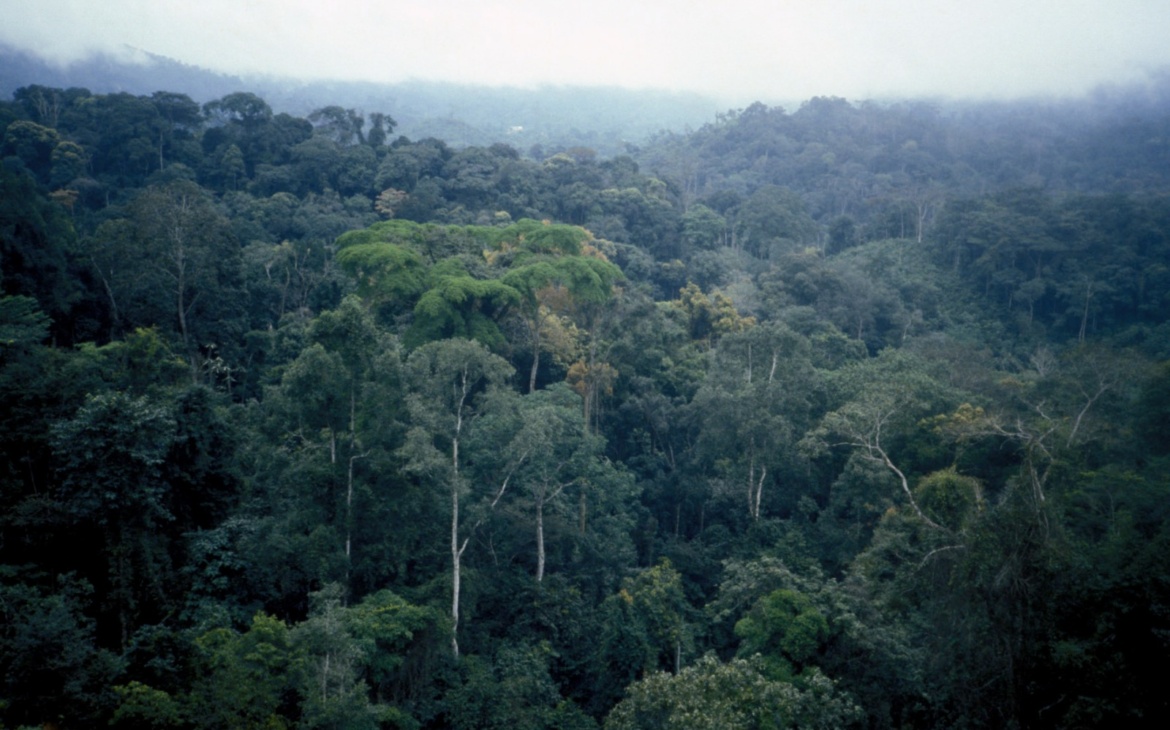
Africa controls vast areas of tropical forest and grazing land and has significant potential for clean-cooking, renewable-energy and land-based carbon projects.
Author Profile

Latest entries
 Climate Finance4 September 2026Africa’s carbon markets face their first real test under Article 6
 Energy3 September 2026Africa Holds the Ore. It Doesn’t Hold the Price
 Oceans27 August 2026Gabon Walks Away From Its EU Tuna Deal After 19 Years
 Climate Change26 August 2026Lake Baringo and Lake Bogoria Close In, Communities Lose Homes

