
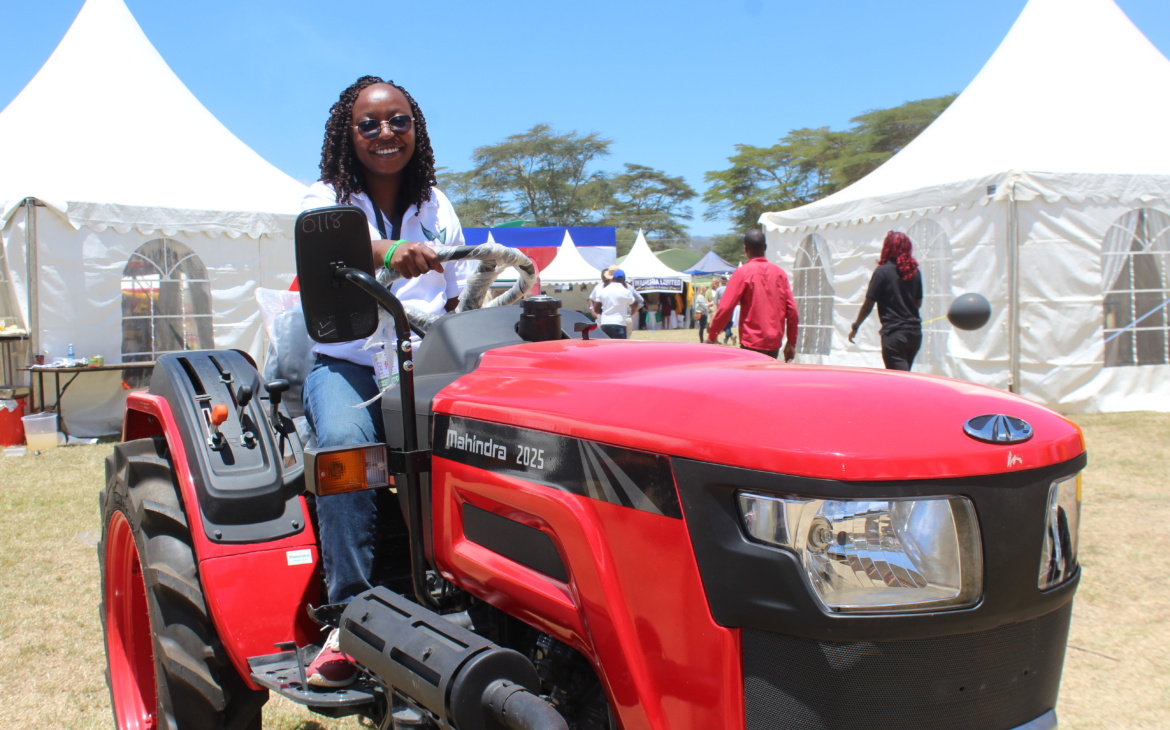
For horticultural farms, mechanisation is no longer simply about putting a tractor in the field.
Modern farms need vehicles to move workers, inputs and produce, reliable power for greenhouses and boreholes, and increasingly, solutions that can improve efficiency while reducing dependence on conventional fuels.
That changing demand is reshaping what equipment suppliers bring to growers.
At the Naivasha Horticultural Fair, Simba Corp showcased a broader range of products than the tractors it has traditionally brought to the event, including trucks, pickups and generators.
“We participated in the NH Fair before, but initially we only participated with the tractors,” says Maureen Kibe, Senior Brand Executive – Marketing at Simba Corp.
The company represents Same and Mahindra tractors, but has increasingly expanded its offering to other farm and transport requirements.
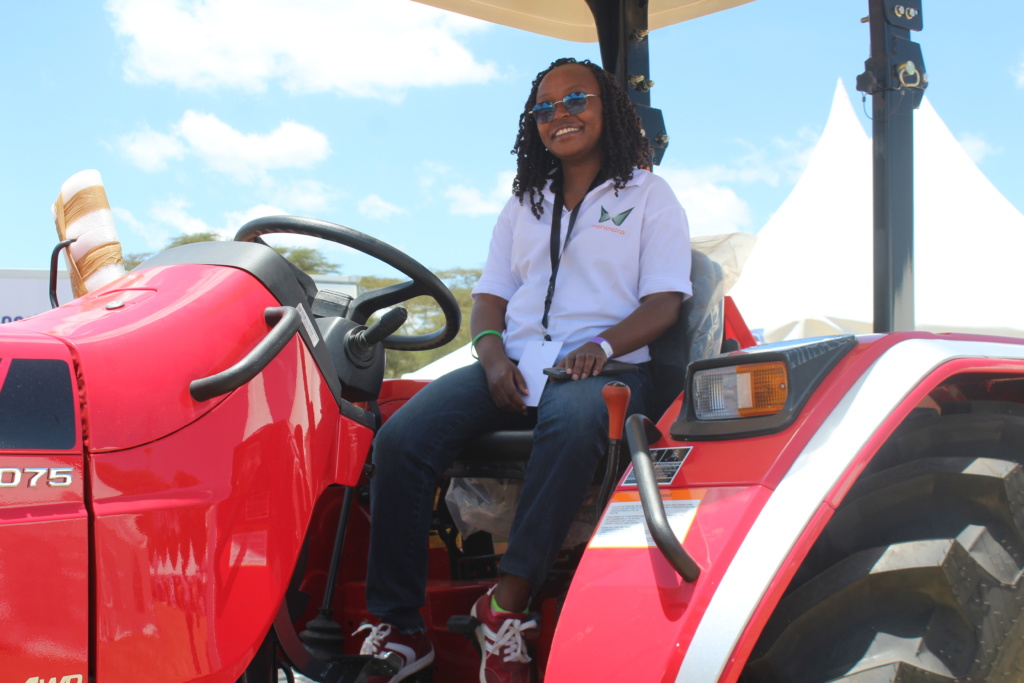
This year, its display included the Fuso 1823, which Kibe says is targeted particularly at flower farms, as well as the Ashok Leyland 1618 and Mahindra single-cab pickup.
Beyond the tractor
For Kibe, there is no single machine that defines what a horticultural farmer needs.
“It’s not a one-size-fits-all. It depends with the customer’s needs,” she says.
A farm heavily involved in transportation may prioritise a pickup or truck, while a grower seeking to increase mechanised production may put a tractor first.
Kibe points to a customer that has clocked one million kilometres on a Fuso 1823 as an example of the reliability expected by commercial operators.
The Mahindra single-cab, meanwhile, is being positioned as a utility vehicle for farm managers and other users who need practical transport. Kibe puts its current price at about KSh3.2 million.
The Ashok Leyland 1618 is being offered at about KSh4.9 million, she says.
But acquiring machinery remains a major investment for farmers moving from small-scale to more commercial operations.
Simba Corp offers leasing through Simba Corp Leasing, with periods ranging from 24 to 84 months. The company also works with major banks on asset financing, rather than providing in-house financing.
Kibe says financing can cover up to 90 per cent in applicable arrangements, with the asset itself serving as security.
Flower farms ask about EVs
The most interesting development, however, is emerging around electric mobility.
Simba Corp has entered the EV market through its MG passenger-car business. But Kibe says inquiries from flower farms are pointing towards a different opportunity.
“The inquiries we’re getting are for EV pickups,” she says.
The interest suggests that commercial farms are beginning to consider electric vehicles not only for personal mobility but also for operational fleets.
For flower farms, pickups can be used by managers and field teams across large estates, making operating costs, reliability and practicality important considerations.
Kibe says the inquiries have influenced the company’s consideration of potentially bringing electric pickups into the market, depending on the outcome of its market studies.
For now, the company is still assessing the opportunity, but the demand points to a possible shift in how farm fleets could be powered in the future.
Keeping the machinery working
Buying equipment is only part of the equation. For commercial farms, downtime can quickly become expensive, making after-sales support an important consideration.
Kibe says Simba Corp’s products come with warranties that vary according to the equipment. She cites the Mahindra single-cab as having a three-year or 180,000-kilometre warranty, together with scheduled free services.
The company also provides access to servicing and spare parts.
That emphasis on reliability extends beyond vehicles to another critical requirement on farms: power.
When the power goes off
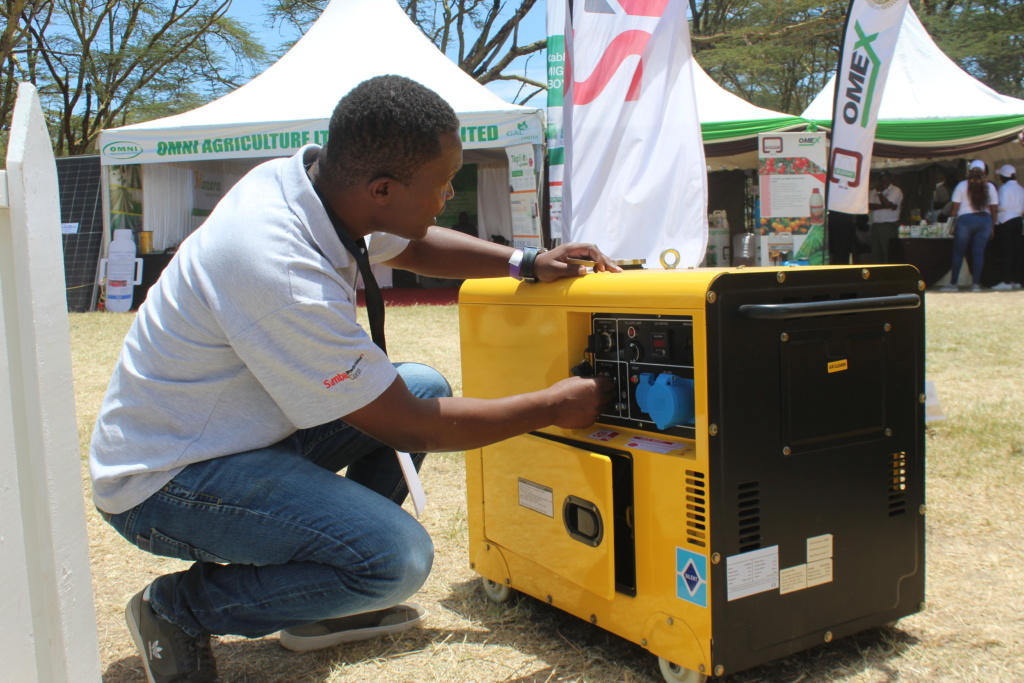
At the fair, Simba Corp showcased a 100 kVA diesel generator powered by a Cummins engine.
Patrick, a Technical Sales Manager at Corp Power System, says the generator is designed to support applications such as boreholes, greenhouses and other farm operations.
For horticulture, reliable backup power is particularly important because production and post-harvest systems can depend on uninterrupted electricity.
“We need to have reliability on the generator, especially for the cold houses because these are perishable plants,” Patrick says.
The company offers generators across a wider range, although the 100 kVA unit was the model displayed at the fair.
Patrick says customers can also enter maintenance contracts, with trained technicians providing servicing and access to spare parts.
He says the business has more than US$40 million worth of parts in stock and operates through locations including Nairobi, Mombasa, Kisumu, Nakuru and Nyeri.
For breakdowns, the company targets a 24-hour response time, he says.
Solar changes the role of generators
The generator market itself is also changing as farms adopt solar power.
Patrick acknowledges that farmers are increasingly turning to solar, but says this has not eliminated the need for generators.
“People are going to solar especially,” he says.
Instead, generators are increasingly becoming backup systems, particularly when solar or grid power cannot meet a farm’s requirements.
“The running time is going quite short as time goes,” Patrick says.
Some power-intensive applications may also continue to require generator support.
This means diesel generators may increasingly move from being the primary source of electricity to providing emergency or supplementary power alongside solar and the grid.
Solutions rather than machines
Patrick says the company therefore does not simply sell generators according to a standard formula.
Through its Power Solutions service, technicians can conduct site surveys, assess a farm’s electricity load and recommend the appropriate generator capacity.
“Different loads, different sizes of generators,” he says. “We advise well and we tailor make it for your need.”
The same principle runs through Kibe’s description of the wider agricultural equipment market.
One farmer may need a tractor. Another may need a pickup or truck. A larger operation may require backup power, while some flower farms are already asking about electric vehicles.
The message emerging from Simba Corp’s presence at the horticultural fair is therefore broader than the sale of individual machines.
As horticultural enterprises become more sophisticated, mechanisation increasingly means building an entire support system around production, from transport and farm machinery to financing, servicing and reliable power.
And as growers look more closely at efficiency and sustainability, the next generation of farm equipment may increasingly include both conventional machines and electric alternatives.
Read Also: The Future Taking Shape at Hortifare


