
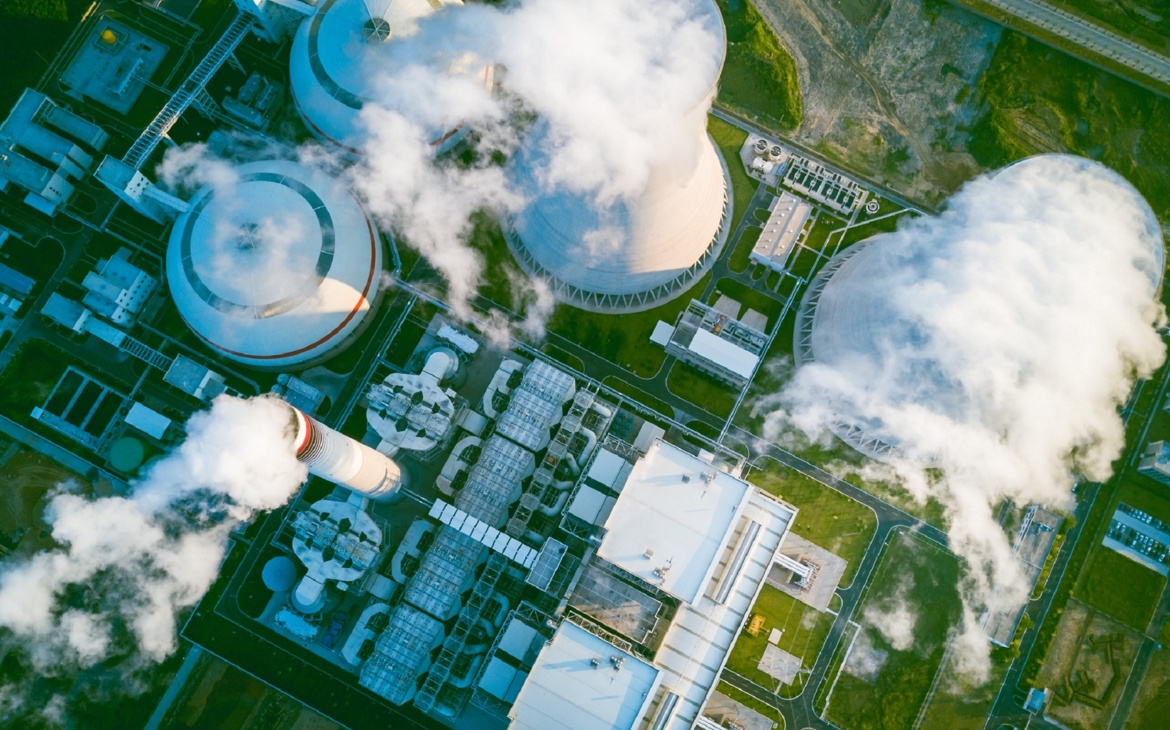
Carbon capture has been identified as one of the ways to reduce CO2 in the air and limiting global warming to 1.5C above preindustrial levels as laid out in the 2015 Paris agreement. However, a new study has found that far less carbon dioxide can be safely stored underground than previously thought.
Researchers from Imperial College London and others, in a peer-reviewed paper published in the journal Nature, found that greenhouse gases injected underground were at risk of leaking back into the atmosphere.
According to the Intergovernmental Panel on Climate Change (IPCC), the world’s leading climate science body, to meet climate goals would mean sequestering 8.7 GT of CO₂ annually. The risks pointed out, including earthquakes, engineering failures, or territorial disputes, meant that less than 1,500 gigatonnes could be safely stored, compared with previous estimates of up to 40,000 GT.
Highlighting the risks of relying on a technology that is undeveloped at the scale needed, Joeri Rogelj says, “Carbon storage should be seen as a scarce resource rather than an unlimited solution to bring our climate back to a safe level.”
He is one of the study authors and director of research at Imperial’s Grantham Institute, and was one of the lead authors on the IPCC special report on 1.5 °C of warming.
He further added that policymakers should plan to use carbon storage to limit the effects of global warming, not let it be “wasted on offsetting ongoing and avoidable CO2 pollution from fossil fuels.
Several economies around the world, in order to achieve “net zero” emissions within 25 years, including the EU, China and the US rely to varying degrees on the removal of CO2 from the atmosphere and storing it underground.
Once removed from the atmosphere, CO₂ is typically stored underground in depleted oil and gasfields or in naturally occurring rock formations.
Moreover, several big corporations, including Microsoft and Amazon, have heavily invested in carbon capture technologies to offset their carbon emissions.
In Kenya, start-ups, like Octavia Carbon, are pioneering the carbon capture industry in the Rift Valley, taking advantage of the geological composition.
One of the biggest concerns about direct air capture has been that the energy required to fuel the machines can release as much carbon as it removes. But by building the plant directly in the Great Rift Valley, 85% of its energy can be provided by the region’s geothermal sources, according to Octavia Carbon.
The steam heat of geysers is easily accessible in the Kenyan part of the Great Rift Valley.
To minimise leakage, the paper recommended injecting the CO₂ between 1km and 2.5km underground, or at ocean depths of no more than 300 metres, and in areas of low seismic activity away from water reservoirs, environmentally protected areas, or contested areas.
According to a report led by Oxford’s Smith School of Enterprise and the Environment, the technology remains is at an early stage, with just 600,000 tonnes of CO₂ stored underground every year.
As the world races toward net-zero, the temptation to lean too heavily on carbon storage is strong. But treating it as a magic fix risks dangerous setback. The safest path remains cutting emissions at the source.
Author Profile

- How can we learn if we don't question?
Latest entries
 COP1717 October 2026The World Has a Plan to Save Nature. Can It Deliver by 2030?
 Agriculture16 October 2026“There Is No Shortcut”: A Kiambu Grower’s Decade in Mushrooms
 COP3115 October 2026Pacific Leaders Call for Urgent Climate Action Ahead of COP31
 Agriculture13 October 2026Can the buffalo fix Kenya’s milk problem? Farmers say start with the feed bill


