
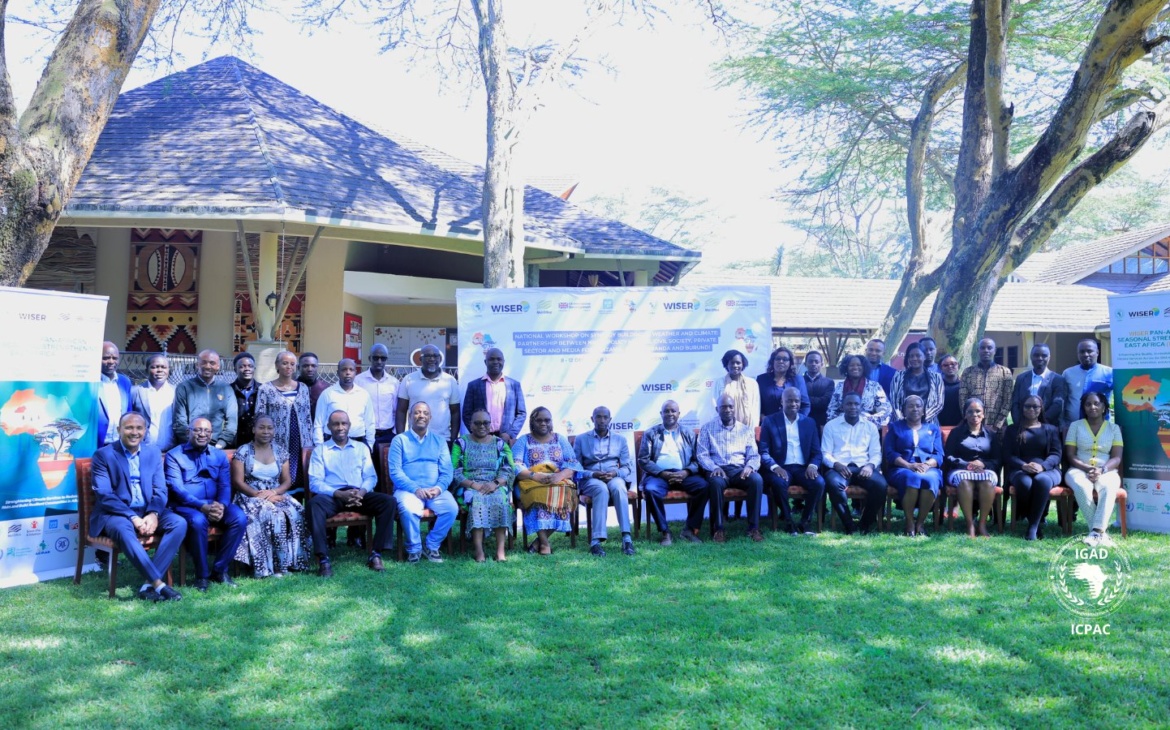
The IGAD Climate Predictions and Applications Center (ICPAC), in collaboration with partners including the Met Office, UK International Development, Kenya Meteorological Department, and the Norwegian Refugee Council, convened diverse stakeholders for discussions on strengthening climate services across the Greater Horn of Africa (GHA) under the WISER Africa programme.
This convening, themed WISER Pan-African Seasonal Strengthening East Africa (PASS-EA), aims to enhance the quality, accessibility, and application of climate services across the region. To achieve this, stakeholders are embracing the need for co-production, equity, innovation, and actionable science.
The national workshop seeks to build synergy in weather and climate partnerships between the National Meteorological and Hydrological Services (NMHSs), policymakers, civil society, the private sector, and the media from Tanzania, Kenya, Rwanda, and Burundi.
This comes with the realization that there are critical gaps that must be addressed beyond the release of regional weather forecasts. Discussions highlighted how the messages contained in these forecasts are instrumental for end users, informing preparedness, decision-making, and early action.
The initiative directly supports the PASS-EA project’s Capacity Cascade approach and aligns with the WISER pillar of improving the quality, accessibility, and use of climate information.
Dr. Fidar Abdi, the Director of ICPAC’s speech, noted that several climate services and tools have been developed, but their real value can only be measured by how well they inform local action and enable proactive responses.
“It’s important to acknowledge that our region, the GHA, is highly impacted by climate change. With tools like the East Africa Hazard Watch, there is an opportunity to prevent most losses through preparedness,” read his speech.
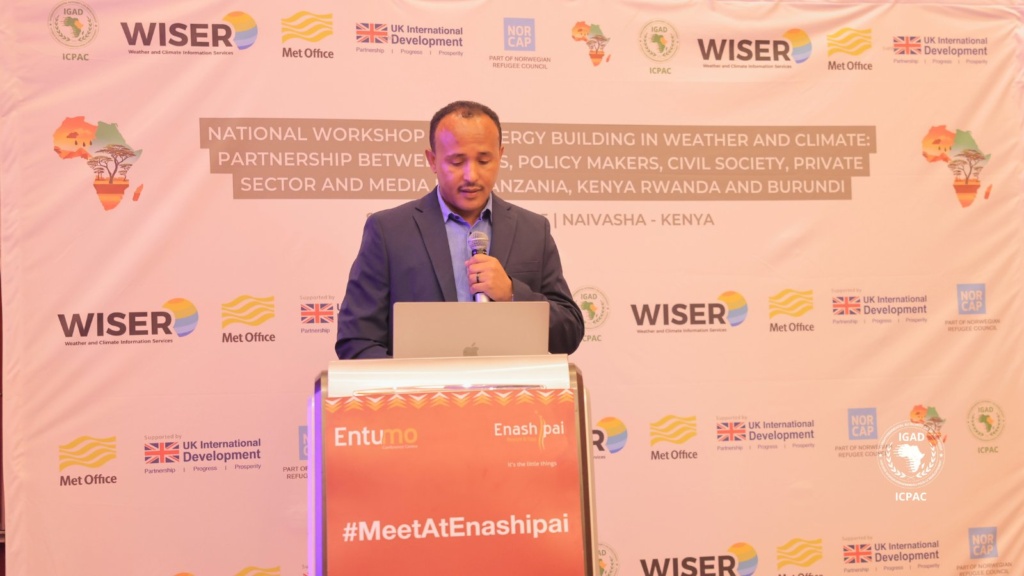
It further emphasized the crucial role journalists play in analysing, interpreting, and tailoring weather forecasts accurately for their audiences.
The importance of seasonal forecasts in the GHA continues to grow, even as more remains to be done. For a region consistently impounded by severe and recurring hazards, timely information remains essential for safeguarding lives and livelihoods, especially in marginalized areas.
For Kenya, through the Kenya Meteorological Department (KMD), the forum marks a step forward in exploring shared interests and strengthening collaboration among NMHSs, government agencies, journalists, and the private sector.
According to Ezekiel Njoroge, Deputy Director at KMD, the week-long engagement will feature hands-on training using applications such as the East Africa Hazards Watch. These tools, he points out, help monitor regional hazards and interpret risk information, which, when utilized fully on the continent, will give us more gains.
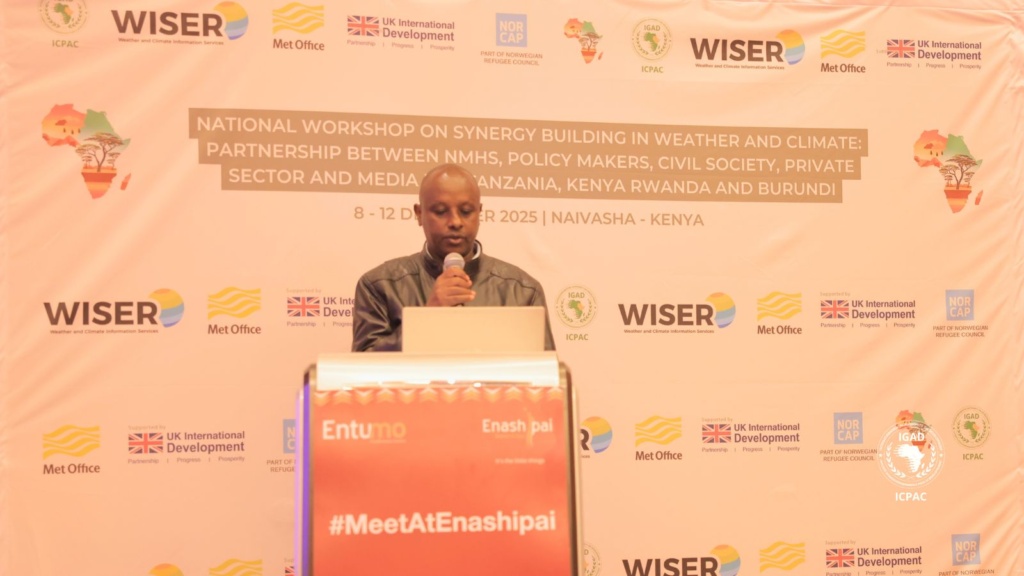
“As we head towards the end of the week, it will be important to draw clear linkages among risk drivers and improve communication among media professionals to ensure accuracy in reporting and debunk misleading narratives,” said Njoroge.
Reflections from actors across sectors such as agriculture, water, energy, health, education, and disaster risk management underscored the importance of working collectively.
Such synergy is essential, as discussions bring out lived realities that deepen understanding and enhance the uptake of climate services.


