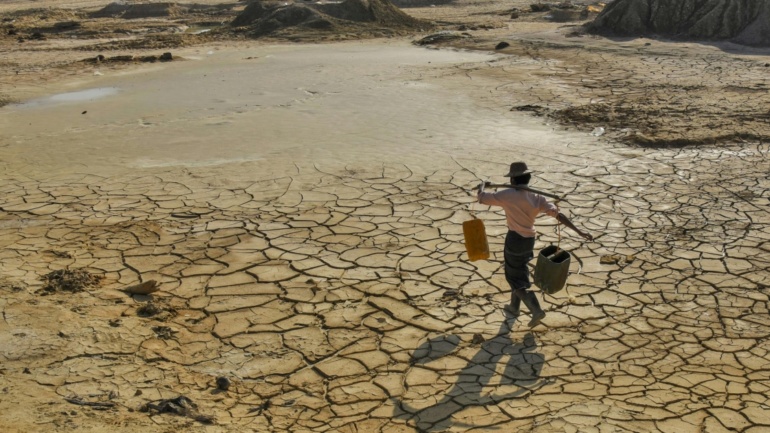
“The globe is water bankrupt!’ That’s it, that’s the latest report from the United Nations on the global water crisis, as emerging geopolitical issues indicate a slowdown and, in some major economies, a rollback of climate pledges.
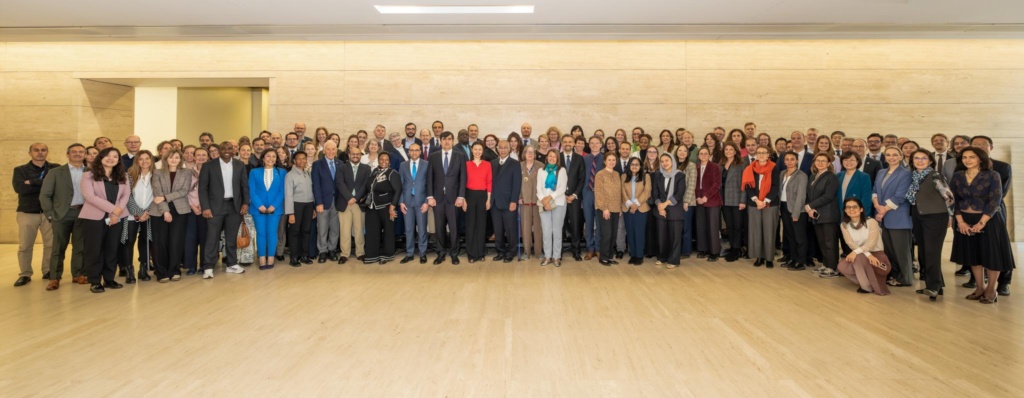
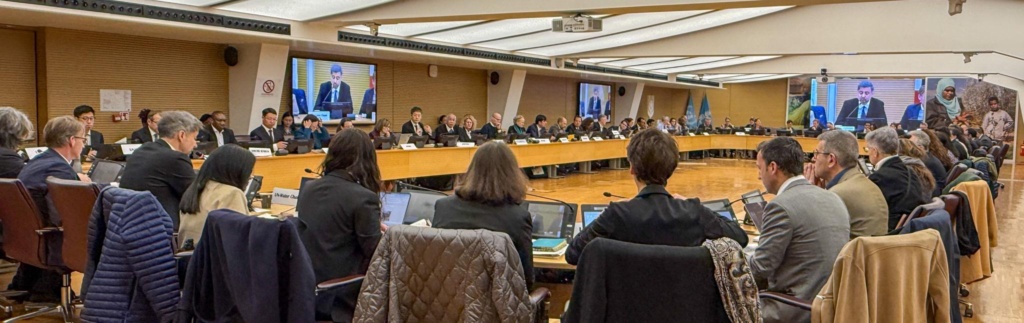
Preparations for the December 2026 UN Water Conference are underway, with discussions at the 43rd UN-Water Meeting at the International Fund for Agricultural Development (IFAD) in Rome highlighting a sobering reality: the upcoming SDG 6 Synthesis Report 2026 is expected to show limited progress on clean water and sanitation ahead of the July session of the High-level Political Forum on Sustainable Development.
As the gap between ambition and delivery in water governance widens, discussions in Rome highlighted that the success of the 2026 conference will hinge not on the strength of its declarations, but on its ability to produce concrete, actionable outcomes, with multilateral cooperation primed to deliver results on the ground.
Why Progress has Stalled
Speaking during the meeting, Ibrahim Alhelali, Representative of the Ministry of Environment, Water and Agriculture, Saudi Arabia, emphasized that the global water efforts are not a series of disconnected events, but a continuous journey of shared responsibility.
However, one of the clearest barriers identified is governance fragmentation.
This results in duplicated efforts, inefficient use of resources, and policies that fail to align at the implementation stage.
According to Alvaro Lario, UN-Water Chair, fragmentation is not just a structural issue; it carries real costs, slowing down progress in communities that can least afford delays.
Also, the emphasis on preparation over follow-up has created a cycle where commitments are renewed, but rarely tracked with the rigor needed to ensure they translate into tangible improvements.
Moreover, disconnects between water, agriculture, climate, and biodiversity strategies continue to undermine progress.
For instance, irrigation policies may not align with climate adaptation plans, while conservation efforts can overlook the realities of water management. Without coherent approaches across sectors, even well-designed interventions risk falling short of their intended impact.
Besides these underlying structural challenges, limited and uneven financing was identified as a fundamental constraint.
“Water systems, particularly in developing regions, remain underfunded, even as demand rises due to population growth and climate pressures,” said Federico Properzi, UN-Water Chief Technical Adviser.
He added that at the same time, shifting political priorities and economic pressures have made sustained investment more difficult. In such an environment, ambitious commitments risk outpacing the resources required to fulfill them.
Will The 2026 UN Water Conference Be a Turning Point?
Against this backdrop, the December 2026 UN Water Conference is being framed as a critical test, not a fresh start, but a continuation of efforts launched at the UN Water Conference 2023.
Its structure, built around six thematic dialogues ranging from ‘water for people’ to ‘investments for water,’ reflects a growing recognition of the complexity of water challenges.
Yet this breadth also presents a risk: without strong integration across these themes, the conference could replicate the very fragmentation it seeks to address. Its success will depend on whether it can bridge these divides and move from dialogue to delivery.
Highlighting the Rome meeting, Ibrahim Alhelali said, “Discussions had revealed ways in which the UN System-wide Strategy on Water and Sanitation and its collaborative implementation plan, which were outcomes from the 2023 UN Water Conference, are helping countries make progress.”
There was also a clear sense of commitment among stakeholders to ensure that the 2026 conference delivers tangible results.
According to Mr. Alhelali, “From the 2023 UN Water Conference, to the upcoming 2026 Conference, to the 11th World Water Forum in Riyadh in 2027, and toward the 2028 Conference and the 2030 SDG horizon, we must move from dialogue to implementation.”
For many communities, however, the urgency of these discussions is already a daily reality. Across parts of Africa, farmers are grappling with erratic rainfall and shrinking water sources, while urban areas face mounting pressure on overstretched supply systems.
Climate variability is intensifying both droughts and floods, exposing the fragility of existing infrastructure. Consequently, the outcomes of global water negotiations will have direct implications for livelihoods, food production, and resilience.
With limited progress on SDG 6 and rising pressure on multilateral systems, the 2026 UN Water Conference must demonstrate that international cooperation can move beyond promises to measurable impact.
Read Also: The Era of Permanent Water Failure has Begun