
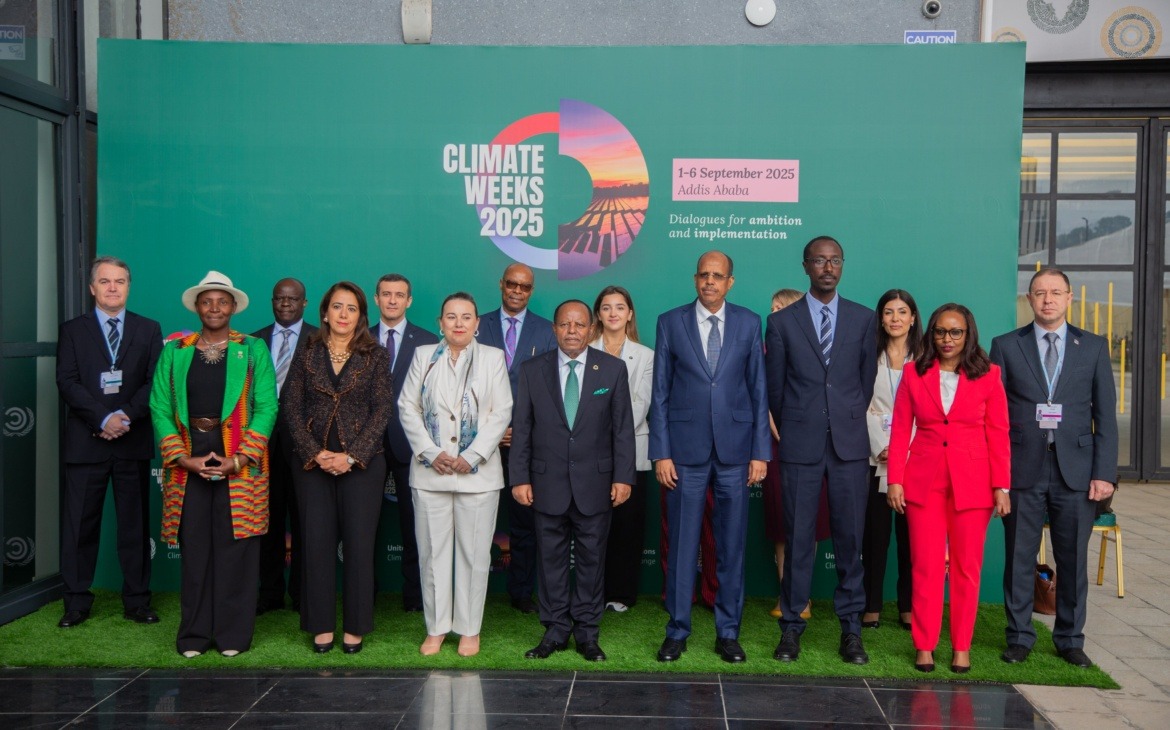
Two years after the first Africa Climate Summit in Nairobi, the continent will gather again for the second edition (ACS2) in Addis Ababa from September 8 to 10, 2025. With over 45 Heads of State expected to attend, this summit is focused on resolution, not rhetoric.
Against a backdrop of record heat and escalating climate shocks, ACS2 will demand a new financing order that directly confronts historical injustices and recognizes climate debt, upholding fairness and equity without compromise.
H.E. Amb. Taye Atske Selassie, President of the Federal Democratic Republic of Ethiopia, during his address, urged that this Africa Climate Week marks a moment of introspection and action on climate change.
H.E. Taye added that Africa bears the impacts of emissions it did not create, yet its contributions are often overlooked. Climate Week 2 paves the way for the Africa Climate Summit 2 as a departure toward collective action.
This position of collective climate action and addressing of the finance issues is expected to be cemented in the Addis Ababa Declaration, to be delivered on the summit’s final day.

His Excellency Abiy Ahmed, Prime Minister of the Federal Democratic Republic of Ethiopia, lauded the move, indicating that it is an honor to host the Second Africa Climate Summit. Prime Minister Abiy highlighted that Ethiopia’s Green Legacy initiative, alongside its advancements in renewable energy and e-mobility, reflects the leadership the country brings.
Under the theme “Accelerating Global Climate Solutions: Financing for Africa’s Resilient and Green Development,” ACS2 builds on Nairobi’s momentum to showcase Africa’s role in shaping solutions, driving innovation, and advancing a future of resilient, sustainable growth.
“From Africa’s diplomatic heart, we declare: this is not the time for rhetoric, but for bold action. We are not victims of a crisis we did not create, but architects of a just, green, and resilient future. Africa seeks not charity, but justice; not pity, but partnership,” said H.E. Abiy.
African leaders say the continent is stepping forward with a clear ambition: to lead, to innovate, and to demand a fair share of the world’s climate response. According to H.E. Fitsum Assefa, Ethiopia’s Minister of Planning and Development, Africa has the chance to build resilient, sustainable economies from the ground up, lowering the risk of green investment and raising long-term returns.
H.E. Fitsum further added that Africa has already proven its ability to turn bold vision into concrete progress, with pipelines of bankable projects ready to scale. However, unlocking this vast potential requires shedding outdated perceptions of Africa as high-risk and instead recognizing the continent as central to a stable climate and equitable global economy.
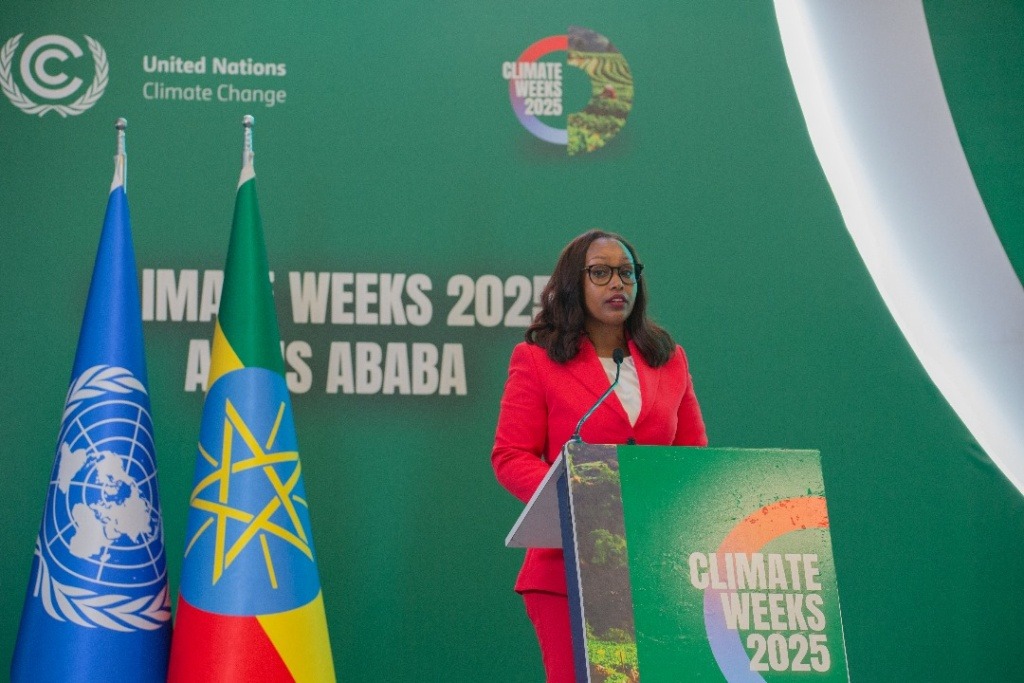
Civil society and communities are pushing for an agenda that delivers resilience where it is most needed, renewable energy that powers villages and cities, and finance that does not chain countries to debt.
H.E. Ameenah Gurib-Fakim, Former President of Mauritius and member of the African Leaders’ Debt Relief Initiative (ALDRI), emphasized that debt reform can no longer be separated from climate reality. For Africa and the wider Global South, the climate crisis is an existential threat, yet these regions provide trillions in free ecosystem services that sustain life everywhere.
From Baku to Addis Ababa, and to Belém, Africa wants the world to hear a unified message: we are partners shaping the planet’s future. ACS2 is Africa’s moment to pivot from declarations to delivery, pressing for a financing order that acknowledges climate debt, reforms the global system, and ensures Africa’s growth is green, just, and people-centered.
What Africa demands is simple yet seismic: fair finance, fair rules, and a fair shot at building a resilient, thriving future.
Amb. Ali Mohamed, Special Climate Envoy of Kenya’s President William Ruto, emphasized that in 2023, at the inaugural Africa Climate Summit, Africa set a bold course with a goal of 300 gigawatts of renewable energy by 2030. A move he says was cemented a few months later in Dubai when Africa laid the foundation for an economic model built on green industrialization.
“As we convene for ACS2, our charge is clear: to transform that 2023 ambition into action by scaling capital, unlocking value chains, and forging alliances that anchor Africa’s competitiveness in the global green economy. This is how we turn climate ambition into prosperity and sovereignty for our people,” said Amb. Ali.


