
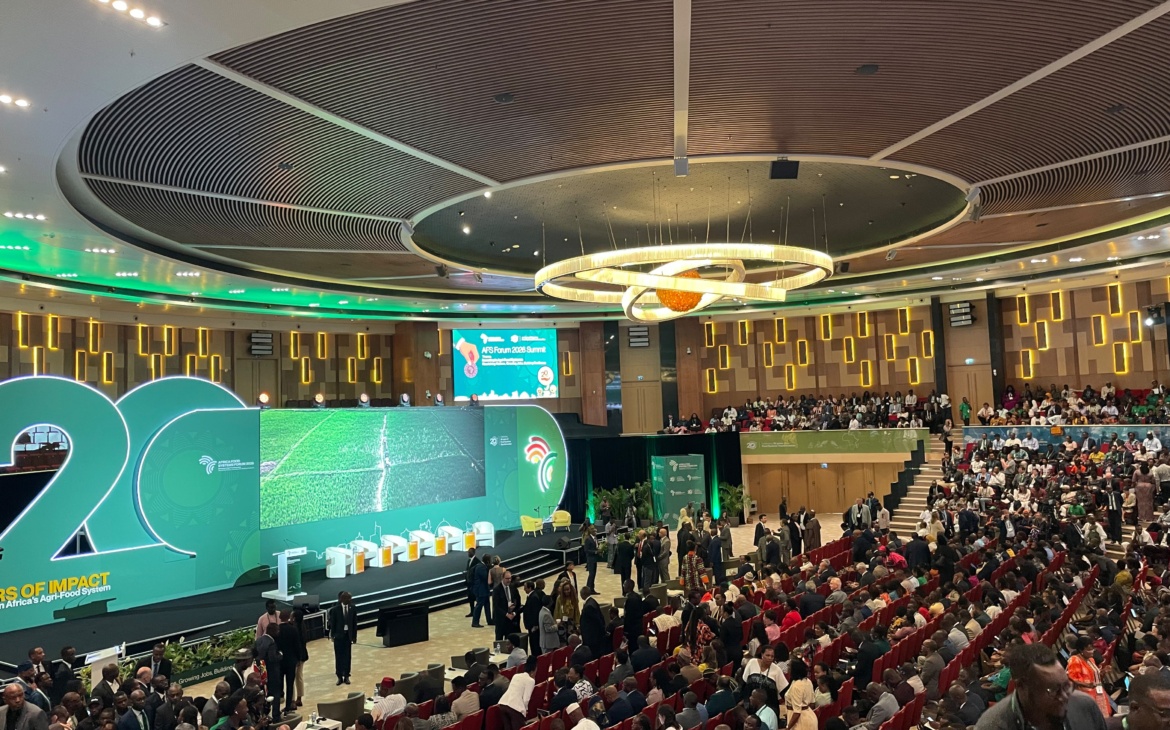
For Asseta Dialo, Africa’s fertiliser question has become a broader question about the health of the soil itself. At the 2026 Africa Food Systems Forum in Kigali, that shift brought together scientists, industry leaders and farmers in a debate over investment, scale and the future of African agriculture.
Asseta Dialo has been in this conversation long enough to remember when it was a single number.
In 2006, African heads of state met in Abuja and committed to increasing fertiliser use from 8 kilograms per hectare to 50. It was a clear target for a continent seeking to increase agricultural productivity and feed a growing population.
Dialo, Senior Programme Officer for Soil Health and Integrated Management at AGRA, says the conversation has since broadened. By the time African leaders met in Nairobi in 2024, the focus had expanded from fertiliser access to the health of the soil itself.
Two years later, that idea was central to discussions at the 20th Africa Food Systems Forum, held in Kigali, Rwanda, from 31 August to 4 September 2026.
“We realise only fertiliser cannot help us to get healthy soils,” she says. “Healthy soils are a critical element for food system resilience, for food system improvement. Our soil is our asset.”
An Asset in Decline
If soil is an asset, discussions in Kigali highlighted how much of that asset is deteriorating. Delegates cited estimates suggesting that approximately 60 to 65 per cent of Africa’s productive land is degraded, with erosion and poor land management among the contributing factors.
Dr Innocent Okuku, CEO of the Africa Fertiliser Industry Development Association (AFIDA), estimated that approximately 60 per cent of the continent’s cropland is degraded, linking much of the problem to poor land management.
The consequences extend beyond declining yields. Degraded soils can lose their ability to retain water, support biological activity and provide essential nutrients, leaving farmers increasingly vulnerable to drought and unpredictable rainfall.
For Dialo, restoring soil health requires treating it as essential agricultural infrastructure. “The soil is like infrastructure. We need to get it very much improved, strengthened, for us to get healthy food, a healthy population, a healthy planet.”
She argues that the cost of neglecting soil health can exceed the investment required to restore it.
The challenge, therefore, is not simply how much fertiliser Africa needs, but how effectively available nutrients can be used while protecting agricultural land.
Alexandre Macedo, Yara International’s Senior Vice President for Africa, urged the industry to move beyond measuring fertiliser consumption and examine how intelligently nutrients are applied. That requires understanding the specific needs of individual farms.
Øystein Botillen, Yara’s Director of Strategic Partnerships, observed that soil information remains largely within the domain of scientists. He argued that digital technologies and artificial intelligence could combine soil information with weather, crop and market data to provide farmers with practical recommendations.
He described soil data as “a big economic asset.” Yet for many smallholder farmers, the immediate obstacle remains access to affordable soil testing.
During the discussions, M’Mailutha called for soil testing to become a national public service, recognising the contribution smallholders make to national food production.
Dr Winnie Ng’ang’a of Yara similarly emphasised that mineral fertilisers should complement rather than replace organic inputs, while highlighting the importance of lime in addressing soil acidity.
Together, these interventions point towards integrated soil management, combining scientific information, appropriate fertiliser use and practices that maintain soil fertility.
However, scientific knowledge alone cannot transform African agriculture if farmers lack the resources to apply it.
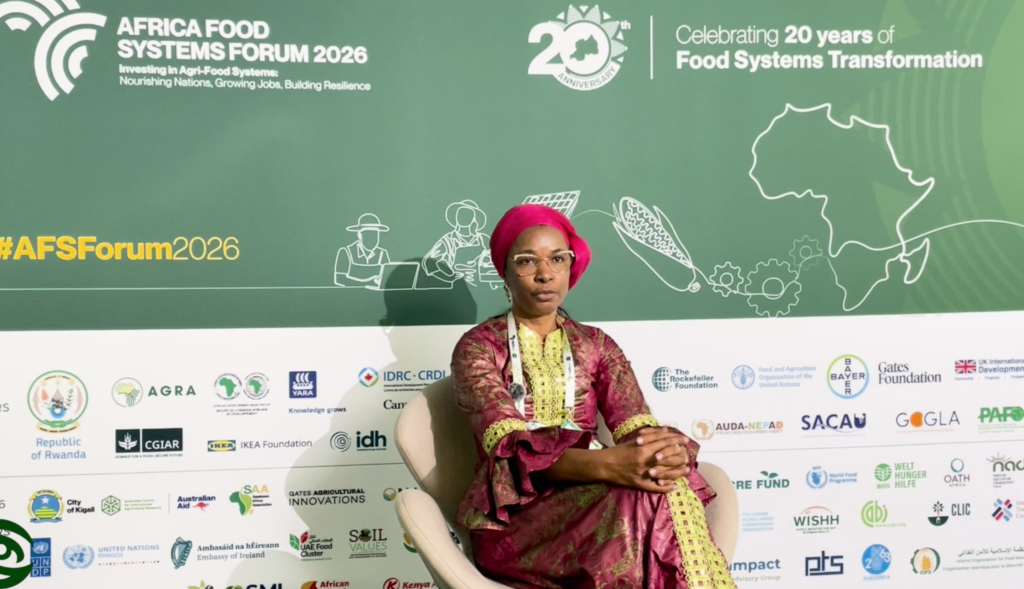
From Commitments to Farms
For Asseta Dialo, restoring Africa’s soils requires investment from governments, private companies, development partners and farmers.
However, increasing supply is only one part of the equation. Farmers must also have access to affordable soil testing, agricultural extension services, appropriate inputs, and financing.
Dialo argues that governments must commit domestic resources and establish supportive policies, while the private sector expands fertiliser production and distribution.
“Who is going to do it? It’s the private sector,” she says.
However, the question of who finances Africa’s agricultural transformation is inseparable from who participates in deciding how that money is spent.
For Elizabeth Nsimadala, a Ugandan smallholder farmer and president of the Eastern Africa Farmers Federation, farmers must be recognised as investors and economic partners rather than passive beneficiaries of agricultural development.
“We are not seeking handouts,” she said. “We are seeking mutually beneficial partnerships.”
Her position highlights the importance of involving farmers in designing and implementing agricultural investments, particularly as African countries pursue the Kampala Declaration’s ambition to mobilise $100 billion in public and private investment for agrifood systems by 2035.
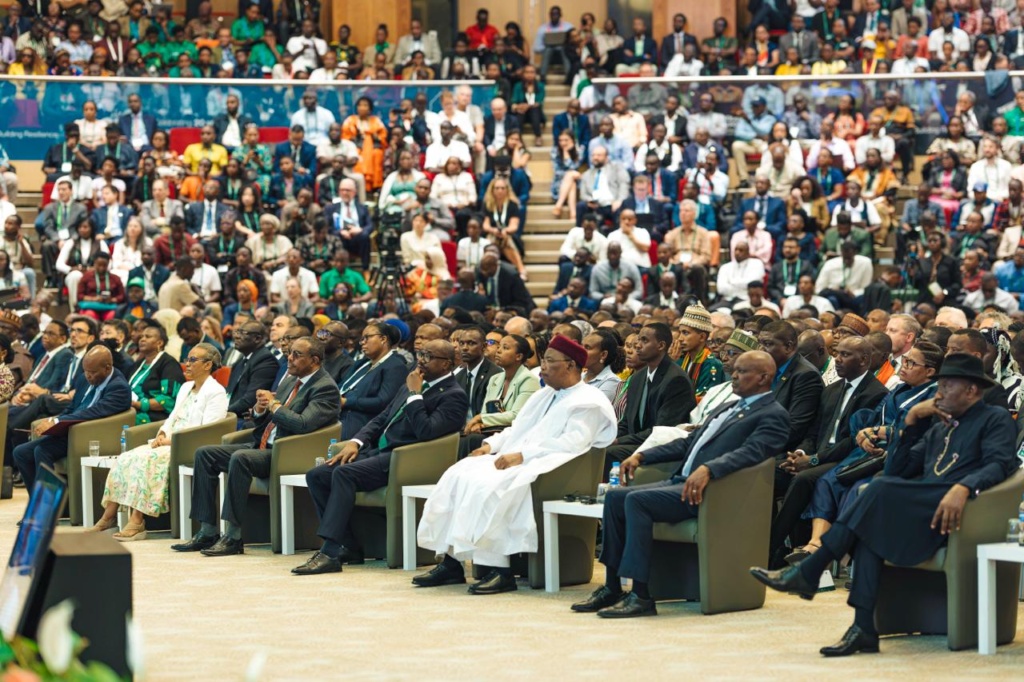
For smallholders, improving soil health can require investment in testing, appropriate fertilisers, organic inputs, and equipment, often without immediate financial returns.
Nsimadala has consequently advocated financing arrangements that reflect farmers’ realities, including a proposed Farmers Empowerment and Resilience Fund developed jointly with farmers.
Her perspective reinforces Dialo’s argument that investment must be accompanied by greater efforts to take existing agricultural technologies to scale.
During a session on integrated soil fertility management (ISFM), Dialo questioned why an approach promoted for years has not reached more farmers.
“We have been doing it for years, so what is wrong?” she asked. “We need to take it at scale.”
ISFM combines mineral fertilisers with organic inputs, improved crop management and practices suited to local soil conditions. Rather than relying on a single intervention, it seeks to improve nutrient-use efficiency while maintaining soil fertility.
For AGRA, scaling up requires stronger agricultural extension systems and practical demonstrations that allow farmers to observe the benefits of different techniques.
“They need to be exposed to these technologies to make sure they can adopt them,” Dialo says.
Partnerships are equally important. AGRA is among the partners involved in the Soil Values Programme, led by the International Fertiliser Development Centre (IFDC), which works to improve soil health and agricultural productivity, particularly in West Africa.
“If we have many partners working together, the impact will be higher,” Dialo says. “Otherwise we cannot just continue operating the way we used to do.”
The Kigali discussions also explored how soil information could improve fertiliser subsidies and how carbon finance could support conservation agriculture.
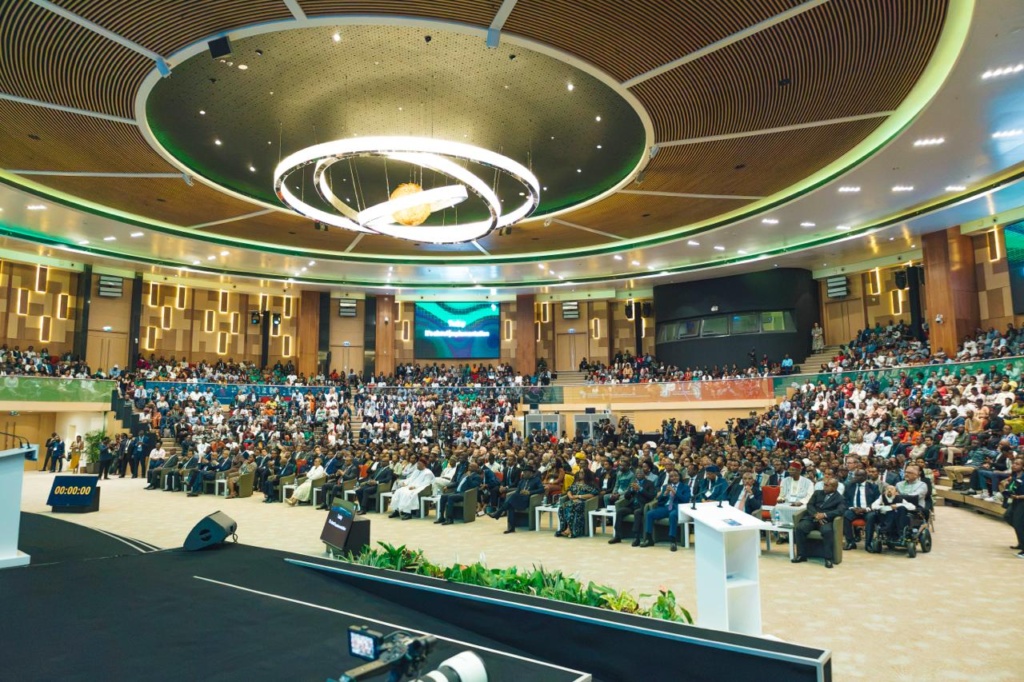
For Asseta Dialo, the way forward rests on four interconnected conditions: investment, scale, partnerships and supportive policies. “The area is huge; it’s a bigger investment,” she says.
In his opening remarks, Rwanda’s President Paul Kagame urged African countries to act on commitments made at previous agricultural and food-security meetings, with the forum’s Managing Director Amath Pathé Sene similarly calling for greater emphasis on delivering measurable transformation.
For Dialo, the urgency is clear. “We need to act now. This is now.”
Even though, as Nsimadala’s intervention illustrates, implementation also depends on recognising farmers as partners in shaping agricultural investments.
The real test of Kigali’s soil-health agenda will be whether commitments translate into affordable services, information, inputs and financing that farmers can actually use.
For Dialo, the starting point remains beneath the farmer’s feet. If Africa is to build resilient food systems, the first infrastructure it may need to strengthen is the one it has been farming all along: the soil.
Author Profile

-
Seeker.
Inspire AFRIKA.
Latest entries
 Corporate15 October 2026Water, Sanitation and Digital Learning at the Centre of Garissa School Upgrade
 Agriculture14 October 2026Africa’s Food Systems Future Depends on Listening to Farmers
 Weather Forecasts13 October 2026Rain and Rising Temperatures Forecast Across the Greater Horn of Africa
 Climate9 October 2026Beyond Negotiations: Africa Expects Concrete Outcomes from Antalya


