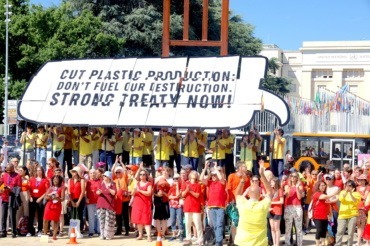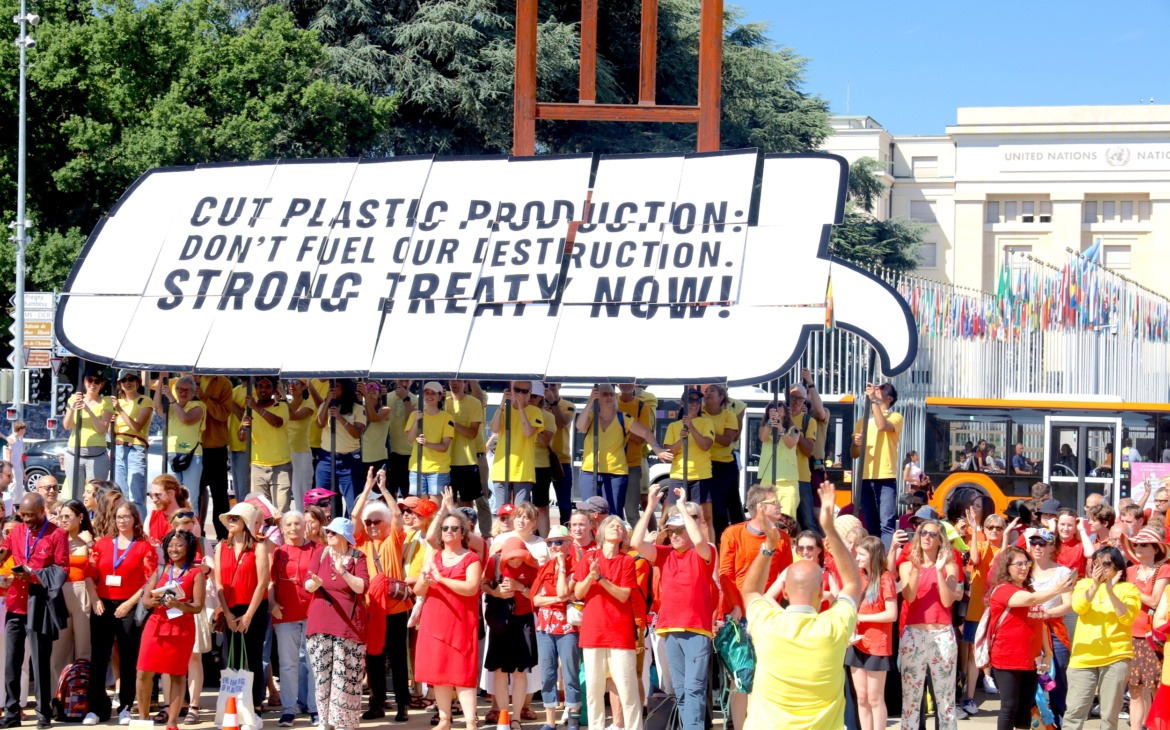
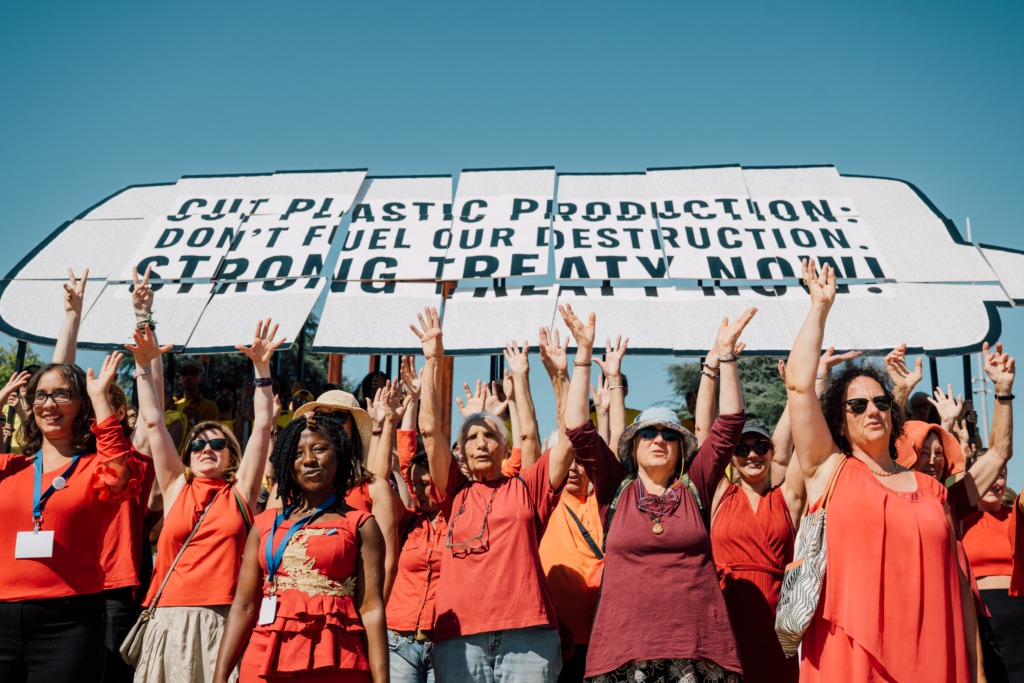
As the final round of negotiations for a Global Plastics Treaty begins in Geneva, hundreds of citizens and civil society organisations from around the world converged at Place des Nations to demand an ambitious and legally binding agreement, one that prioritises people and the planet over polluters.
The demonstration, led by Greenpeace Switzerland, the Break Free From Plastic (BFFP) movement, the Gallifrey Foundation, and a growing coalition of environmental and social justice groups, marked the opening of the United Nations negotiations scheduled from 5 to 14 August at the Palais des Nations.
Protesters, donning yellow, red, and orange, used colour to symbolise the urgency of the crisis and the danger posed by unchecked plastic production, which is largely derived from fossil fuels.
Joëlle Hérin, expert in consumption and circular economy at Greenpeace Switzerland, pointed out that as the host country of the negotiations on plastic pollution, Switzerland has to stay firm on the ambition of the future Global Treaty.
“With plastic production set to triple by 2050, the treaty would be bound to fail without a global target to reduce plastic production. We need to end the age of plastic to protect our health, our communities, and our planet,” she said.
For African nations, the treaty offers a critical opportunity to address the disproportionate burden of plastic pollution on the continent. This is concerningly urgent since, despite contributing less plastic waste per capita than wealthier nations, African communities continue to suffer some of the most severe environmental and health impacts. This is a situation that has been worsened by plastic waste dumping from countries in the Global North.
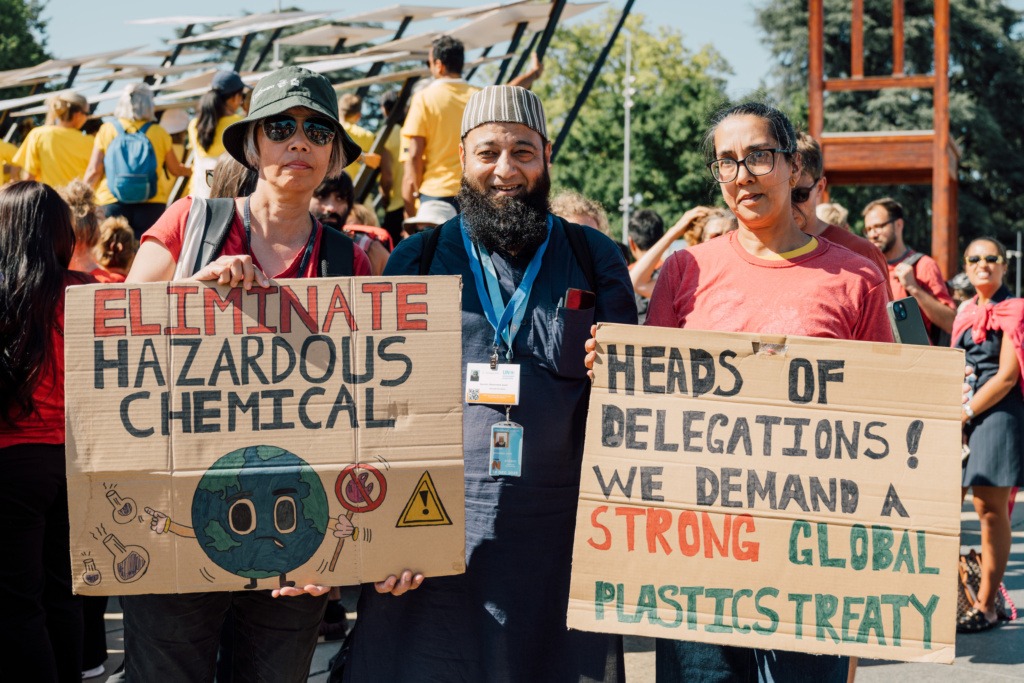
“Our communities are drowning in plastic waste while contributing just a fraction of global production,” said Hellen Dena, Greenpeace Africa’s Pan-Africa Plastics Project Lead.
“We need a treaty that addresses plastic pollution at its source by cutting production rather than shifting the burden to those least responsible. Governments must not side with the petrochemical industry as we negotiate the Global Plastics Treaty. We cannot let oil-producing countries, at the behest of big oil and petrochemical companies, dominate and slow down the treaty discussions and weaken its ambition,” said Dena.
Based on the extent of pollution seen, with no global action, plastic production is projected to triple by 2050, hence an urgency for the Global Plastics Treaty. Following China’s 2018 ban on plastic waste imports, Africa has become an increasingly targeted destination for waste exports, leading to toxic dumping grounds that contaminate soil, water, and air across vulnerable communities.
Scientists are still uncovering the long-term impacts of plastics on human health. According to the United Nations Environment Programme (UNEP), over 16,000 chemicals are used in plastics, at least 4,200 of which are considered highly hazardous to both human and environmental health.
Dena further stressed the need for justice-oriented solutions, pointing out that any effective treaty must ensure a just transition for waste pickers across Africa. She further revealed that an estimated 20 million people worldwide work in informal waste collection, with a significant number in Africa.
“Many African initiatives are already pioneering plastic-free alternatives, reuse systems, and community-led waste management models that could serve as global blueprints,” said Dena.
African countries have shown leadership in previous rounds of negotiations, with nations like Rwanda and Ghana advocating for production caps and the phase-out of problematic plastics.
Greenpeace Africa is calling on all Member States to demand a phase-down approach to plastic production, from manufacturing through to disposal, to protect both environmental and public health across the continent.
The organisation also urges stronger alignment with international agreements such as the Basel and Bamako Conventions, which are essential in curbing Africa’s continued exposure to plastic waste dumping.
Author Profile