

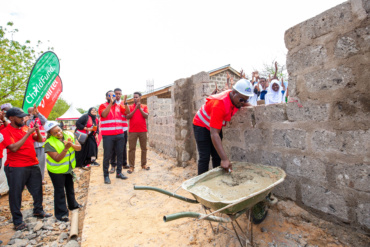
More than 450 households in Marsabit town are set to gain reliable access to clean water through the newly launched Karantina borehole project, a joint initiative of the Kenya Red Cross Society and Airtel Money Kenya Limited.
Located in Saku sub-county, the project aims to ease the impact of recurring drought in Northern Kenya by improving access to safe and sustainable water. Beyond drilling the borehole, the initiative includes the construction of masonry tanks, extension of pipelines, installation of prepaid meters, and building of watering troughs and kiosks to support both households and livestock.
Speaking during the commissioning, Marsabit Deputy Governor Solomon Riwe commended the project and urged residents to take responsibility for its upkeep.
“We thank Airtel Money Kenya and the Kenya Red Cross Society for these interventions aimed at building resilience in Marsabit. As beneficiaries, we must safeguard the project because it belongs to us,” he said.
The Karantina project is part of a wider partnership that has also seen the rehabilitation of four water sources in Loosuk, Lojorin, Bendera, and Loltulele in Samburu County, improving access to clean water for over 1,950 households.
Airtel Money Kenya Managing Director Anne Kinuthia-Otieno said the company was committed to growing with the communities it serves.

“As we expand, it is imperative that we walk with the people who trust in us. This borehole is not just a water source, it represents health, dignity, and opportunity for this community,” she noted.
In 2022, Airtel Money Kenya donated KES 50 million to the Kenya Red Cross Society to support drought relief efforts that targeted over 5.1 million Kenyans.
Kenya Red Cross Society Governor Geoffrey Korir called for greater collaboration on long-term solutions.
“Partnerships such as this are critical. Moving forward, we must prioritize sustainable use of water resources, including irrigation initiatives,” he said.
Kenya continues to face economic water scarcity, with only 15 percent of its water resources fully developed. In Northern Kenya, where rainfall is erratic and droughts are frequent, access to safe water remains one of the region’s most pressing challenges.
Author Profile

-
Seeker.
Inspire AFRIKA.
Latest entries
 Corporate15 October 2026Water, Sanitation and Digital Learning at the Centre of Garissa School Upgrade
 Agriculture14 October 2026Africa’s Food Systems Future Depends on Listening to Farmers
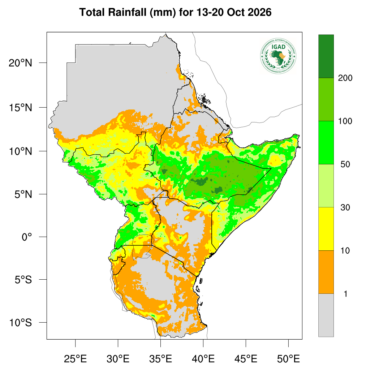 Weather Forecasts13 October 2026Rain and Rising Temperatures Forecast Across the Greater Horn of Africa
 Climate9 October 2026Beyond Negotiations: Africa Expects Concrete Outcomes from Antalya


