
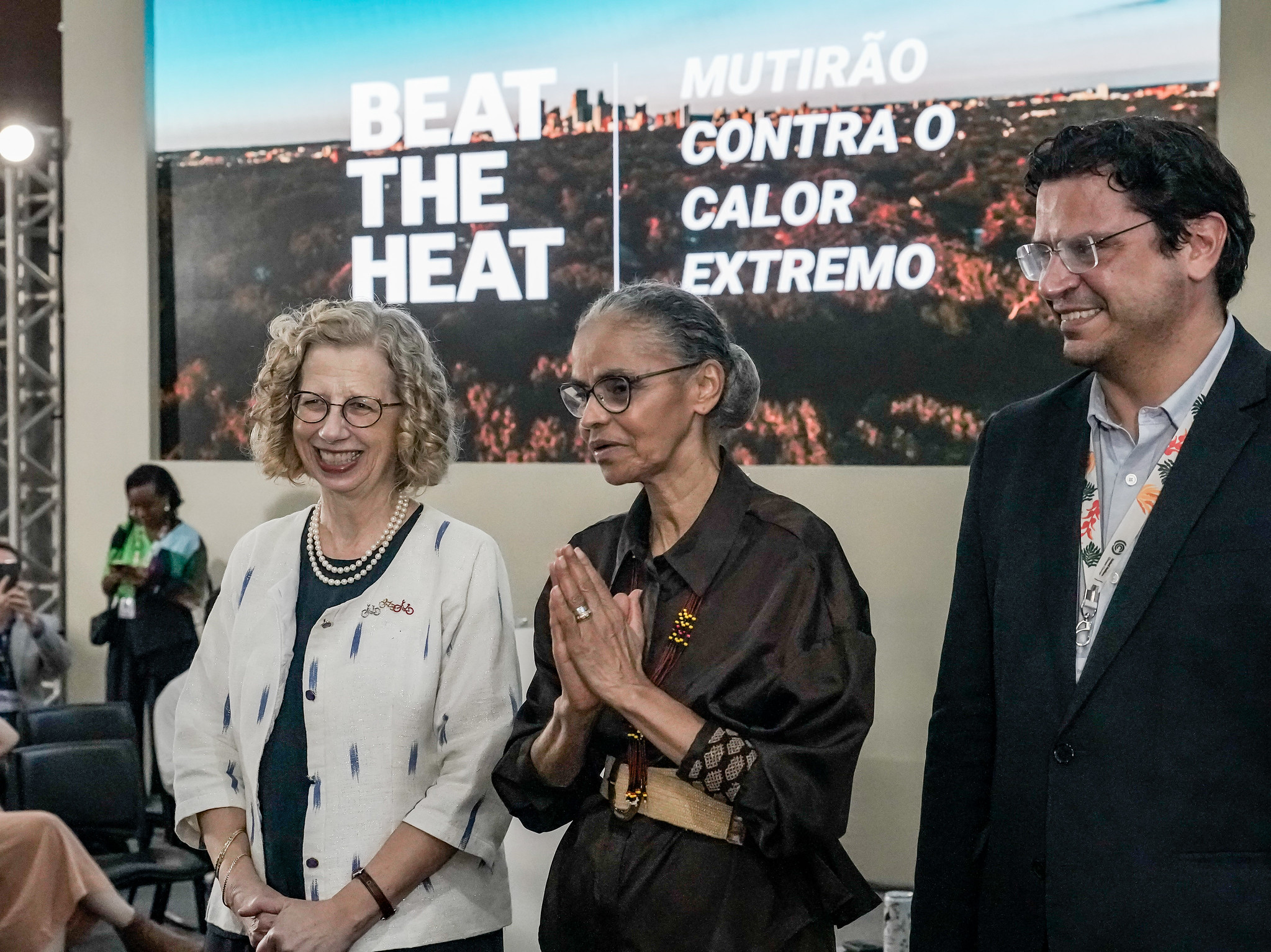
A new global study unveiled at COP30 warns that as the world loses its cool at night, millions are facing an overlooked climate danger: sleepless, suffocating heat.
The study showed that in many global cities, minimum nighttime temperatures have been rising rapidly during oppressively hot weather situations than daytime average highs, up to 12 times faster in some cities.
The study by Climate Resilience for All, titled “Extreme Heat and the Shrinking Diurnal Range: A Global Evaluation of Oppressive Air Mass Character and Frequency,” examined weather patterns over 30 years (1994–2024).
The research focused on identifying two types of air masses most hazardous to human health: “dry tropical” (DT) conditions, characterized by hot, dry air, and “moist tropical” (MT) conditions, marked by heat and high humidity.
The Findings
The study revealed a consistent rise in nighttime temperatures and a narrowing gap between daytime highs and nighttime lows across most regions of the world. Notably, 83% of the cities analyzed have experienced sustained increases in nighttime heat.
In Africa, 13 out of 15 cities recorded higher nighttime temperatures under moist tropical (MT) conditions, while 10 out of 14 cities showed similar increases under dry tropical (DT) conditions.
The fastest nighttime temperature rises were observed in Agadir, Morocco, where DT temperatures are climbing by 1°C every 5.6 years, and in Cairo, Egypt, where MT temperatures are increasing by 1°C every 16.8 years.
Cities showing a reduced difference between daytime and nighttime temperatures during moist tropical weather include Upington, Bamako, Abidjan, Cairo, Agadir, Mombasa, Espargos, Brazzaville, Dakar, Algiers, Cotonou, Luxor, and Reunion Island.
Similarly, under dry tropical conditions, Agadir, Cairo, Luxor, Espargos, Cape Town, Niamey, Dakar, Mombasa, Brazzaville, and Reunion Island are experiencing shrinking temperature ranges.
The analysis also showed an increase in the frequency of extreme heat days, with summertime moist tropical weather patterns rising by nearly 49% in Africa and 37% globally over the 30 years, equating to an additional MT day every 2.5 years in African cities.
Dry tropical weather patterns have risen by 14% globally, adding one DT day roughly every 3.4 years. Each increase in DT and MT occurrences corresponds to a decline in cooler, more comfortable weather conditions.
Significance of the Study
Initially, heat exposure was measured by exposure to daytime high temperatures and increasing “average” temperatures.
This analysis is the first to examine how humidity, daytime, and nighttime temperatures are changing within dangerous summer air masses; how their frequency is shifting; and how these trends vary across climate regions.
This study emphasizes the urgent need for preventative and responsive actions on extreme heat, including early warnings, public health measures, and adaptation planning, to explicitly account for and address the rapidly rising threat of hotter nights.
“Before this analysis, we did not know how rapidly nighttime heat has been rising within the most dangerous air masses,” said Larry Kalkstein, climatologist, Chief Heat Science Advisor at Climate Resilience for All, and the study’s lead author.
“We must understand how the heat of summer, that sends people to the emergency room, is shifting, and what we are overlooking when we talk about it,” he added.
Mayor Yvonne Aki-Sawyerr of Freetown, Sierra Leone, leading a city on the frontlines of extreme heat, said, the study reflects the lived reality of so many cities in the global south. “Most of our residents lack access to cooling, and women market traders facing extreme heat all day return to homes that are dangerously hot at night, she said.
She further added that as the global community implements the heat action plan, “this study sounds the alarm on the hidden threat of nighttime temperatures and pushes us toward solutions that drive awareness and protect people.”
Emphasizing the significance of the study, Kathy Baughman McLeod, CEO of Climate Resilience for All, said the analysis needs to mobilize city and health leaders and broaden their view of what a 24-hour heat crisis is.
“This research uncovers a critical blind spot in our understanding of extreme heat,” concluded.
High nighttime temperatures prevent the human body from cooling down, increasing risks of heat exhaustion, dehydration, and cardiovascular stress.
When sleep is disrupted by heat, the body loses its ability to recover from daytime exposure, heightening the danger of illness and death, especially for older adults, women, and those living in poorly ventilated housing.
As the planet heats up even after sundown, cities must rethink how to cool their people — not just their days, but their nights.
Author Profile

- How can we learn if we don't question?
Latest entries
 Events12 October 2026Cybersecurity in the Floriculture Industry
 Opinion & Analysis8 October 2026Why Africa Must Look to What Already Exists in Its Blue Economy
 Agriculture5 October 2026The Search for a Smarter Way to Feed Crops
 Events30 September 2026The Goat, the Market and the Dryland: Heifer International’s Push for Livestock Resilience


