
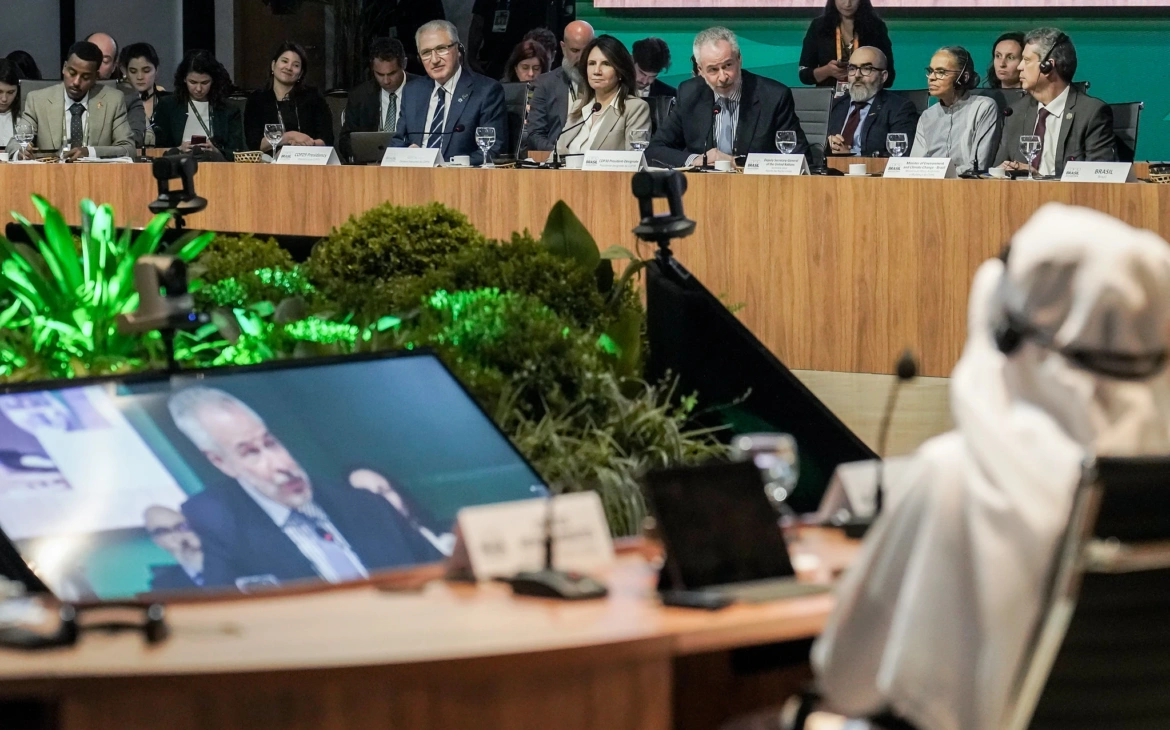
In Brasília’s Palácio Itamaraty, 67 delegations, including ministers from Angola to the EU, alongside 3,000 indigenous representatives and business leaders from Siemens to Unilever, gathered from October 13–14, 2025, to lay the groundwork for COP30 in Belém.
Against geopolitical tensions and a warming climate backdrop, the meeting produced a joint ministerial declaration demanding over $1 trillion annually in climate finance, pre-agreements on adaptation, and a bold call for ethical, 1.5°C-aligned action.
As COP30 host, Brazil leaned into its role as a bridge between Global South and North, with President Lula da Silva’s administration framing climate action as a moral imperative, and setting the tone for a summit rooted in equity.
The meeting tackled updates to Nationally Determined Contributions (NDCs), due in 2025, and operationalizing the New Collective Quantified Goal (NCQG) on finance, building on the $100 billion annual pledge met in 2023.
Yet, fossil fuel phase-out timelines sparked friction, with Saudi Arabia pushing back. “It’s very difficult to establish consensus,” admitted Marina Silva in a post-meeting briefing, highlighting the diplomatic tightrope.
Climate Finance
The joint ministerial declaration called for scaling climate finance to $1.3 trillion annually by 2030 for developing nations, dwarfing the $100 billion baseline. It endorsed innovative mechanisms like debt-for-climate swaps and reforms to multilateral development banks to unlock private capital.
Reflecting the frustrations with slow negotiations, Panama’s delegation highlighted the procedural hurdles, stating, “Decision-making rules at the UN climate talks should be reformed to deliver faster changes.”
Business leaders, via the ICC, pledged $200 billion for green tech scaling, from EVs to hydrogen, but stressed regulatory clarity.
“Real climate progress demands governments and businesses work together to accelerate climate finance, enable investment, and scale solutions for a 1.5°C future,” an ICC representative noted. Yet, the declaration’s lack of firm commitments left some wanting.
Developing nations, particularly Least Developed Countries (LDCs), pushed for tripling adaptation finance, with Malawi’s Evans Njewa emphasizing, “Multilateralism must deliver, to keep 1.5°C alive.”
Ethical Balance and Just Transitions
The declaration introduced a Global Ethical Stocktake, framing climate action as a moral imperative. “Ethics give meaning to action; it reminds us that confronting the climate emergency also means confronting a moral and civilizational crisis,” declared Marina Silva, Brazil’s Minister of Environment and Climate Change.
This push for equity prioritized just transitions, ensuring fossil fuel-dependent economies like those in Africa and the Middle East aren’t left behind. Proposals included retraining programs and renewable energy investments tailored to local needs.
Moreover, the declaration called for accelerated transitions aligned with 1.5°C. Brazil’s bioeconomy focus, leveraging Amazon restoration, offered a compromise, blending economic and environmental goals.
Voices From the Frontlines
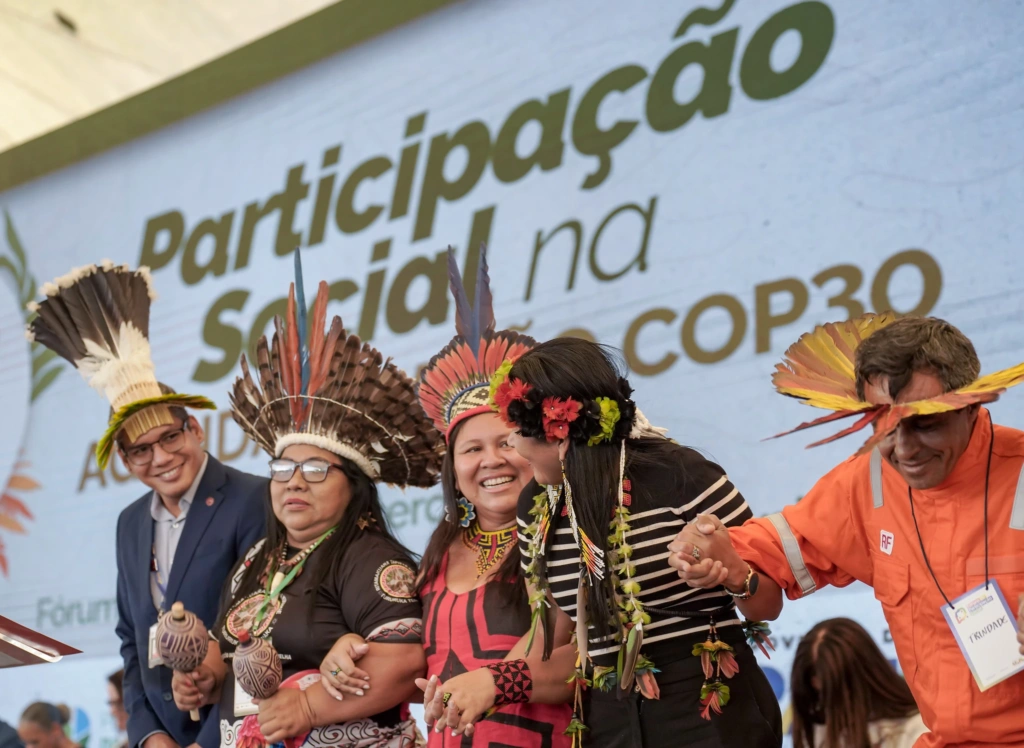
Adaptation took center stage, with the declaration outlining a COP30 work schedule for resource mobilization.
“Responses to extreme climate events are urgently needed,” said Angola’s Ana Paula Pereira, emphasizing the need for funding for early warning systems and resilient infrastructure, critical for vulnerable nations facing floods and droughts.
The declaration also committed to digital tracking tools for transparency, ensuring funds reach the ground.
Sonia Guajajara, Brazil’s Minister of Indigenous Peoples, declared, “Indigenous peoples and local communities are not only among those most affected by climate change, we are also part of the solution.”
The Peoples’ Circle, a Pre-COP innovation, ensured 3,000 indigenous delegates shaped adaptation talks, advocating for nature-based solutions like rainforest protection.
Pathway to Belém
Despite progress made at the meeting, challenges persist on the road to COP 30. The declaration’s finance targets lacked binding timelines, and ministerial statement overruns delayed sessions, as Panama’s delegate hinted.
E3G analysts warned, “Delegates must now make progress on finance, decarbonization, resilience, nature, and governance, and rebuild the trust essential for success in Belém.”
Business commitments, like the ICC’s $200 billion pledge, signaled scalability, with the group noting, “Real climate progress demands governments and businesses work together.”
COP30 President André Corrêa do Lago said, “Belém cannot be another climate summit of words. It must be one of the deliveries.”
Read Also: IUCN Makes a Historic Moment by Adopting a Phase Out of Fossil Fuels Motion
Author Profile

- How can we learn if we don't question?
Latest entries
 Agriculture16 October 2026“There Is No Shortcut”: A Kiambu Grower’s Decade in Mushrooms
 COP3115 October 2026Pacific Leaders Call for Urgent Climate Action Ahead of COP31
 Agriculture13 October 2026Can the buffalo fix Kenya’s milk problem? Farmers say start with the feed bill
 Events12 October 2026Cybersecurity in the Floriculture Industry


