

Amid frustration over stalled negotiations at COP30 in Belém, Brazil, a coalition of nations took matters into their own hands, taking steps to advance fossil fuel phase-out in the Belem Declaration.
On November 21, 2025, the Belém Declaration on the Just Transition Away from Fossil Fuels was launched, marking a decisive push for a fair, equitable, and orderly global shift away from coal, oil, and gas.
The initiative, spearheaded by Colombia and co-hosted with the Netherlands, arose after official COP30 texts failed to explicitly commit to a fossil fuel phase-out.
As pointed out by Colombian Environment Minister Irene Vélez Torres, one of the Belem Declaration’s primary architects, the sole achievement would be placing people before everything else.
“The greatest win out of Belém comes from outside the negotiation halls, from the communities and indigenous peoples who stood up for their homes and the survival of their people, and from Global Southern leaders who called for a roadmap to a fossil-free future even beyond official texts,” said Irene.
COP30, hosted by Brazil from November 11–22, aimed to operationalize prior climate commitments, including adaptation finance, deforestation reversal, and energy transitions.
Brazilian President Luiz Inácio Lula da Silva framed the summit with a call for actionable “roadmaps” to halt deforestation and phase out fossil fuels. Yet opposition from major fossil fuel producers, notably Saudi Arabia and Russia, meant the official “Belém Package” of 29 decisions lacked binding language on fossil fuel phase-out.
The declaration, however, acts as a coalition of the willing, establishing a minimum level of ambition for transition plans: it must be just, orderly, inclusive, and funded. That means prioritizing affected workers, Indigenous and Afro-descendant communities, and regions impacted by pollution, while phasing out fossil fuel subsidies, halting new licensing, and mobilizing international finance, including debt relief and technology transfer, for developing nations.
At launch, 24 countries spanning the Global South, Europe, and the Pacific signed on, from Colombia, Kenya, and Fiji to Austria, Spain, and the Netherlands.
Vanuatu’s Minister Ralph Regenvanu described it as a catalyst for global momentum: “The courage on the streets of Belém and the world has ignited global momentum: what began as a single country, Brazil, calling for a roadmap to phase out fossil fuels has grown into a coalition of almost 90 countries pushing for it.”

The Belem declaration also sets the stage for the First International Conference on the Just Transition Away from Fossil Fuels, co-hosted by Colombia and the Netherlands in April 2026. This forum will be the first dedicated multilateral space to explore legal, economic, and social pathways for fossil fuel phase-out, reinforcing Paris Agreement goals.
COP30’s official texts nonetheless included a complementary measure: the Just Transition Action Mechanism, a UN body designed to coordinate protections for workers, promote gender equity, and safeguard communities during the shift to clean energy.
COP30 President André Corrêa do Lago emphasized that Brazil would pursue two roadmaps, respectively, as one focuses on halting and reversing deforestation, while the other focuses on transitioning away from fossil fuels in a just, orderly, and equitable manner, mobilizing resources for these purposes in a ‘just and planned manner.
UN Secretary-General António Guterres framed the declaration in urgent global terms: “The fossil fuel age is ending & clean energy is rising. However, we must move much faster & ensure that all nations share the benefits. Let’s turn climate necessity into development opportunity & make the transition to renewable energy fair, fast & final.”
European Commission President Ursula von der Leyen added, “We now have a global agreement to keep the 1.5°C limit within reach and transition away from fossil fuels. The EU will stay the course in providing global leadership.”
For leaders like Colombia’s Gustavo Petro, the Belém Declaration represents a moral and practical imperative: “To face the climate crisis and protect human life in the face of the advancing climate collapse, the common goal must be the construction of a decarbonized economy, a true economy of life.”
Civil society and environmental advocates have welcomed the move as a “bold complement” to stalled UN negotiations. Further revealing that the moment signaling that the Global South, grassroots movements, and willing partners can accelerate the transition toward renewable energy, even when procedural bottlenecks delay formal agreements.
By bridging gaps in the official COP30 texts, the Belém Declaration positions itself as a blueprint for future action, potentially shaping COP31 in Australia and beyond.
Author Profile

-
Seeker.
Inspire AFRIKA.
Latest entries
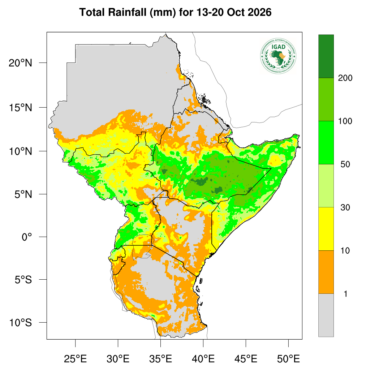 Weather Forecasts13 October 2026Rain and Rising Temperatures Forecast Across the Greater Horn of Africa
 Climate9 October 2026Beyond Negotiations: Africa Expects Concrete Outcomes from Antalya
 Animals7 October 2026In Kajiado’s Drylands, Collective Selling of Small Herds Is Changing the Livestock Trade
 Oceans6 October 202640 Years of Ocean Cooperation: The Western Indian Ocean’s Next Test Is Implementation


