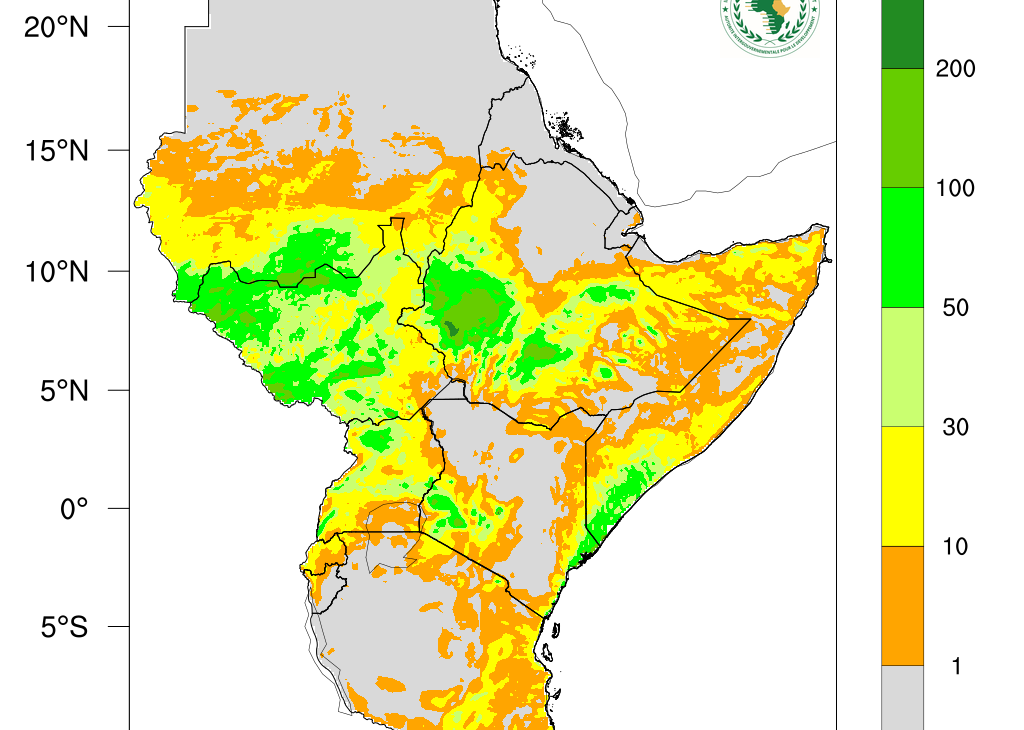
Much of the Greater Horn of Africa is expected to experience below-normal rainfall between June 2 and June 9, 2026, with depressed precipitation forecast across South Sudan, central Ethiopia, most parts of Uganda, and western Kenya, even as warmer-than-average temperatures continue to dominate the region.
The latest outlook from the IGAD Climate Prediction and Applications Centre (ICPAC) indicates a weather pattern characterized by uneven rainfall distribution, localized heavy downpours, and widespread heat stress, highlighting the continued influence of climate variability across East Africa.
Forecasts indicate moderate rainfall ranging between 50 and 200 millimeters across southern Sudan, most parts of South Sudan, isolated areas of northern-central and southern Uganda, western Kenya, western and central Ethiopia, and southern Somalia.
Meanwhile, light rainfall below 50 millimeters is expected over most parts of central to southern Tanzania, large areas of Kenya and Somalia, southern Sudan, and northern and south-eastern Ethiopia.
Meteorologists note that 1 millimeter of rainfall is equivalent to one litre of water per square meter, illustrating the relatively limited rainfall expected across many areas during the forecast period.
Despite the generally drier outlook, rainfall anomalies suggest above-average rainfall over western and eastern Ethiopia, northern and southern Somalia, parts of southern Sudan, and sections of south-eastern Tanzania.
However, below-normal rainfall is expected across parts of South Sudan, Uganda, and central Ethiopia, reinforcing concerns over reduced moisture availability in some agricultural and pastoral areas.
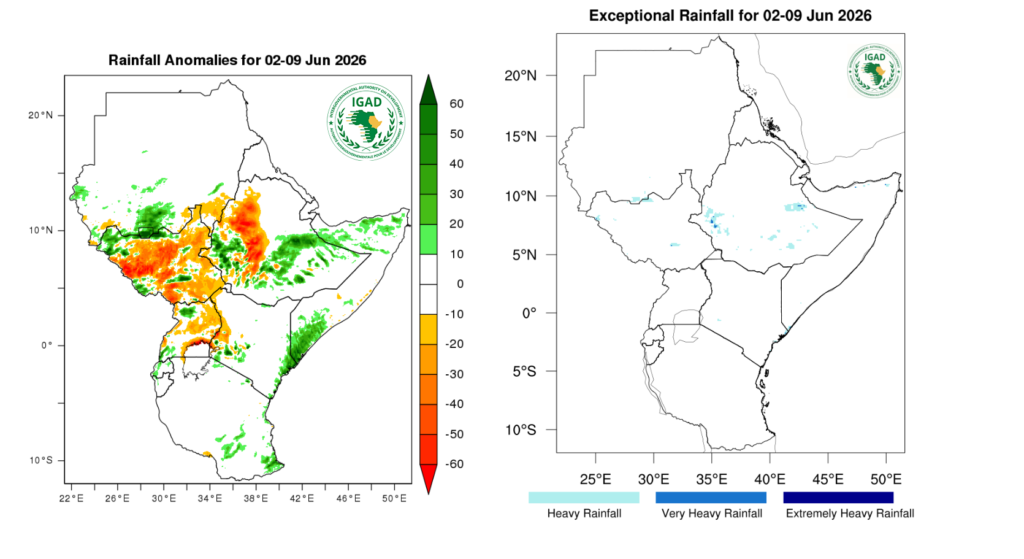
Forecasters also warn of exceptionally heavy rainfall, with totals exceeding the 90th percentile expected over isolated areas of western and north-eastern Ethiopia, parts of the southern Sudan–northern South Sudan border region, and pockets of South Sudan.
These localized extreme rainfall events highlight the increasingly erratic nature of weather patterns in the region, where intense downpours can occur even amid broader rainfall deficits.
Heat Stress Remains a Growing Concern Amidst Below-Normal Rainfall
Alongside the rainfall outlook, temperatures are expected to remain above seasonal averages across most parts of the Greater Horn of Africa.
Temperatures exceeding 32°C are forecast across Sudan, Eritrea, Djibouti, and north-eastern Ethiopia, while moderate to high temperatures ranging between 20°C and 32°C are expected across much of the region.
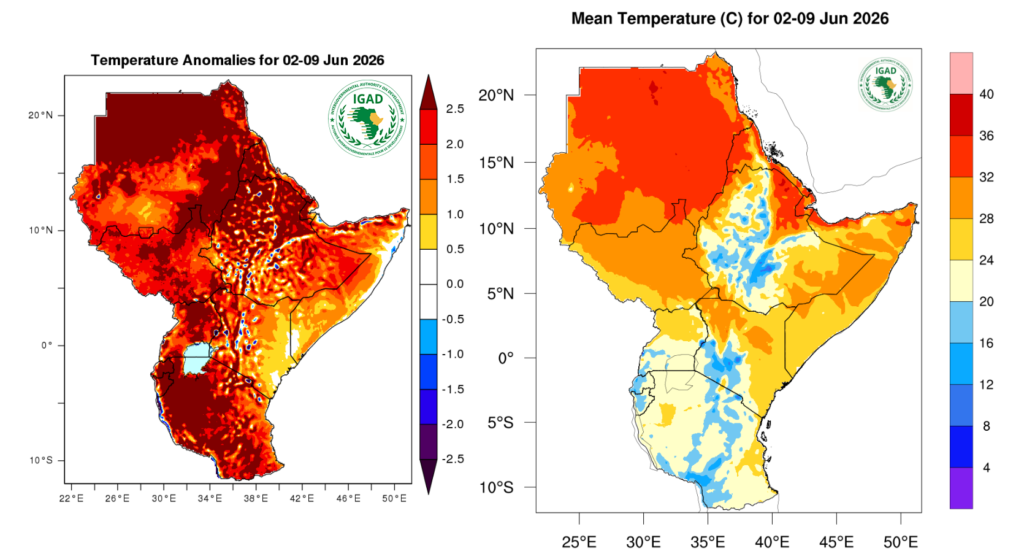
Meanwhile, milder conditions below 20°C are likely over Rwanda, Burundi, central to western Kenya, central Tanzania, and most highland areas across the Greater Horn, largely due to elevation and cloud cover.
The broader outlook indicates warmer-than-usual temperatures across most parts of the region, with only isolated highland areas expected to experience relatively cooler-than-normal conditions.
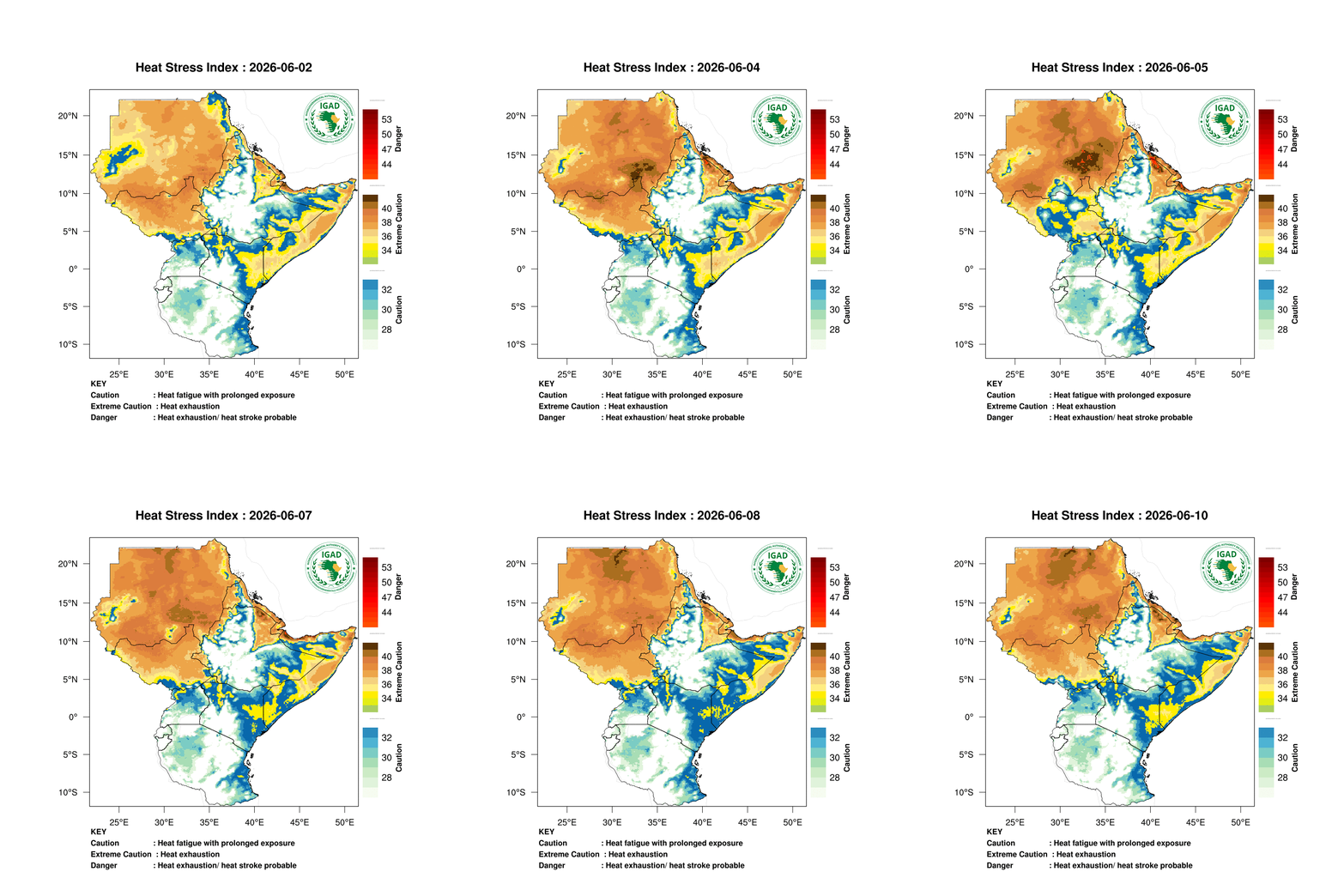
Heat stress is also expected to remain elevated, with conditions within the “Extreme Caution” category forecast across most parts of South Sudan, Sudan, Eritrea, Djibouti, eastern and northern Kenya, Somalia, and north-eastern Ethiopia.
These conditions increase the risk of heat-related illnesses, particularly among vulnerable populations and those engaged in prolonged outdoor activities.
The latest forecast paints a picture of a region facing contrasting weather extremes, where localized heavy rainfall events coexist with widespread rainfall deficits and persistent heat.
As climate variability continues to shape weather patterns across East Africa, experts emphasize the importance of preparedness, early warning systems, and close monitoring of evolving conditions to reduce risks to communities, agriculture, and water resources.
Author Profile

-
Seeker.
Inspire AFRIKA.
Latest entries
 Climate9 October 2026Beyond Negotiations: Africa Expects Concrete Outcomes from Antalya
 Animals7 October 2026In Kajiado’s Drylands, Collective Selling of Small Herds Is Changing the Livestock Trade
 Oceans6 October 202640 Years of Ocean Cooperation: The Western Indian Ocean’s Next Test Is Implementation
 Adaptation5 October 2026Africa Is Financing Its Own Survival as Climate Adaptation Money Falls Short