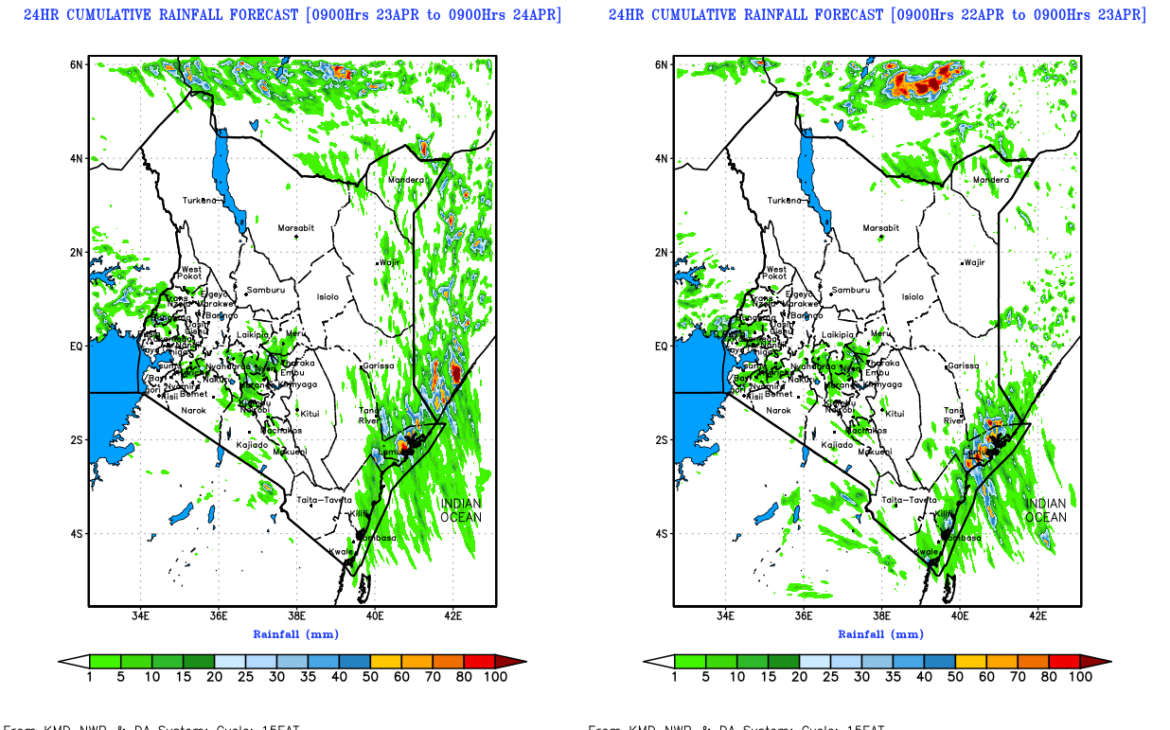
The Kenya Meteorological Department (KMD) has warned of intensifying rainfall across several parts of Kenya between April 22 and April 27, 2026, accompanied by strong winds, rough sea conditions, and an increased risk of flooding.
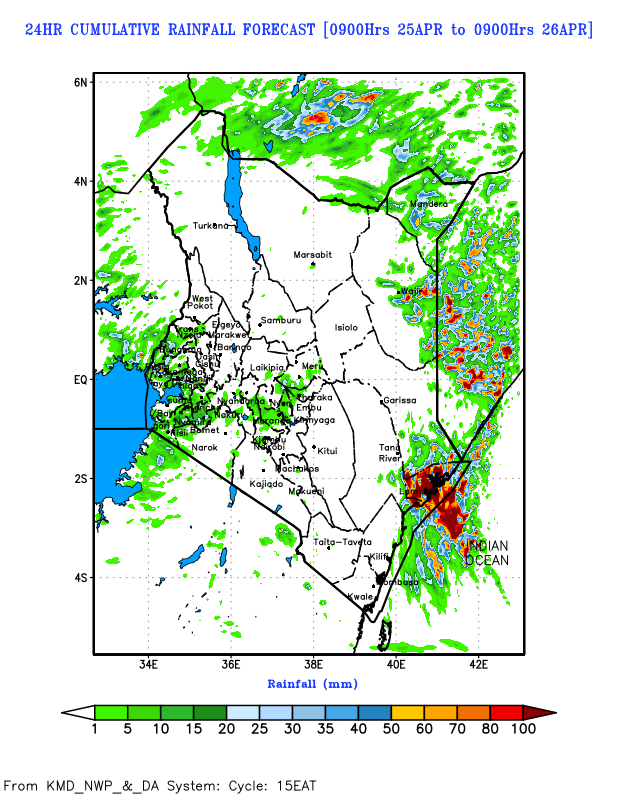
According to the latest advisory, rainfall is expected to strengthen over the coastal region and extend into northeastern and southeastern lowlands, with 24-hour accumulations likely to exceed 20 millimeters in some areas.
The evolving weather system signals a short-duration but high-impact rainfall event, particularly across eastern parts of the country.
The current forecast highlights a multi-hazard weather event, combining intense rainfall, strong winds, and rough seas within a short period.
While the rains may offer some relief in water-stressed areas, the risk of flooding and weather-related disruptions remains high, particularly across eastern Kenya.
As weather patterns continue to shift, KMD emphasizes the importance of early preparedness and awareness to reduce the potential impacts on communities and infrastructure.
Coastal, Northeastern Areas to be Impacted
KMD indicates that the coastal counties of Kwale, Mombasa, Kilifi, Tana River, and Lamu are among the areas likely to receive the most intense rainfall.
Additional impacts are expected across parts of Garissa, Wajir, Mandera, Taita-Taveta, Kitui, and Makueni, where rainfall could combine with existing conditions to trigger localized flooding.
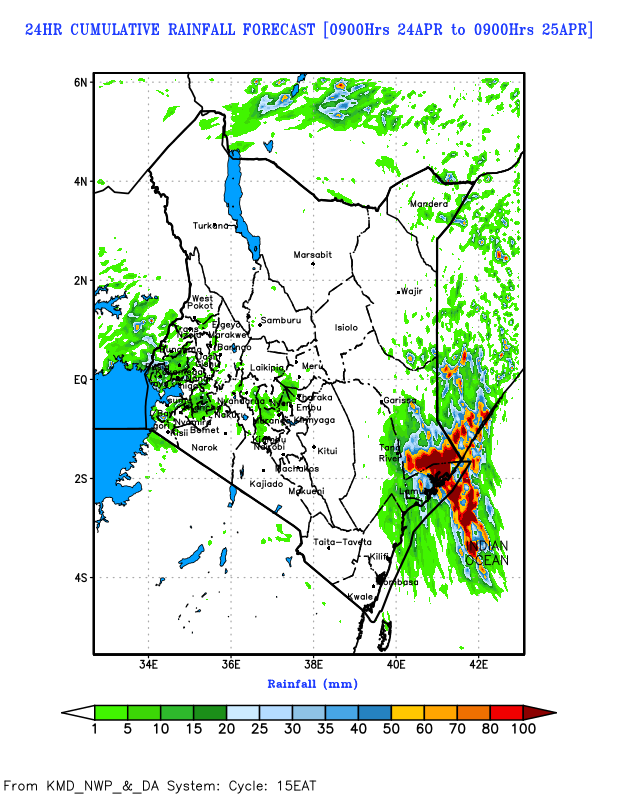
The spatial distribution of rainfall suggestshttps://climate.co.ke/patchy-rains-flood-risks-persist-as-heat-builds-across-the-greater-horn-of-africa/
Beyond rainfall, the advisory highlights gusty winds exceeding 25 knots (12.5 meters per second), which could affect both land and marine environments.
Sea conditions are also expected to deteriorate, with wave heights projected to exceed 2 meters along the Kenyan coast.
These conditions pose a significant risk to maritime activities, particularly for small-scale fishers and coastal transport, while also increasing the likelihood of coastal flooding and erosion.
KMD has cautioned that flooding may not be limited to areas receiving heavy rainfall, noting that downstream regions could be affected by runoff from upstream areas.
This raises concern for communities living near river basins, floodplains, and low-lying urban areas, where water accumulation can occur rapidly even with moderate rainfall.
Potential impacts include flash floods, waterlogging, and reduced visibility, which may disrupt transport and daily activities.
KMD Urges Public to Take Precautions
Authorities are urging residents in affected regions to remain vigilant and take necessary precautions to minimize risk.
KMD advises the public to:
- Avoid walking or driving through moving water
- Refrain from sheltering under trees or near metallic structures during storms
- Exercise caution during outdoor and maritime activities
- Stay updated with official weather alerts and advisories
The department also warns that lightning strikes and poor visibility may accompany the storms, further increasing safety risks.