
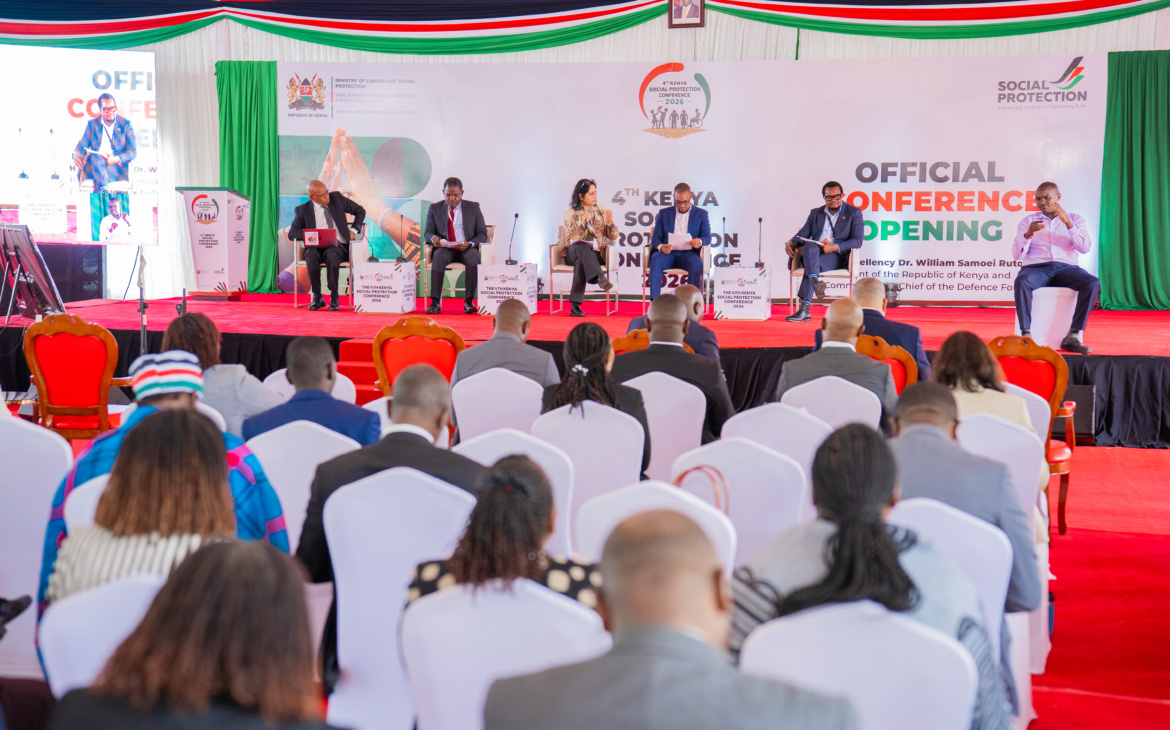
As Kenya expands Inua Jamii, plans a Social Protection Fund and prepares a national school meals programme, the government is seeking to shift social protection from short-term relief towards livelihoods, economic inclusion and resilience.
For years, Kenya’s social protection system has largely been understood in terms of the immediate assistance it provides to people facing poverty, disability, old age, and economic shocks.
But as climate shocks become more frequent, informal work continues to dominate the labour market and millions of households remain vulnerable to economic disruptions, the government is seeking to redefine what protection should mean.
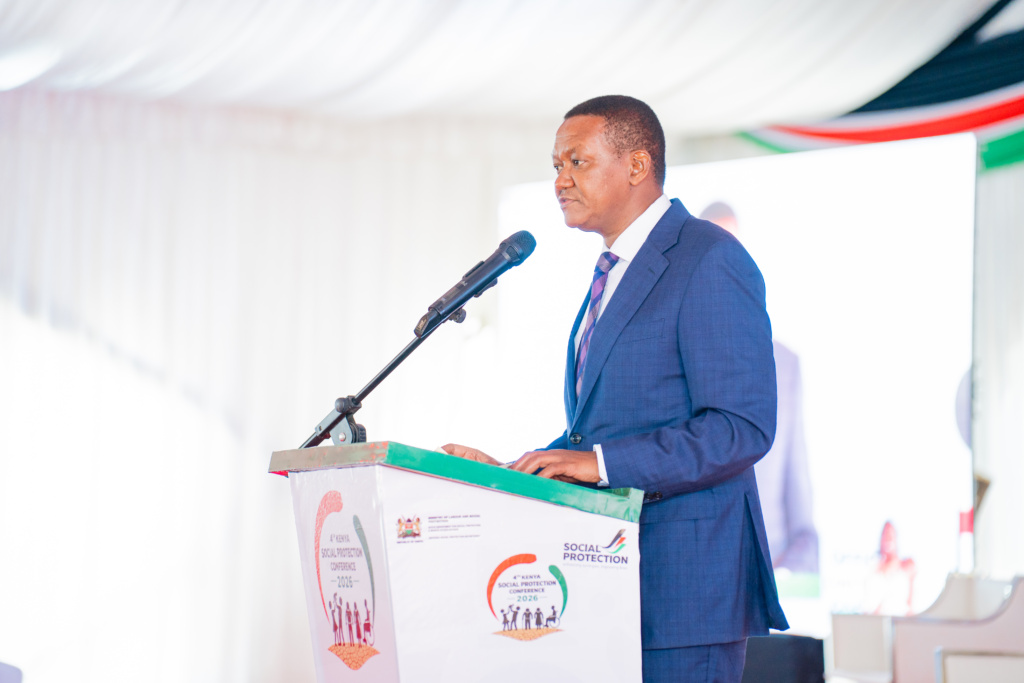
At the opening of the Fourth Kenya Social Protection Conference in Nairobi on September 29, Cabinet Secretary for Labour and Social Protection Alfred Mutua said the country needed to look beyond cash transfers and build systems that help households achieve economic security.
“Cash transfer, however well targeted, protects a household only for as long as the transfer lasts,” Mutua said. “The more durable form of protection, the one that outlasts any single programme, is livelihood sustainability.”
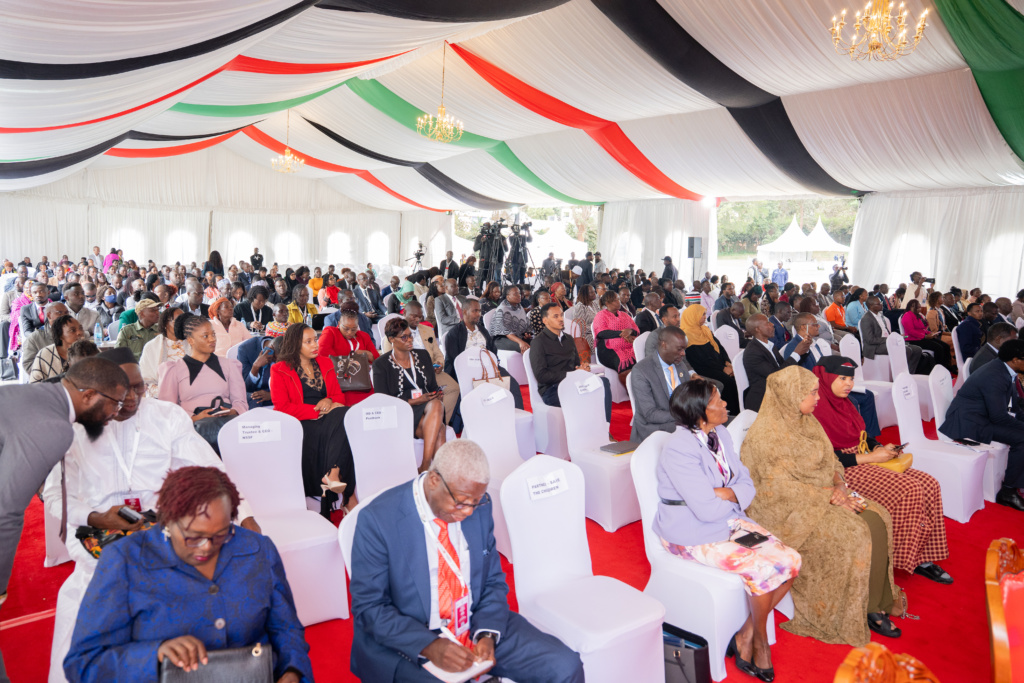
The conference, held under the theme “Re-imagining Social Protection in an Evolving Socio-Economic Landscape and Climate Change,” brings together government, county administrations, development partners, researchers, civil society and private sector actors to examine how Kenya can build a more adaptive and sustainable social protection system.
At the centre of the government’s plans is the proposed establishment and capitalisation of a Social Protection Fund, alongside an expansion of the Inua Jamii programme towards 2.5 million households.
The government currently spends more than KSh3.5 billion each month through various social protection programmes. Inua Jamii coverage has already expanded from 1.2 million to 1.7 million beneficiaries, bringing an additional 500,000 vulnerable Kenyans into the programme.
The next phase is intended to extend coverage further while protecting cash transfer allocations until eligible and vulnerable Kenyans are reached.
For beneficiaries, the way that support is delivered is also changing. Inua Jamii payments have shifted from commercial banks towards mobile money, particularly M-PESA, allowing older persons, people with disabilities and other vulnerable groups to access payments closer to their homes.
Yet the government’s broader message at the conference was that social protection cannot remain primarily about transferring money after a household has already fallen into hardship.
From protection to participation
Kenya’s labour market is central to that shift, as pointed out by the Kenya National Bureau of Statistics’ Economic Survey 2026, the economy created 882,100 jobs in 2025, with more than 80 per cent of those jobs generated in the informal economy. Some 18.1 million Kenyans now earn their livelihoods outside formal employment.
For Mutua, those numbers underline the need to expand social protection beyond traditional formal employment structures.
“The formal employment space is shrinking, and there is a need to tap into the informal economy which is growing steadily,” he said.
The Ministry has therefore developed a strategy to extend social protection coverage to rural and informal workers, including efforts to help workers save for old age and reduce their dependence on government support later in life.
The government has also directed the National Social Security Fund and Retirement Benefits Authority to accelerate the development of simple, portable savings products for informal workers, including boda boda riders, mama mbogas and jua kali artisans.
The approach is also reflected in the government’s youth economic inclusion programmes, as CS Mutua cited the NYOTA programme, which combines training, mentorship and business capital rather than treating assistance as a conventional cash transfer. On July 10, 2026, the programme disbursed KSh3.05 billion in business start-up capital to 122,203 young Kenyans across 18 regional clusters, according to the ministry.
“NYOTA is not a cash transfer. It is training, mentorship and capital, deliberately designed to graduate our young people from vulnerability into enterprise,” Mutua said.
This emphasis on economic participation is also reflected in the Kenya Social and Economic Inclusion Project (KSEIP), which supports early childhood nutrition, addresses adolescent vulnerabilities and strengthens economic inclusion while improving social protection registries and systems.
The results are already visible in some areas. National stunting among children under five has declined from 26 per cent in 2014 to 18.4 per cent, while KSEIP is supporting vulnerable households to participate more actively as entrepreneurs, farmers, workers and suppliers.
Disability, children and climate resilience
For persons with disabilities, the government says social protection investments have expanded considerably. Between the 2022/23 and 2025/26 financial years, KSh7.947 billion was allocated to programmes implemented through the National Council for Persons with Disabilities, of which KSh7.277 billion was disbursed and utilised.
More than 330,000 persons with disabilities were newly registered during the period, while beneficiaries of the Cash Transfer Programme for Persons with Severe Disabilities increased from 30,000 to 63,960.
The investments have supported access to social protection, education, assistive devices, economic empowerment, employment and specialised services.
The government is also preparing a national school meals programme that could further broaden the meaning of social protection.
The Ministry of Education, working with the Ministry of Labour and Social Protection, the National Treasury and other stakeholders, is expected to develop the policy, financing, governance and implementation framework for a phased national rollout beginning in the first school term of 2027.
The programme is expected to cover learners in lower primary, upper primary and junior secondary schools across all 47 counties, linking education and nutrition with social protection, agriculture, local economic development and employment.
Underlying these reforms is an attempt to make the system more responsive to shocks.
Droughts, floods and other climate-related events can rapidly push already vulnerable households deeper into poverty. The conference is therefore examining how social protection can respond before, during and after such shocks, including through stronger data systems, digital platforms, social registries and coordination between national and county governments.
Mutua described the ministry’s responsibility in broad terms: “to safeguard the Kenyan who has no cushion of their own, the older person, the orphaned child, the person with severe disability, the household struck by drought or flood or any other shock that may come.”
Kenya now has a stronger policy and legislative foundation on which to build that system. Developments over the past four years include the Social Protection Policy 2023, Persons with Disabilities National Policy 2024, Social Protection Act 2025, Persons with Disabilities Act 2025 and Social Protection Regulations 2026.
The challenge now is translating those frameworks into systems that reach people consistently, particularly those working outside formal employment and households exposed to climate and economic shocks.
For Kenya, the emerging model is therefore no longer simply about creating a safety net for people who fall through the cracks. It is increasingly about creating pathways through which vulnerable households can withstand shocks, participate in the economy and build livelihoods that reduce their dependence on emergency assistance.
As Mutua put it, the question facing the country is ultimately about the relationship between work and protection: “No vision for our country’s future can be credible unless it answers, plainly, how our people will work and how they will be protected while they do.”
Author Profile

-
Seeker.
Inspire AFRIKA.
Latest entries
 Biodiversity22 October 2026One in Five Tropical Biodiversity Sites Overlapped by Mining Concessions, COP17 Report Finds
 Biodiversity21 October 2026COP17 Opens in Armenia with Global Biodiversity Progress Under Scrutiny
 Biodiversity19 October 2026Yerevan Declaration Sets Tone for COP17 as World Leaders Demand Real Action on Biodiversity
 Changemakers19 October 2026How Earth Wise Storage Plans to Expand Smallholder Poultry Farming in Rwanda


