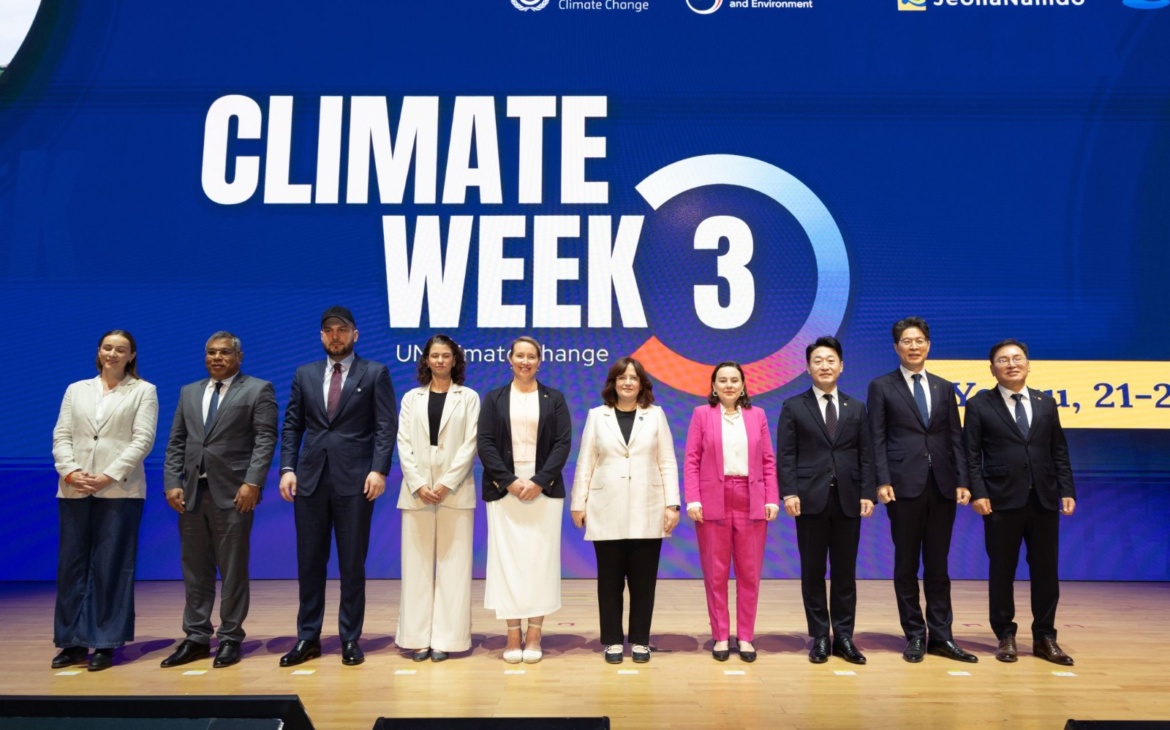
Years of climate pledges have produced an uncomfortable consensus: the world does not lack ambition, it lacks the architecture to act on it, as evidenced by the Climate Week 3 Meetings.
That diagnosis framed nearly every climate finance conversation at the UNFCCC’s Climate Week 3 (CW3) of 2026, held April 21–25 in Yeosu, South Korea. Convened under the theme “from dialogue to delivery,” the week brought together governments, development finance institutions, private investors, and subnational leaders to confront reality.
Looking into what has become the defining challenge of the post-Paris era, not the setting of targets, but their translation into investable, measurable outcomes on the ground.
The first Global Stocktake has made clear, as the COP31 Presidency noted in framing documents circulated ahead of the Implementation Forum, that “the primary challenge is no longer the level of ambition, but the implementation gap.”
A Missing Bridge
At the heart of the Yeosu finance discussions was a structural problem that has dogged climate negotiations for years. Since the Nationally Determined Contributions (NDCs) exist, the National Adaptation Plans (NAPs) exist; the question is, why don’t the climate funds’ existing flow at the speed, scale, or geographic distribution that implementation demands?
The COP31 Presidency, as part of its Action Agenda priorities, has begun developing what it describes not as a new climate fund or a replacement for existing coordination mechanisms, but as something more targeted.
It’s a mechanism designed to close what it terms a “missing bridge” in global climate governance, “the structural gap between identified political priorities and the actual deployment of capital.”
The concept, presented at the April 23rd, 2026, high-level session on financial and institutional mechanisms, is structured around three mutually reinforcing components: robust national architecture encompassing strategic diagnostics, capacity building, and digital infrastructure; project preparation focused on building bankable and investable pipelines; and finance design aimed at mobilising private capital at scale.
Together, the COP31 Presidency describes these as forming “an end-to-end implementation framework, connecting national strategies with concrete investments and results.”
Crucially, the mechanism prioritises what its architects call strict policy coherence, ensuring that NDCs, NAPs, and National Development Plans are not parallel documents but interlocking ones, with climate targets “inextricably linked to sovereign macroeconomic strategies and positioned as drivers of economic growth.”
It is an acknowledgment of something that practitioners in developing countries have long argued: that climate finance does not fail at the level of funds, but at the level of integration.
The session posed the question directly to panelists from the Asian Development Bank, the Green Climate Fund, and UNEP: “What are the primary enablers and structural shifts needed within the current financial ecosystem to transform NDCs into viable investment pipelines that unlock private and public capital at scale and drive concrete socio-economic outcomes?”
Subnational Access and the Bankability Problem
An impact dialogue on April 23, titled “Enabled and Investable: Multilevel Governance for Climate Delivery,” brought the same structural argument down to the level of cities, regions, and local authorities, where implementation ultimately lives or dies.
Discussions explored what participants described as “enabling conditions that strengthen subnational access to climate finance and investment readiness,” and how national green finance strategies can be translated into “bankable local climate project pipelines.”
The session raised pointed practical questions: what single adjustment to fiscal arrangements or coordination roles would most improve national-subnational climate delivery?
Though how are subnational governments currently assessing whether a climate project is “bankable”, and which tools, among blended finance, guarantees, and credit enhancements, are most realistic in their contexts?
The Stockholm Environment Institute’s Wanaporn Yangyuentham contributed to the dialogue on cross-level coordination, reflecting a broader recognition at CW3 that the governance challenge is as significant as the financial one.
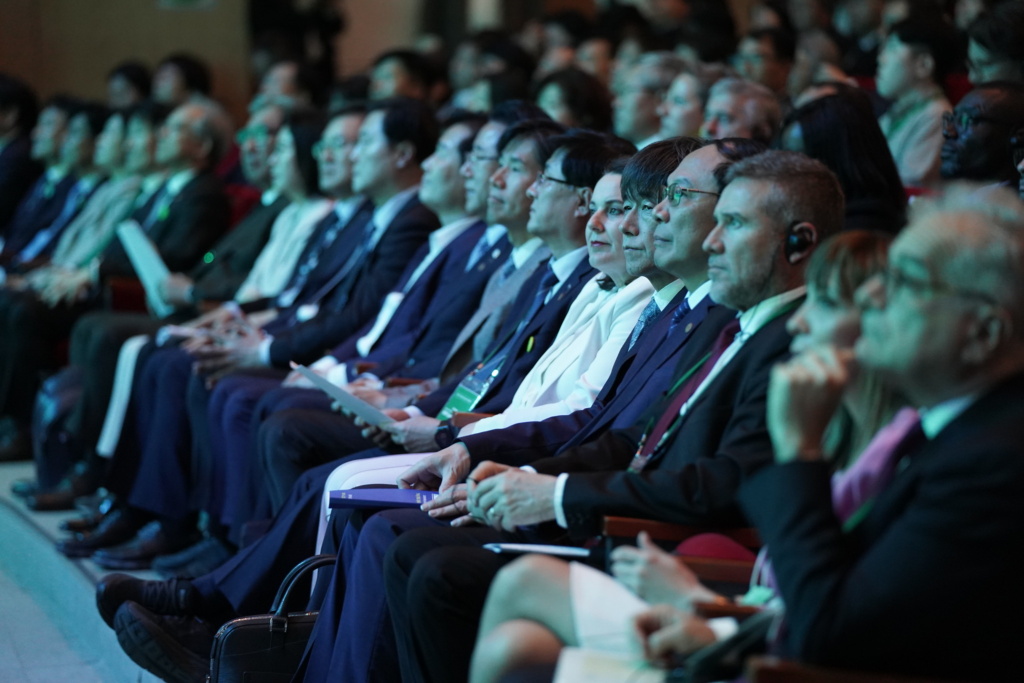
Capital will not reach communities if the institutional pathways between the national strategy and the local project are broken or absent.
A dedicated session on April 24 explored practical tools for NDC financing: fiscal measures, debt-related instruments, risk-sharing arrangements, and market-based solutions calibrated to national contexts.
The framing was deliberately pragmatic, less about headline commitments and more about the specific mechanisms through which public finance can crowd in private capital in environments where risk perception remains a persistent barrier to investment.
CW3 Reflects on Adaptation: The Underfunded Frontier
If the energy transition has at least attracted the interest of private capital, adaptation finance remains the more intractable challenge, and Yeosu gave it unusual prominence.
Participants worked to “refine and prioritize practical options” for closing the adaptation finance gap, with explicit emphasis on country-driven application and experimentation rather than standardised top-down instruments.
At Climate Week 3 in Yeosu, government representatives and partners came together for a peer exchange workshop to share experiences on NDC implementation.
Some of the approaches highlighted to advance implementation were: Strengthening whole-of-government coordination through interministerial platforms, aligning sectoral plans, national budgets, and investment strategies with NDC targets, developing pipelines of bankable projects to finance climate priorities, and embedding inclusive processes, engaging youth, civil society, Indigenous Peoples, and local communities across NDC cycles.
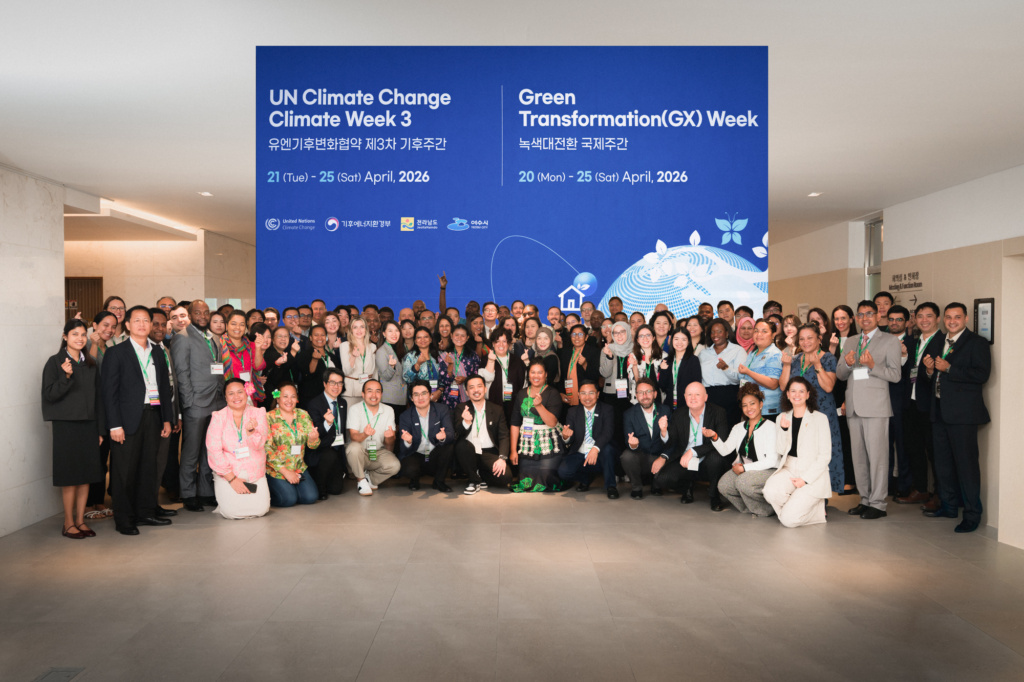
One of the sessions built on processes initiated at the 2025 Nairobi Work Programme gatherings and was oriented toward identifying non-conventional financing pathways suited to the specific vulnerability profiles of different countries and regions.
The stakes were given a human dimension by Ayan Harare, Somalia’s National Climate Finance Coordinator, who described climate finance as “a key national priority” for her country, one demanding increased access, equity, and effective delivery to support resilience.
For Somalia, and for a wide arc of similarly exposed nations across the Global South, the adaptation finance gap is not an abstraction. It is the difference between managed risk and compounding crisis.
Carbon Markets and the Architecture of Private Capital
Alongside the public finance sessions, the parallel K-GX Green Transformation Week featured discussions on the broader ecosystem of instruments through which climate investment can be mobilised at scale.
Hereby, the blended finance models, green bonds, and the architecture of risk de-risking were recurring themes.
The launch of a Global Voluntary Carbon Market during the week drew attention as a mechanism for directing private capital toward credible emissions reductions and removals. Even though practitioners noted that the instrument’s value will depend heavily on the integrity standards and governance frameworks applied to it.

The Global Green Growth Institute and other multilateral partners consistently stressed that the path from ambition to outcome requires turning political commitments into what they called “tangible and bankable actions.”
A move possible through multilateral collaboration, Article 6 mechanisms, and investment vehicles that can be operated at the country level without prohibitive transaction costs.
What Yeosu Demonstrated
Climate Week 3 did not resolve the climate finance gap, as no single gathering could, but it demonstrated, with some clarity, where the international community now locates the problem.
The debate has moved on from the question of whether wealthy nations will honour their finance commitments, a question that dominated earlier COPs and remains unresolved, to the deeper structural issue of how any climate finance, once available, can be converted into results that are implementable, investable, and measurable.
The COP31 Presidency’s “missing bridge” framing captured the mood: the gap is not primarily between rhetoric and resources, but between resources and the institutional architecture needed to deploy them effectively.
As the concept note for the week’s flagship finance session put it, “a critical gap remains in translating national climate commitments into implementable, investable, and measurable outcomes.” Closing that gap, the discussions in Yeosu suggested, will require not more pledges, but better plumbing.