
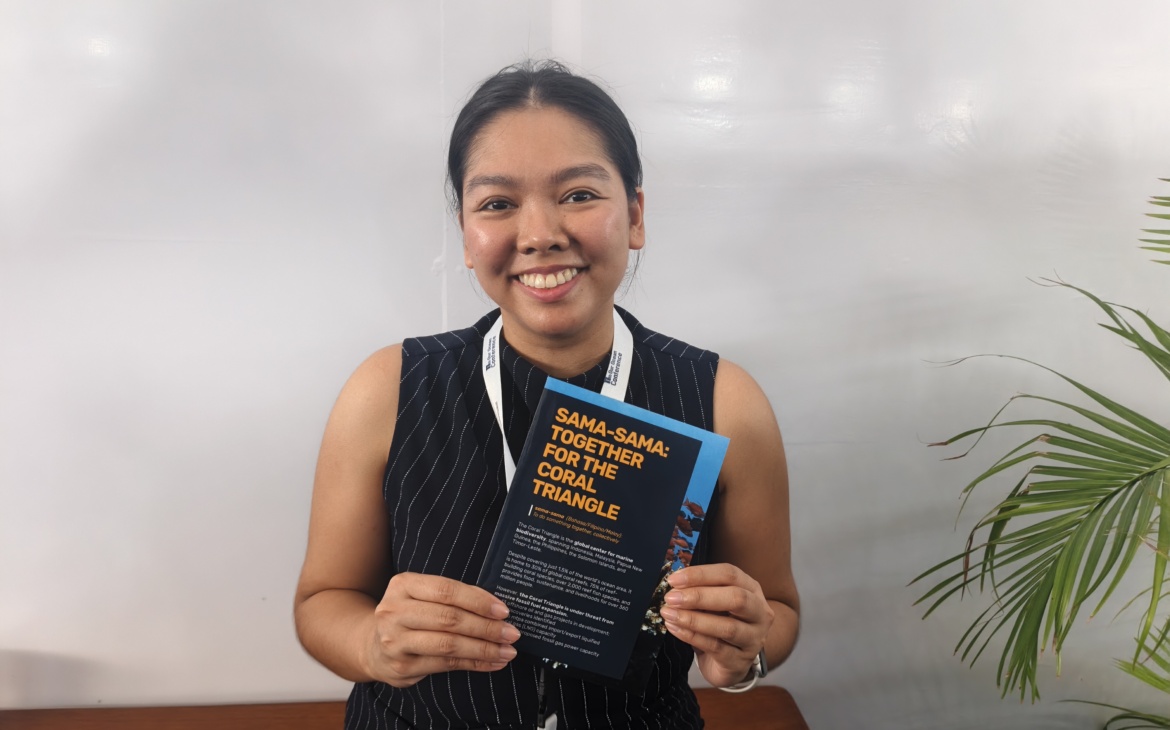
At the 11th Our Ocean Conference, where governments and civil society convened to shape the future of marine protection, a voice from Southeast Asia shifted the conversation beyond plastics, illegal fishing and ocean finance.
Angelica Dacanay of the Center for Energy Ecology and Development (CEED) issued a stark warning: the ocean crisis cannot be fully understood without confronting the role of fossil fuels.
She pointed to the world’s most biodiverse marine region as a case in point.
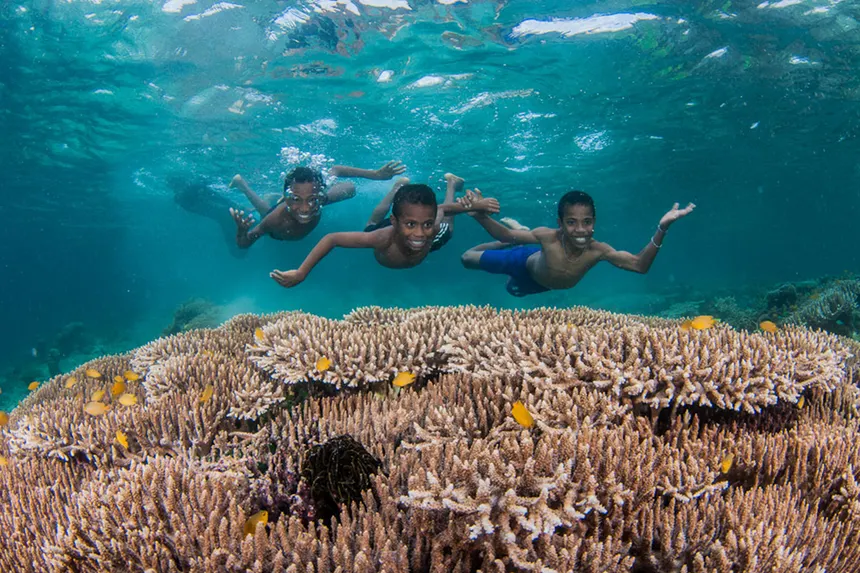
“The Coral Triangle is actually the global epicenter of marine biodiversity,” she said. “It currently holds 30% of the world’s coral reefs.”
The Coral Triangle spans the archipelagic waters of Southeast Asia and is widely recognized as the richest marine ecosystem on Earth.
It supports more than 2,000 reef fish species and some of the planet’s most complex coral reef systems. Yet, according to Dacanay, this ecological treasure is increasingly under pressure from expanding fossil fuel development across the region.
That tension, she warned, is unfolding in plain sight.
A biodiversity hotspot under pressure
Dacanay describes the Coral Triangle not only as a centre of marine life, but as a lifeline for millions of people.
“About 70% of that is reef-building species, meaning it spawns fish and gives life to the oceans,” she explained, referring to coral systems that sustain fisheries and coastal ecosystems.
In Southeast Asia’s archipelagic geography, where thousands of islands depend directly on marine resources, oceans are not a distant environmental concern but the foundation of daily survival.
“Being an archipelagic region, Southeast Asia is built on many, many islands, which means the lives of the people depend on the oceans, the sea, the water,” she said.
Fishing communities, coastal livelihoods, and food systems are tightly interwoven with the health of coral reefs. Any disruption to marine ecosystems, she argues, is therefore not only an environmental issue but a socio-economic one.
That dependence is what makes emerging threats in the region particularly alarming.
While ocean governance discussions often centre on plastic pollution, illegal fishing, or maritime security, Dacanay says a deeper driver of ecological degradation is being sidelined: fossil fuel expansion.
Over the past decade, Southeast Asia has seen what she describes as a “dash for fossil gas,” including liquefied natural gas (LNG) infrastructure and new offshore energy projects.
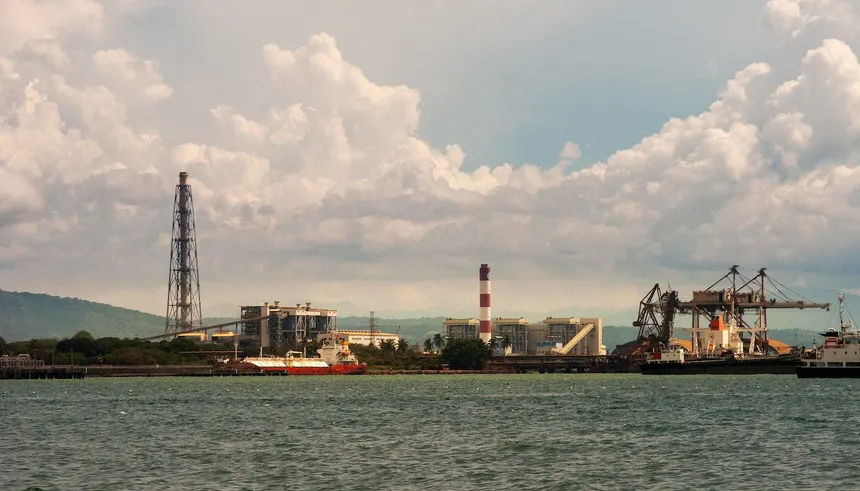
“There have been a lot of projects that are being proposed and currently operating in terms of fossil gas power plants that are constructed along the coastlines,” she said.
These developments include LNG import and export terminals, coastal gas plants, and an expanding network of offshore oil and gas blocks.
According to Dacanay, this is not a marginal trend. It is a structural shift reshaping coastal zones across the Coral Triangle.
“There are also a lot of oil and gas blocks prepared to be opened up, and there are currently around 100 that are operating across the Coral Triangle.”
For her, the concern is not abstract. It is spatial and immediate: infrastructure placed directly within fragile coastal ecosystems.
“This affects, degrades marine ecosystems, and of course impacts coral reefs, the fisheries, and the livelihoods of many people,” she said.
The expansion of fossil fuel infrastructure along coastlines introduces risks ranging from habitat destruction to pollution and long-term ecosystem stress, pressures that compound existing climate and environmental challenges.
A missing conversation at global ocean talks
At the 11th Our Ocean Conference, Dacanay noted that many commitments were made on marine protection. However, she believes a critical gap persists in the global conversation.
“I think our oceans conference needs to recognize also the other threats to the oceans,” she said.
While issues such as illegal, unreported and unregulated fishing (IUU), shipping impacts, and plastic pollution feature prominently in discussions, fossil fuels are rarely addressed in the same space, she argued.
“I know there’s been a lot of discussions on IUU, illegal fishing, shipping as well, plastic pollution, but I think that we need to talk about also the threat of fossil fuels.”
Even where the topic appears, it remains peripheral.
“I know someone will have a side event on fossil-free oceans later this afternoon, but beyond that, there’s very limited space openly talking about fossil fuels as a threat to the oceans.”
For Dacanay, this omission represents a policy blind spot, one that risks undermining broader ocean conservation efforts.
At its core, her argument is simple: ocean protection cannot be separated from energy systems.
Beyond transition rhetoric: a call for justice
The question of fossil fuels, however, is not only about environmental harm but also about how transitions are managed.
Dacanay is careful to distinguish her position from calls for abrupt shutdowns. Instead, she emphasizes a just and structured transition.

“We don’t want to cut it off on one day. We need to transition,” she said. “There will be people who depend on the jobs of fossil fuels and others.”
The challenge, she argues, is ensuring that the shift away from fossil fuels does not reproduce new forms of inequality or economic harm.
“We need a just transition… but rapid in transitioning away from fossil fuels,” she added.
In her view, this transition must also be integrated into ocean governance discussions, rather than treated as a separate climate issue.
“Talking about oceans is not only about climate but also about the livelihoods of the people,” she said. “This has to be approached in a very holistic way.”
Renewable futures and energy democracy
While Dacanay is critical of fossil fuel expansion, she is equally focused on solutions emerging within the region.
She points to Southeast Asia’s renewable energy potential and the growing role of decentralized systems as an alternative pathway.
“Talking about solutions in Southeast Asia, we are a very renewable-rich country,” she said, referencing the Philippines specifically.
Among the alternatives she highlights is decentralized renewable energy, systems that allow communities to generate and manage their own power.
“Decentralized renewable solutions… empower people to have their own energy solutions, energy democracy,” she explained.
For Dacanay, this is not just a technical shift but a political and social one. It challenges centralized fossil fuel models that, in her view, concentrate risk and environmental harm along vulnerable coastlines.
She contrasts this with LNG expansion and gas infrastructure, which she sees as locking communities into long-term dependency on polluting systems.
A Global South perspective on ocean protection
Dacanay reflects on the broader significance of voices from Southeast Asia participating in global ocean discussions held far from home.
“Being here in Africa, it gives more sense of community that a lot of people are coming together to protect the oceans.”
Her message is ultimately one of shared responsibility across the Global South, regions that depend heavily on marine ecosystems but often have limited influence in global policy design.
“People from the Global South like us need to come together and protect the oceans,” she said, calling for stronger collective advocacy.
“Fossil fuels are a big threat to the oceans, and this needs to be discussed in these kinds of conferences.”
It is a statement that, in her view, should not remain on the margins of ocean diplomacy, but at its centre.
Read Also: 11th Our Ocean Conference: Can Kenya Lead Africa’s Shipping Transition?


