
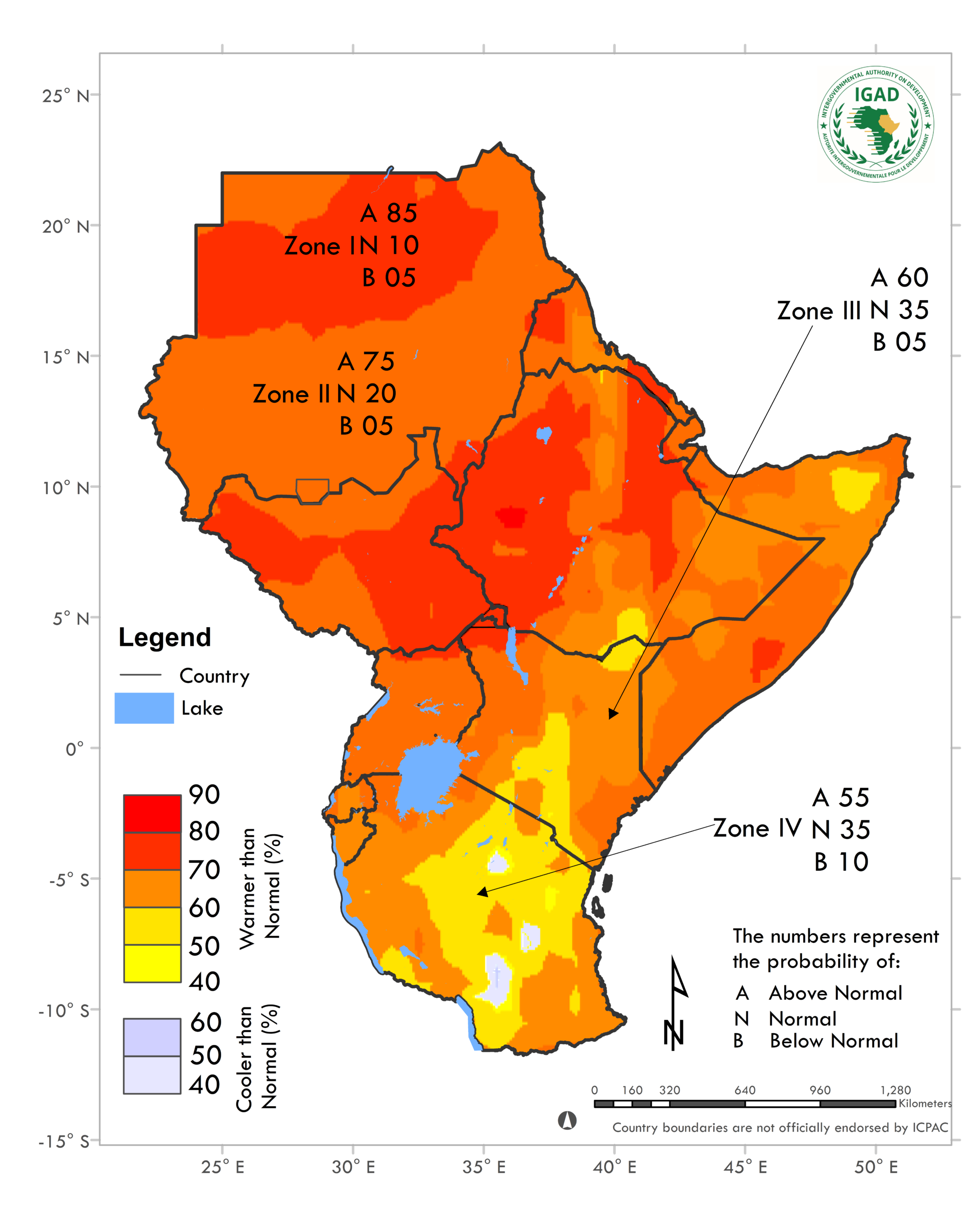
Much of the Greater Horn of Africa is expected to experience below-normal rainfall and warmer-than-average temperatures during the June to September (JJAS) 2026 rainfall season, raising concerns over food security, water availability, livestock production, and energy generation across the region.
The seasonal outlook was released during the 73rd Greater Horn of Africa Climate Outlook Forum (GHACOF 73) by the IGAD Climate Prediction and Applications Centre together with National Meteorological and Hydrological Services (NMHSs), the World Meteorological Organization, and regional partners.
According to the outlook, most parts of the Greater Horn of Africa, where the JJAS season is a major rainfall period, are likely to record below-normal rainfall, particularly across South Sudan, Uganda, Ethiopia, Djibouti, much of Eritrea, Sudan, and western and coastal Kenya.
However, isolated areas in northern Sudan, southeastern Ethiopia, and parts of southern and northern Somalia are expected to receive above-normal rainfall. Some parts of northern Sudan, southern coastal Somalia, and coastal Kenya are projected to experience near-normal rainfall conditions.
The forecast further indicates a likelihood of delayed rainfall onset in parts of South Sudan, Ethiopia, and southern Sudan, while a few localized areas in north-central Ethiopia and central Sudan could experience near-normal or earlier-than-usual onset of rains.
Temperatures across much of the region are also expected to remain above average during the season. The highest probabilities of warmer-than-normal conditions are projected over northern Sudan, most parts of South Sudan, and Ethiopia, with very low chances of below-average temperatures across the region.
Climate experts noted that the evolving 2026 climate conditions closely resemble those experienced during the strong El Niño years of 1997 and 2023. During both years, several parts of Ethiopia, South Sudan, Uganda, and western Kenya recorded below-normal rainfall during the June–September season, similar to conditions currently forecast for 2026.
The comparison with previous El Niño years offers useful guidance for preparedness and anticipatory action, although forecasters emphasized that the current seasonal outlook remains the primary reference for planning and decision-making.
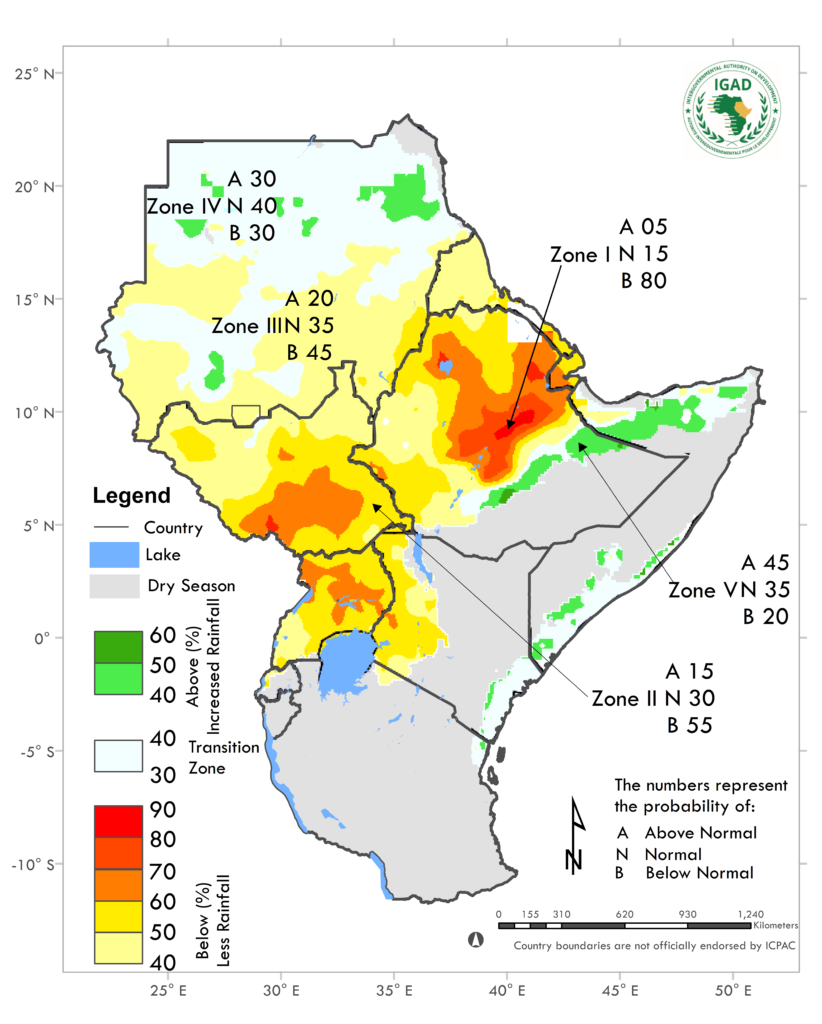
The anticipated dry conditions could have significant implications for rain-fed agriculture, water resources, livestock systems, hydropower generation, public health, and regional food security, particularly in already climate-vulnerable areas.
Stakeholders across the region have therefore been encouraged to use the forecast and related advisories to strengthen early action, disaster preparedness, and climate-informed planning.
ICPAC said it will continue providing regular regional climate updates, while NMHSs are expected to issue country-specific forecasts and advisories.
Speaking during the opening of GHACOF 73, H.E. Mohamed Abdi Ware emphasized the importance of linking climate information to practical preparedness measures across the region.
“Across the region, we are increasingly shifting the conversation from ‘early warning’ to ‘early warning linked to anticipatory action,’ recognising that climate information must ultimately support action and preparedness to make a difference.”
Meanwhile, Fetene Teshome called for sustained investment in climate services and regional cooperation to strengthen resilience across the Greater Horn of Africa.
“We must continue to invest in and expand systems capable of generating knowledge-based, user-tailored climate information at both the national and regional levels.”


