In Machakos County, a young Environmental activist and farmer, Muindi Maingi, has been struggling to time his community’s suitable fruit tree planting season with the erratic rains, a plight that youth face. For years, critical information about seasonal performance, the kind that could make or break his efforts, was made available in forums where he and his peers had no seat.
That has now changed, as from the latest 72nd Greater Horn of Africa Climate Outlook Forum (GHACOF 72), youth were formally included in the deliberations for the first time, marking a quiet but consequential shift in how climate and agriculture decisions are being made in the region.
For years, these forums have shaped decisions that ripple across farms, food markets, and rural livelihoods, aimed at building resilience. Yet the generation that will inherit these systems has largely remained on the margins.
This move, anchored in a joint initiative by the Intergovernmental Authority on Development Climate Prediction and Applications Centre (ICPAC) and the Alliance for a Green Revolution in Africa (AGRA), seeks to change that by placing young people at the center of climate-resilient agrifood systems.
Across the Greater Horn of Africa, agriculture remains the backbone of rural economies and a major employer of young people. Yet, many involved in farming and agribusiness operate with limited access to climate information, finance, or the policy spaces that shape the sector, a disconnect that has often left them reacting to climate shocks rather than anticipating them.
ICPAC and AGRA’s partnership seeks to close that gap by reframing youth not as passive beneficiaries, but as essential actors in planning and implementation.
According to Kindie Tesfaye, head of climate adaptation and resilience at AGRA, young people are a powerful force on the continent. “It’s essential that they are fully engaged and involved in these discussions to foster action,” he says.
The initiative recognises what youth already bring to the table: innovation, community mobilization, policy advocacy, and the ability to translate climate information into locally relevant action. What has been missing, the programme notes, is the institutional support to unlock that potential.

“Climate services entail a whole value chain in which young people are set to benefit extremely through job creation and opportunities for roles they can partake in across the whole chain,” added Kindie.
Youth Frontline Climate Services That Reach the Young Farmer
To build resilience, the initiative is taking a multi-pronged approach: building capacity, empowering youth and women, and delivering targeted climate services directly to those who need them.
One of the programme’s core pillars is improving youth access to tailored climate services that directly support climate-resilient agriculture and green job creation. In countries including Kenya, Ethiopia, Rwanda, and Uganda, ICPAC and AGRA are working with National Meteorological and Hydrological Services and Ministries of Agriculture to integrate youth into existing agricultural extension systems.
For young farmers and agripreneurs, access to timely and usable climate information can mean the difference between profit and loss. Seasonal forecasts help guide planting decisions, while early warnings reduce losses from extreme weather.
The program is deliberately targeting youth within these systems to ensure that climate intelligence does not stop at institutions, but reaches fields, cooperatives, and emerging agribusinesses.
As pointed out by Charity Sammy, a Food Security Specialist at ICPAC, the youth are not just the leaders of tomorrow; they are active drivers of climate action today.
“By engaging them in platforms like GHACOF 72, we unlock a powerful force for policy change, green entrepreneurship, and jobs that will define a sustainable region,” said Charity.
Beyond Service Delivery: Building Youth Voice and Platforms
Beyond service delivery, the programme places a strong emphasis on voice and visibility. Plans are underway to establish a regional Youth in Climate and Climate-Resilient Agrifood Systems Coalition, which will bring together youth-led organizations working at the intersection of climate and agriculture.
This coalition of youth will serve as a structured bridge to national, regional, continental, and international institutions, creating opportunities for dialogue, mentorship, and advocacy in policy forums, such as GHACOF itself.
Complementing this effort is the development of a youth co-designed digital platform to support collaboration, peer learning, and resource sharing across the region. Innovation is also being encouraged through regional hackathons, where young innovators collaborate to co-develop digital solutions for climate services delivery. The goal is clear: make climate tools as accessible and engaging as a smartphone app.
This digital knack is already evident. Youth innovator Kaara Waithaka from Kajiado County described how he and his peers partnered with the Kenya National Library Services.
“We are placing live trees in the libraries, then inputting a QR code which, if scanned, offers details about the tree. A part of an initiative they are doing in Ololua Forest at Kajiado County with propagation of seedlings,” he explained.
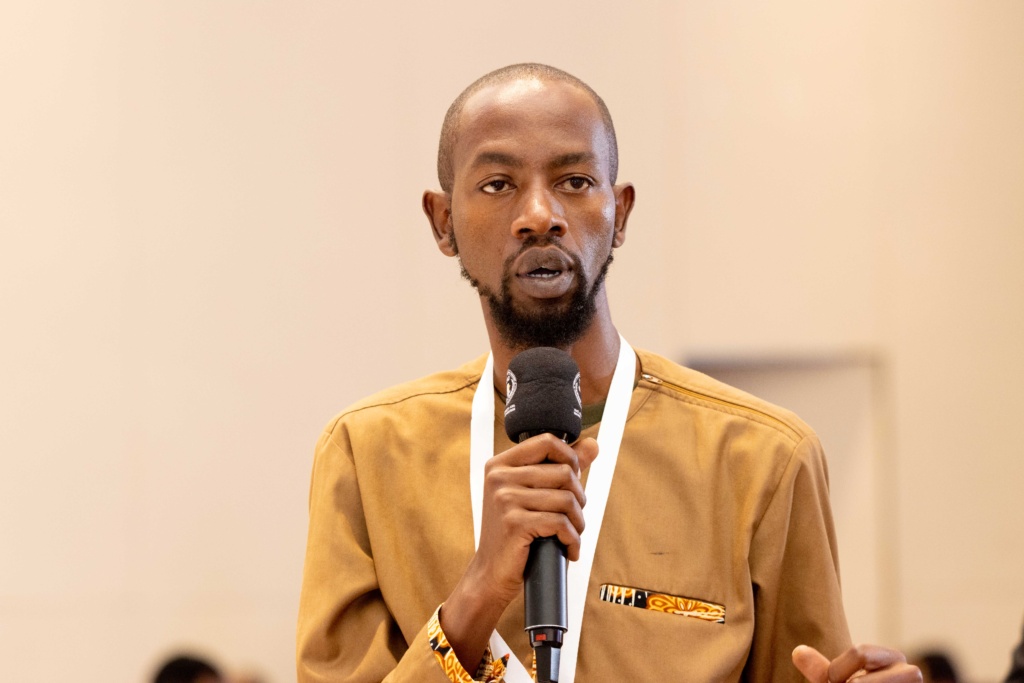
“The data includes where the tree grows best and its benefits across the value chain.” This kind of digital innovation, applied to species selection and education, is exactly the creativity the programme aims to harness for climate adaptation.
Training for Resilience on the Ground
At the farm level, the initiative moves from dialogue to practice. In Kenya and Uganda, young farmers are being trained in Participatory Integrated Climate Services for Agriculture (PICSA), a hands-on method that blends scientific forecasts with traditional farming knowledge to create locally relevant plans.
Through this process, they co-produce Seasonal Agricultural Planners that guide decisions across the farming calendar. A training-of-trainers model ensures continuity, allowing youth to pass skills on within their communities.
Muindi Maingi, who leads the Greening Mua Environmental Initiative in Machakos, lauded the move to involve youth as key players, not just attendees. “I thank AGRA and ICPAC for making this possible,” he said.

“Attending this forum enabled me to showcase our regeneration work. This is a great step, and I’ll share these forecasts with my team so we can reschedule the fruit tree planting to a later time.”
Youth inclusion at GHACOF may not come with dramatic headlines, but its implications are far-reaching. By opening the doors of climate outlook forums to young people, ICPAC and AGRA are helping align climate science with the lived realities of the generation that will inherit the region’s agrifood systems.
As climate risks intensify across the Greater Horn of Africa, the future of agriculture will depend not only on better forecasts but on who has access to them, and who is trusted to act on them.
Bringing youth to the climate table signals a recognition that resilience is not built by institutions alone, but by informed, empowered communities, led by those who will farm, innovate, and advocate long into the future.