
|
Getting your Trinity Audio player ready...
|
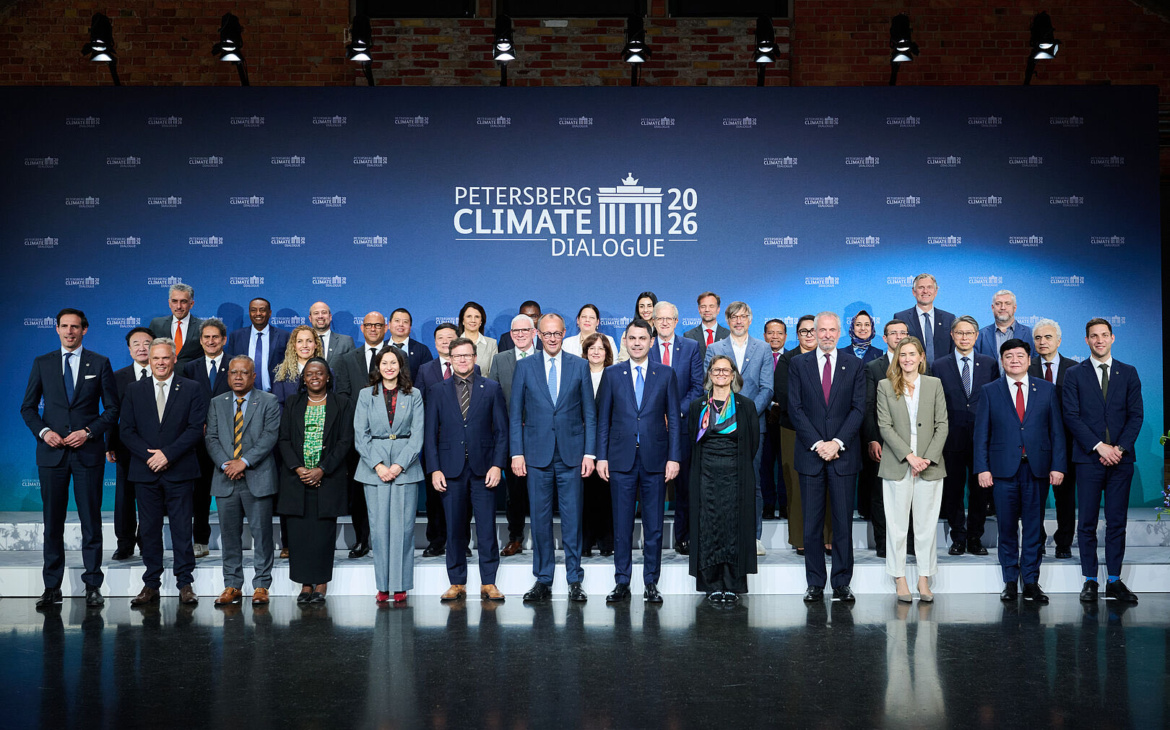
Ministers from forty countries gathered in Berlin last week for the first major climate meeting of 2026. What they said, and what they signalled they will do before November, will shape the road to COP31.
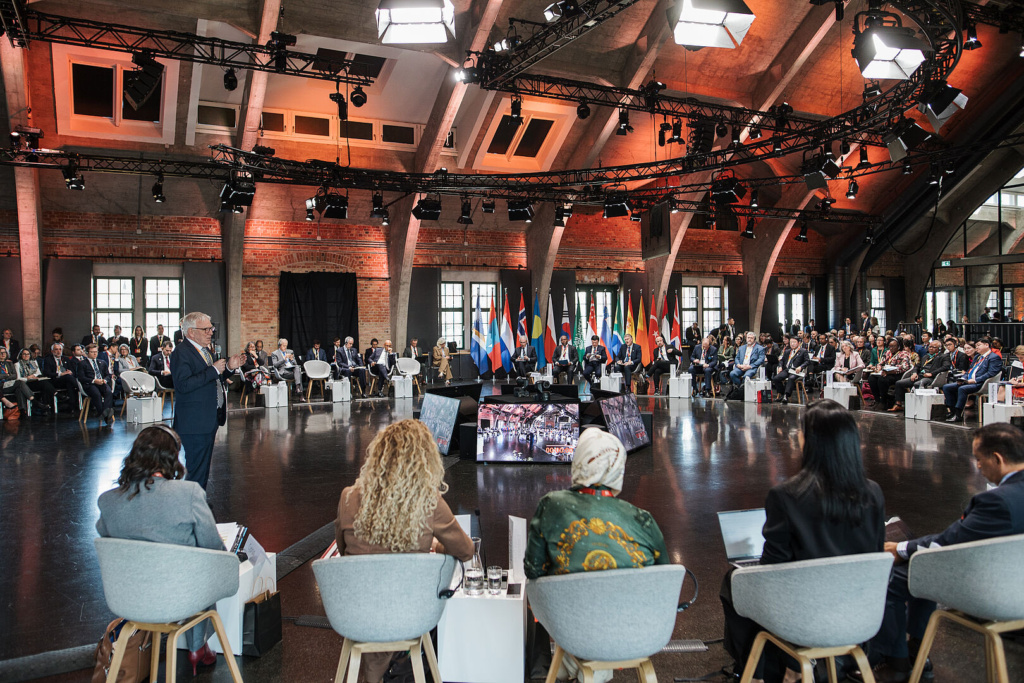
Something is fitting about the Petersberg Climate Dialogue being held in Westhafen since Berlin’s old industrial waterfront, with its brick warehouses and canal-side cranes, which stands as a reminder of the economy the world is now trying to move beyond.
Although this year’s meeting carried unusual weight as it marked the first major climate ministerial of 2026 and the first joint appearance of the incoming COP31 Presidency of Türkiye and Australia’s lead negotiators, outlining priorities ahead of the summit in Antalya, seven months away.
The context sharpened the urgency as the climate indicators continue to trend in the wrong direction. Notably, the renewed conflict in the Middle East has rattled global energy markets, reinforcing a central argument that dominated discussions in Berlin: dependence on fossil fuels is not only an environmental liability, but a strategic and economic risk.
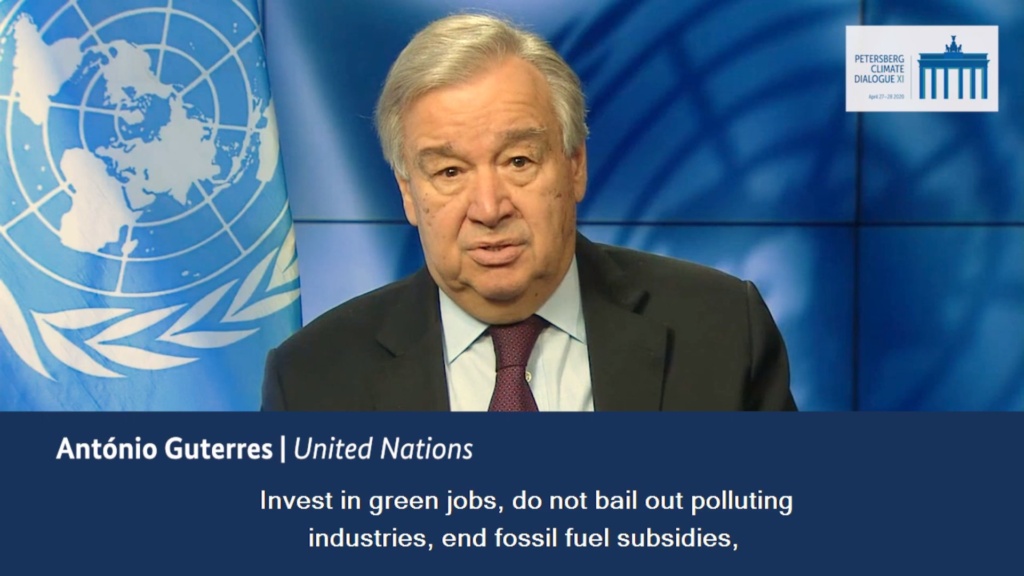
From the outset, UN Secretary-General António Guterres set that tone, clearly pointing out that the conflict in the Middle East has triggered the most severe energy crisis in a generation. In a video address, Antonio Guterres emphasizes that fossil fuels are not just wrecking our planet; they are holding economies hostage.
The fossil fuel reframe
The language used in Berlin was deliberate, with ministers and officials repeatedly referring to a “fossil fuel crisis,” not simply an “energy crisis,” which suggests a shortage that can be solved by increasing supply. A fossil fuel crisis identifies the source itself as the problem.
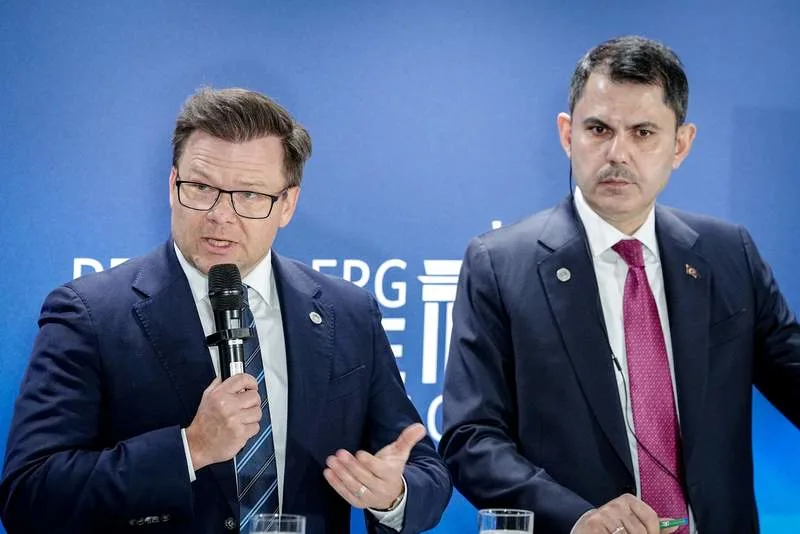
Germany’s Environment Minister Carsten Schneider urged that it should be clear to everyone that the crisis is a fossil fuel crisis, as fossil fuels do not offer the security of supply that is so urgently needed by people, businesses, economies, and global supply chains.
“Those who rely on importing oil and gas today are exposing themselves to incalculable risks, yet the renewable energy sources, on the other hand, are secure energies,” said Carsten.
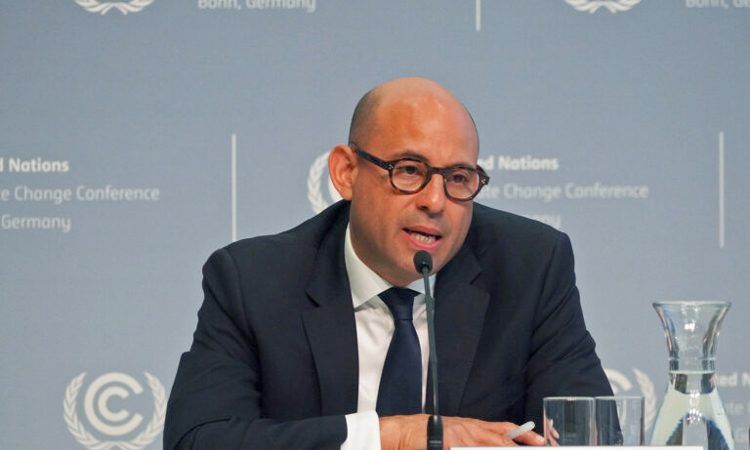
UN Climate Change Executive Secretary Simon Stiell extended the argument, linking climate risk directly to economic instability as he said that climate cooperation is key to fending off the twin threats of global heating and fossil fuel cost volatility.
“On the other hand, clean energy offers security and affordability, returning sovereignty to nations and their peoples,” he said.
Guterres pointed to investment trends as evidence that the shift is already underway, considering that the global clean energy investment reached $2.2 trillion last year, roughly double the amount directed to fossil fuels.
“Homegrown renewables are the cheapest, fastest, and most reliable source of new power,” he said. “They deliver what fossil fuels never can: real and lasting energy security.”
From ambition to delivery
If one word defined the closed-door ministerial sessions, it would indeed be delivery, since the Paris Agreement, now a decade old, has, as per the Global Stocktake, clarified how far current national commitments fall short of limiting warming to 1.5°C.
Berlin was not the forum to quantify that gap, but it was where ministers aligned on a more pressing point that remains that around 2026, it cannot be another year of ambition without implementation.
Schneider addressed the pace directly, revealing that the energy transition is well advanced and cannot be stopped; rather, it should be embraced. “It’s important that we need to pick up the pace and do even better, because our planet continues to heat up,” said Shneider.
Discussions focused on updating nationally determined contributions, accelerating the phase-out of fossil fuels, tripling renewable energy capacity, and doubling energy efficiency. A central concern was how to translate Global Stocktake commitments into concrete, investable projects.
German Chancellor Friedrich Merz added a note of political realism that resonated across delegations. “A transformation that leads to deindustrialisation will not find acceptance among the people, and will eventually hamper innovation,” he said. “Climate policy that is multilateral, ambitious, and effective earns public support while keeping our economies competitive.”
Finance and the Global South
If there was one area where alignment remained fragile, it was climate finance, with ministers’ reflections on the implementation of the New Collective Quantified Goal agreed at COP29, which saw an emphasis on scaling adaptation finance and improving access for developing countries, least developed countries, and small island states.
The challenge is not only the volume of finance, but its accessibility and terms, since while private capital has increasingly been directed toward the energy transition, the gap between commitments and actual flows to the Global South, on workable terms, remains wide.
For many developing countries, Berlin was a test of whether major economies are prepared to match rhetoric with political and financial commitment in a more fragmented geopolitical environment.
Looking ahead, the Pre-COP in Fiji offers an opportunity to elevate Pacific priorities and strengthen coalitions around adaptation as a central pillar of climate action before negotiations formally begin in Antalya.
Examples from countries further along the transition, such as Ethiopia’s high share of renewable energy, were highlighted as proof of what is possible with sustained support.
What Berlin leaves behind
The Petersberg Climate Dialogue produces no formal outcome document. Its influence lies in the signals it sends. As the first major climate ministerial of 2026, it helps shape the trajectory toward the June climate meetings in Bonn and, ultimately, COP31 in Antalya.
By that measure, the signals from Westhafen were cautiously constructive.
The reframing of fossil fuels as a systemic risk gained traction. The case for renewables as a source of energy security found broad, if not universal, alignment. Finance, as ever, remained the most contested frontier.
Guterres closed with a message that doubled as a warning, as he reminded us that we would rather not repeat the failures of the past, or we can unleash the renewables revolution, but make the right choice.
Schneider, in turn, directed his appeal at the process itself, adding that there is a need for multilateralism to be alive and deliver results. “Let’s set the course together for a successful COP31,” he added.
As much as Berlin does not decide outcomes, it was seen that it also rarely resolves disagreements. What it does is clarify where the lines are being drawn and how far governments may be willing to move.
The course toward Antalya is now set. Whether it holds, through domestic politics, market shocks, and competing global crises, will determine not just the success of COP31, but how much room remains for the climate system to absorb delay.


