
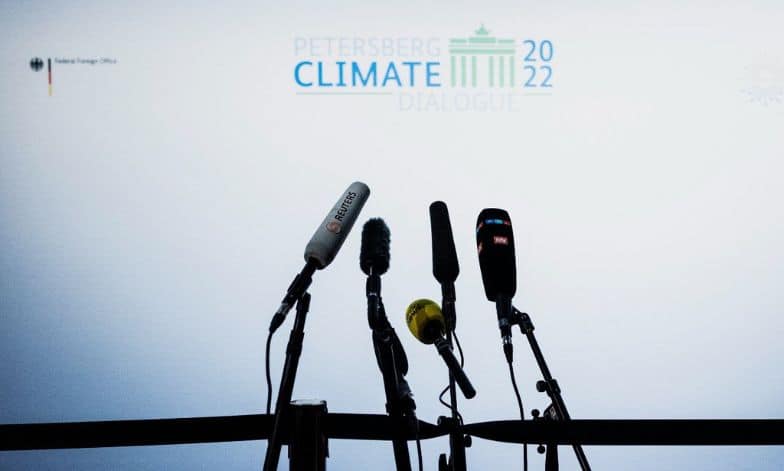
Before the world’s nations reach agreement at annual UN climate summits, they spend a few days in Berlin trying to understand one another. In a convening renowned as the Petersberg Climate Dialogue, here is a sneak peek into how it started, and why it matters.
Every November, the world watches as delegates from nearly 200 countries crowd into vast conference centres to negotiate the future of the planet’s climate. The United Nations Framework Convention on Climate Change(UNFCCC) or Conference of the Parties (COPs) process is formal, appears exhausting, and often runs days past its scheduled close.
What fewer people see is the quieter gathering that takes place earlier each year, a two-day ministerial meeting in Berlin where trust is built. Here, positions are tested before the cameras arrive, with deliberations and affirmations made, that is, the Petersberg Climate Dialogue.
After seventeen editions, it has become one of the most consequential forums in international climate diplomacy, yet most people have never heard of it or know little to nothing about it.
Born from failure
The Petersburg Climate Dialogue’s origins are inseparable from one of climate diplomacy’s most dire and crucial moments. It was initiated in the aftermath of the near-collapse of negotiations at the 2009 United Nations Climate Change Conference (COP15) in Copenhagen.
Led by the German Chancellor Angela Merkel, who sought to repair the breakdown in communication between leaders and environment ministers, as we recall, Copenhagen had promised much, especially for the most vulnerable.
This would lead up to the first meeting held in April 2010 at the Hotel Petersberg, near Bonn, the seat of the UN climate secretariat, which gave the Dialogue its name, although subsequent meetings would move to Berlin.
From early on, the Petersburg climate meeting was not designed as a negotiation since there would be no binding text, no voting, and no formal outcome documents. Instead, selected representatives would meet informally to explore positions, test ideas, and speak candidly without committing to fixed stances.
The aim was simple: create space for frank conversation where formal diplomacy had faced challenges in navigating and getting to a consensus.
How the Petersberg Climate Dialogue works
Each year, Germany hosts the meeting and co-chairs it with the country set to preside over that year’s COP, and this year’s COP31 is set to go down at Antalya, in Turkey. This structure gives the incoming COP Presidency an early, informal platform to outline priorities, test its agenda, and begin building the coalitions it will need months later.
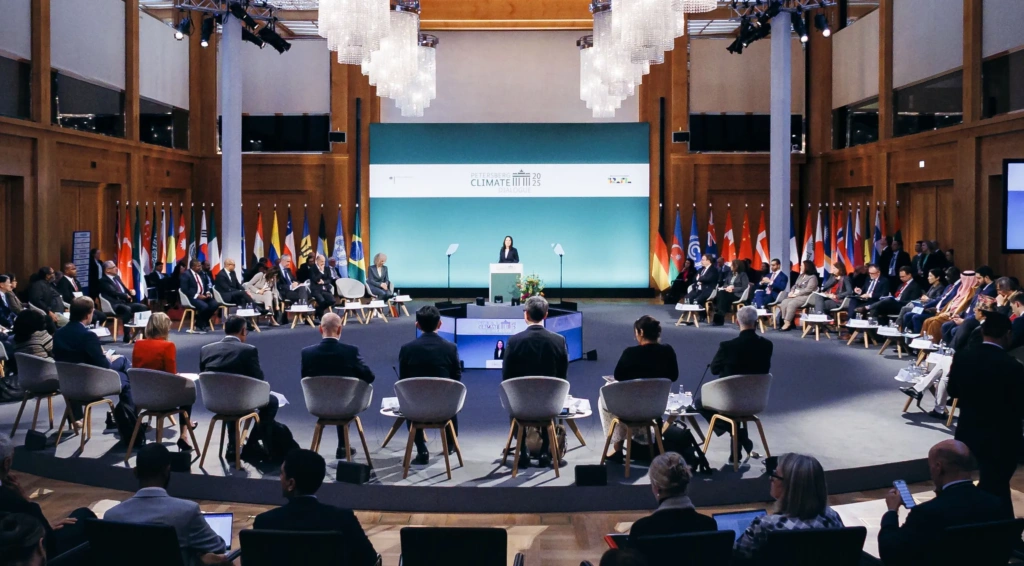
Ministers from over 40 countries attend, alongside representatives from civil society, science, finance, and industry, amounting to approximately 400 participants who actively take part.
Closed-door ministerial sessions form the core of the Dialogue, complemented by side events, bilateral meetings, and stakeholder discussions that extend the conversation beyond the main room.
The guest list is deliberately curated to bring together representatives of the most climate-vulnerable nations, including small island states and least developed countries, alongside the major G20 economies.
The combination is made rare by placing ministers with vastly different stakes in the same room, often without the constraints of formal negotiating scripts.
Notably, the lead-up to the Paris Agreement in 2015, the sixth Petersberg Climate Dialogue helped shape key elements of the process. Participants aligned on the need for countries to submit their climate contributions in advance, increase ambition toward the two-degree limit, and strengthen support for developing nations.
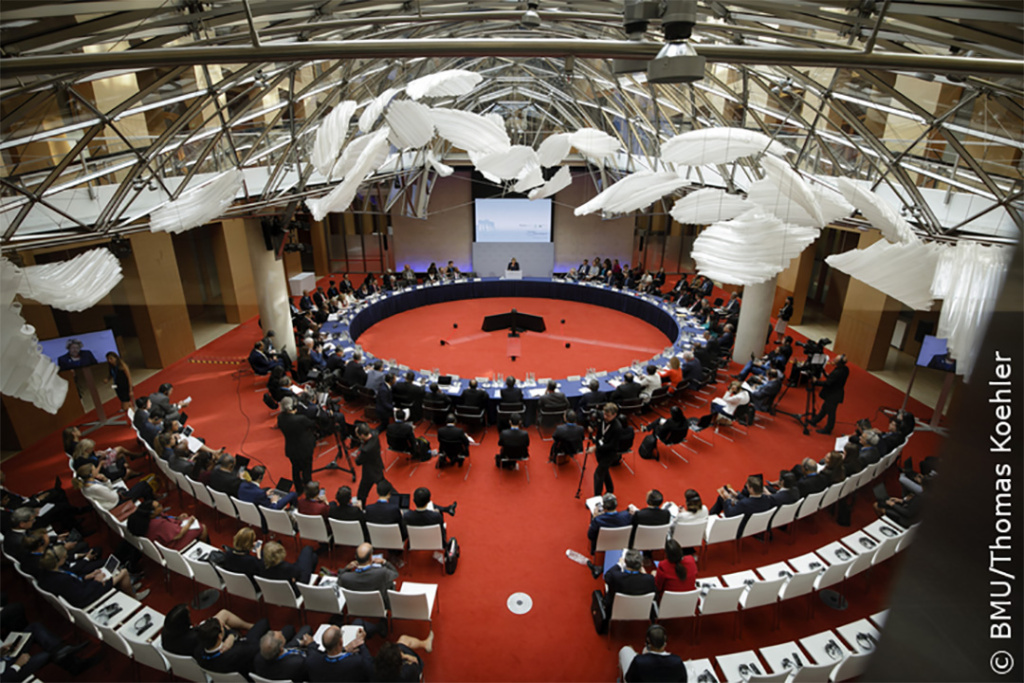
While no formal decisions were taken in Berlin, the informal convergence of positions helped lay the groundwork for what later became the architecture of the Paris Agreement.
The Dialogue proved its value again during the pandemic when, in 2020, ministers met virtually for the first time, keeping the climate process active despite the collapse of global summitry. That year also expanded stakeholder participation, a format that has since remained part of the Dialogue.
What the Petersberg Climate Dialogue cannot do
It is important to be clear about the Dialogue’s limits, understanding that it is precisely informal, and it produces no binding commitments; hence, positions aired in Berlin do not obligate governments.
Recognizing that the ministers might signal flexibility in April, only to return to harder positions by November its apparent that the Dialogue sets tone, not policy. Neither can it substitute for political will.
As ministers themselves have acknowledged, the science points to a narrowing window to contain global warming, and no amount of dialogue alters the underlying arithmetic of emissions. Reflecting on the geopolitics, we realize that ambition built in Berlin must still survive domestic politics, economic pressures, and competing national interests.
Why it still matters
What the Petersberg Climate Dialogue does, consistently, is create the conditions in which agreement becomes possible as it reduces misunderstanding before negotiations harden into positions.
It allows trust to form where formal processes often produce distance, as it gives political leaders a rare space to test compromise before it becomes public.
In a system as complex and adversarial as international climate diplomacy, outcomes are rarely made in the spotlight. They are shaped, quietly, in rooms like this, long before the final gavel falls.
Despite the Petersberg Climate Dialogue not deciding the future of climate action, year after year, it helps determine whether agreement will be within reach when the world finally sits down to negotiate it.


