
The African Great Lakes Region holds some of the world’s most sought-after critical minerals, including cobalt, copper, tantalum and lithium, making it central to the global transition to clean energy; hence the vitality of the International Conference on the Great Lakes Region (ICGLR) in the region. Deliberations amongst diverse regional stakeholders reveal that for decades, these same resources have also fuelled conflict, illicit trade and insecurity, particularly in the eastern Democratic Republic of the Congo (DRC).
For the International Conference on the Great Lakes Region (ICGLR), changing that narrative has become one of its defining missions. Established in 2006, the ICGLR was created in response to years of regional instability that followed the 1994 Rwandan genocide and recurring conflicts in the DRC.
Recognising that insecurity, displacement and the illegal exploitation of natural resources easily crossed borders, African leaders, with support from the African Union and the United Nations, formed the regional bloc to promote peace, security, stability and sustainable development.
Its foundation is the Pact on Security, Stability and Development in the Great Lakes Region, a legally binding agreement that guides cooperation on peacebuilding, governance, economic development and humanitarian action among its 12 member states: Angola, Burundi, the Central African Republic, the Republic of the Congo, the Democratic Republic of the Congo, Kenya, Rwanda, South Sudan, Sudan, Tanzania, Uganda and Zambia.
Today, the organization is headquartered in Bujumbura, Burundi, and is chaired by DRC President Félix Antoine Tshisekedi Tshilombo, with Dr. Mubita Luwabelwa serving as Executive Secretary.
While the ICGLR’s work spans conflict prevention, democratic governance, regional integration, humanitarian affairs and environmental cooperation, responsible natural resource governance has become increasingly important as demand for critical minerals continues to rise worldwide.
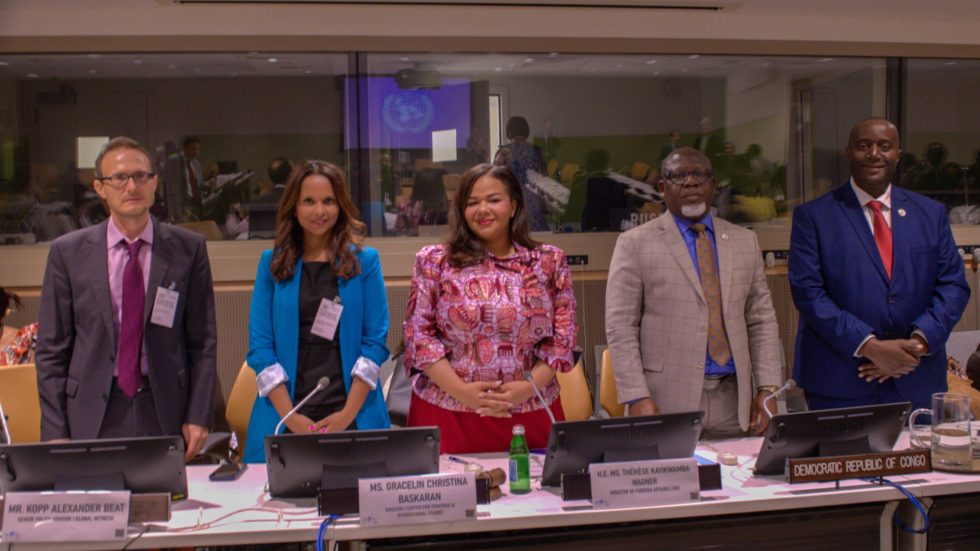
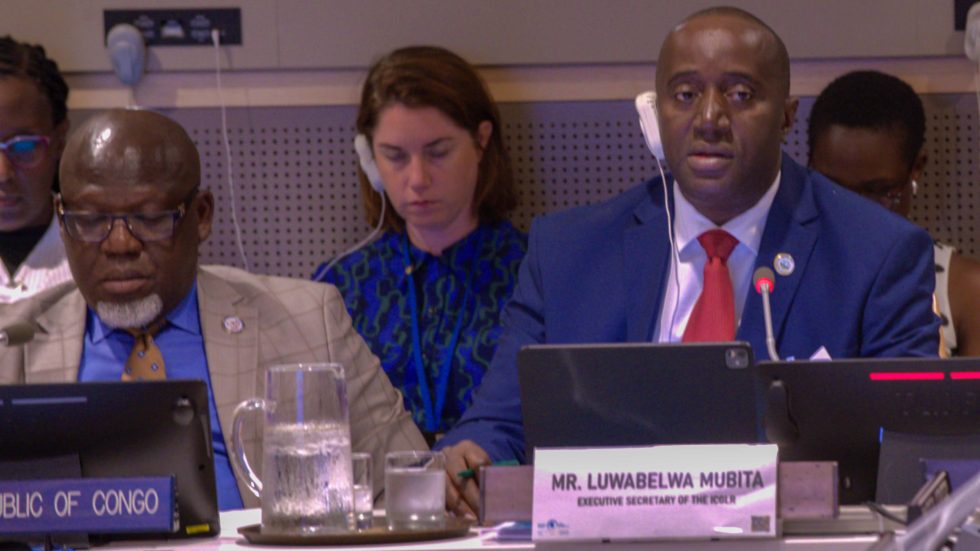
That agenda was brought into sharp focus on July 20 when Dr. Luwabelwa addressed a United Nations Security Council Arria-formula meeting titled “Diagnosing the Normative Gap Linking Natural Resources and Peace: Foundations and Perspectives.” Convened during the DRC’s presidency of the Security Council, the meeting explored how natural resources can either finance armed conflict or support lasting peace when governed responsibly.
Addressing representatives of UN member states, regional organizations and international experts, Dr. Luwabelwa called for stronger regional and international cooperation to ensure the Great Lakes Region’s mineral wealth becomes a driver of peace, security and sustainable development.
“The Great Lakes Region is home to more than 440 million people and possesses a combined GDP of over US$520 billion. Our critical minerals should not be remembered as drivers of conflict, but as engines of industrialization, regional integration and shared prosperity,” he said.
Central to that ambition are two regional instruments developed by the ICGLR: the Regional Initiative against the Illegal Exploitation of Natural Resources (RINR) and the Regional Certification Mechanism (RCM).
For more than 15 years, these frameworks have helped improve mineral traceability, strengthen transparency and encourage cooperation among member states to reduce the illegal trade in minerals that often finances armed groups.
According to Dr. Luwabelwa, the challenge is no longer the absence of regional frameworks but ensuring they are fully implemented. “For more than fifteen years, the ICGLR has been building the regional architecture for responsible mineral governance. Today, the challenge is no longer whether the framework exists, but how we strengthen its implementation,” he told the meeting.
Despite progress, illegal mineral trade, cross-border smuggling and weak enforcement continue to undermine both peace and economic development. To address these challenges, the Executive Secretary urged governments and development partners to strengthen accountability, expand digital mineral certification systems and deepen cooperation among regional institutions, industry and international organizations.
He also stressed the need to move beyond exporting raw minerals by investing in regional value addition. Processing minerals closer to where they are extracted, he argued, would create jobs, support industrialization and allow countries across the Great Lakes Region to capture more value from their natural resources.
Evidence presented during the meeting suggests that stronger governance is already delivering measurable results. In areas where responsible mineral governance has been effectively implemented, interference by security forces has fallen by 27%, while the presence of government regulators has increased by 58%, strengthening oversight of mining activities.
Dr. Luwabelwa further called for closer collaboration between the ICGLR, the United Nations, governments, civil society and the private sector to reinforce due diligence, improve information-sharing and combat the illegal exploitation and trade of natural resources.
His intervention reflects the ICGLR’s broader evolution over nearly two decades, from an organization primarily focused on resolving regional conflicts to one increasingly positioning responsible resource governance as a cornerstone of peacebuilding and economic transformation.
The stakes continue to grow as global demand for minerals critical to batteries, renewable energy technologies and electric vehicles accelerates.
For the Great Lakes Region, these resources present a unique opportunity to drive industrial development, strengthen regional integration and improve livelihoods. Yet without transparent governance and effective regional cooperation, they risk continuing to finance instability.
For the ICGLR, the goal is clear: ensure that the region’s mineral wealth is no longer defined by conflict but by its contribution to peace, shared prosperity and sustainable development across one of Africa’s most resource-rich regions.
Author Profile

-
Seeker.
Inspire AFRIKA.
Latest entries
 Corporate15 October 2026Water, Sanitation and Digital Learning at the Centre of Garissa School Upgrade
 Agriculture14 October 2026Africa’s Food Systems Future Depends on Listening to Farmers
 Weather Forecasts13 October 2026Rain and Rising Temperatures Forecast Across the Greater Horn of Africa
 Climate9 October 2026Beyond Negotiations: Africa Expects Concrete Outcomes from Antalya


