
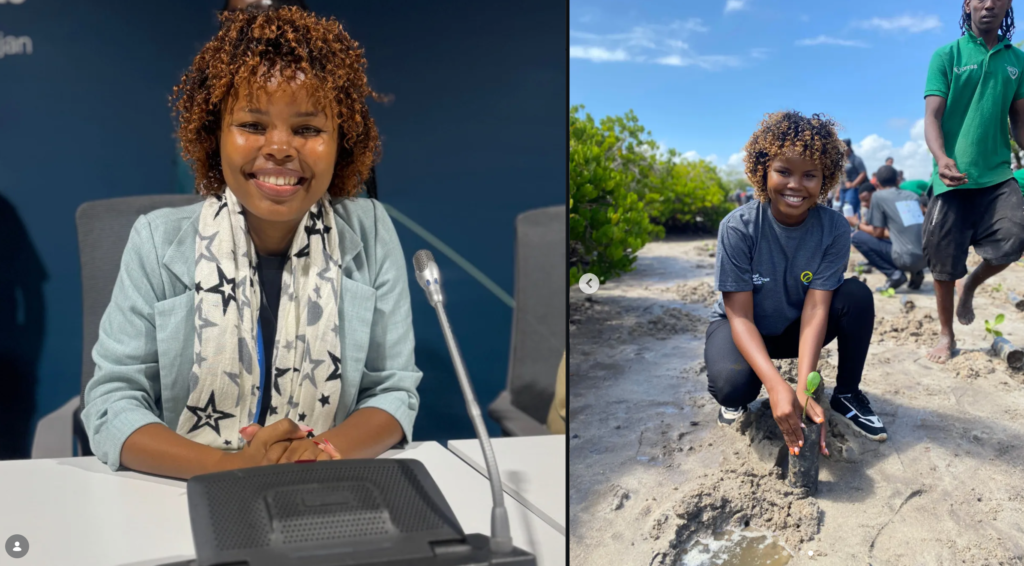
Standing inside the sprawling negotiating halls of COP28 in Dubai, surrounded by diplomats speaking the language of climate finance, adaptation targets and global negotiations, Dorcas Wakio Mugo felt completely out of place.
It was her first-ever climate conference, and the language of the room, dense with policy terms and negotiating jargon, was nothing like the world she came from.
“I was so like, blank,” she recalls, “because I was more of like, we’re planting mangroves, we’re giving the children pads, that’s all.”
That gap, between the technical language of global climate diplomacy and the daily, hands-in-the-mud work of restoring a mangrove forest, is exactly the space Mugo has spent her career trying to close.
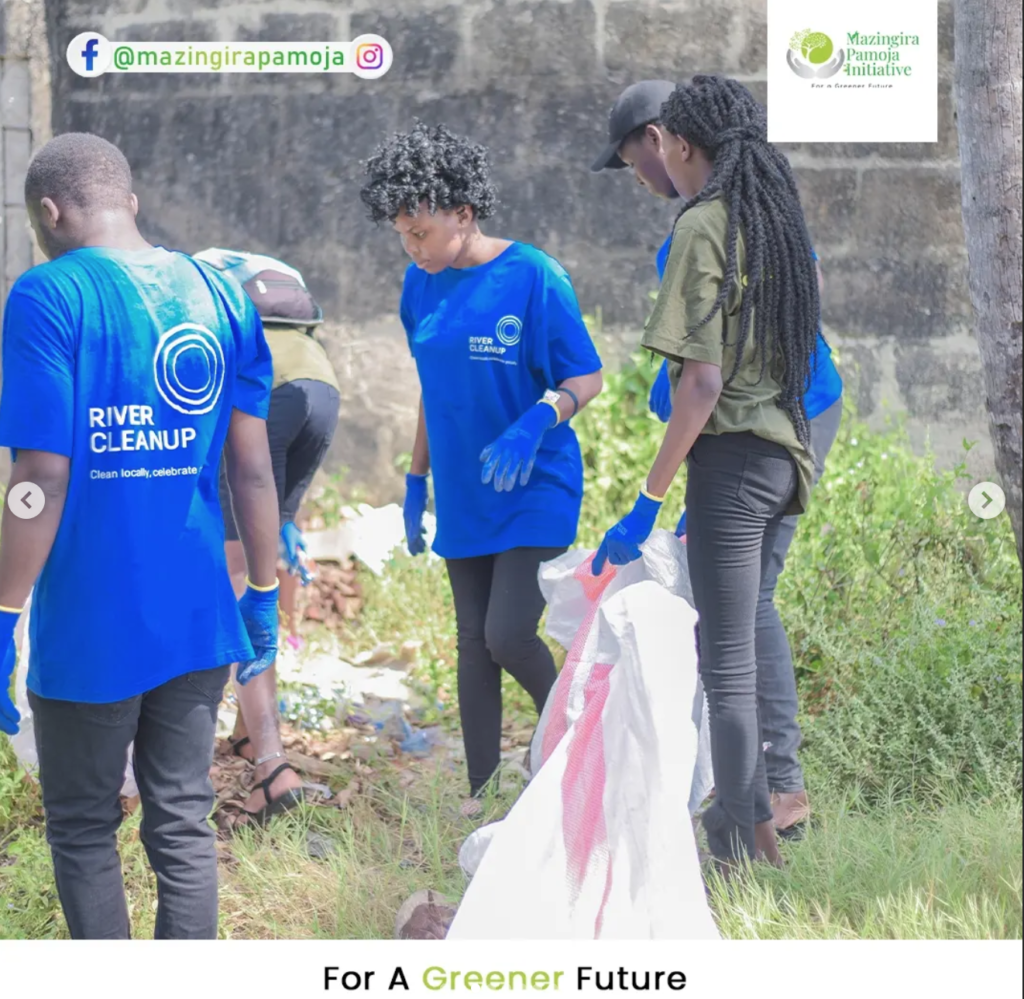
Today, at 27, she is a marine scientist and the founder of Mazingira Pamoja Initiative (MPI), a community organisation based in Kwale County on Kenya’s south coast. MPI works with 48 indigenous women on Funzi Island on mangrove restoration, and is now branching into beekeeping as an additional livelihood stream.
Mugo’s path into environmental work began, as it does for many changemakers, in a university lecture hall. While studying for a bachelor’s degree in marine resource management, she watched the threats facing marine ecosystems play out in her coursework, and felt she could not simply observe from the sidelines.
“I saw the need to add my voice and be a part of the solution,” she says.
The turning point came when her university’s Vice Chancellor asked the marine class to help organise World Environment Day. Mugo joined the planning committee and, for the first time, felt what she describes as a sense of belonging in environmental work. Out of that experience, she and four classmates decided to formalise their shared interest into something that could outlast their degree.
“We were like, how can we come together, share our ideas, different backgrounds, and form a working youth group that can help us even after campus,” she says. That five-person study group became the seed of what is now Mazingira Pamoja Initiative.
Building Mazingira Pamoja Initiative on Funzi Island
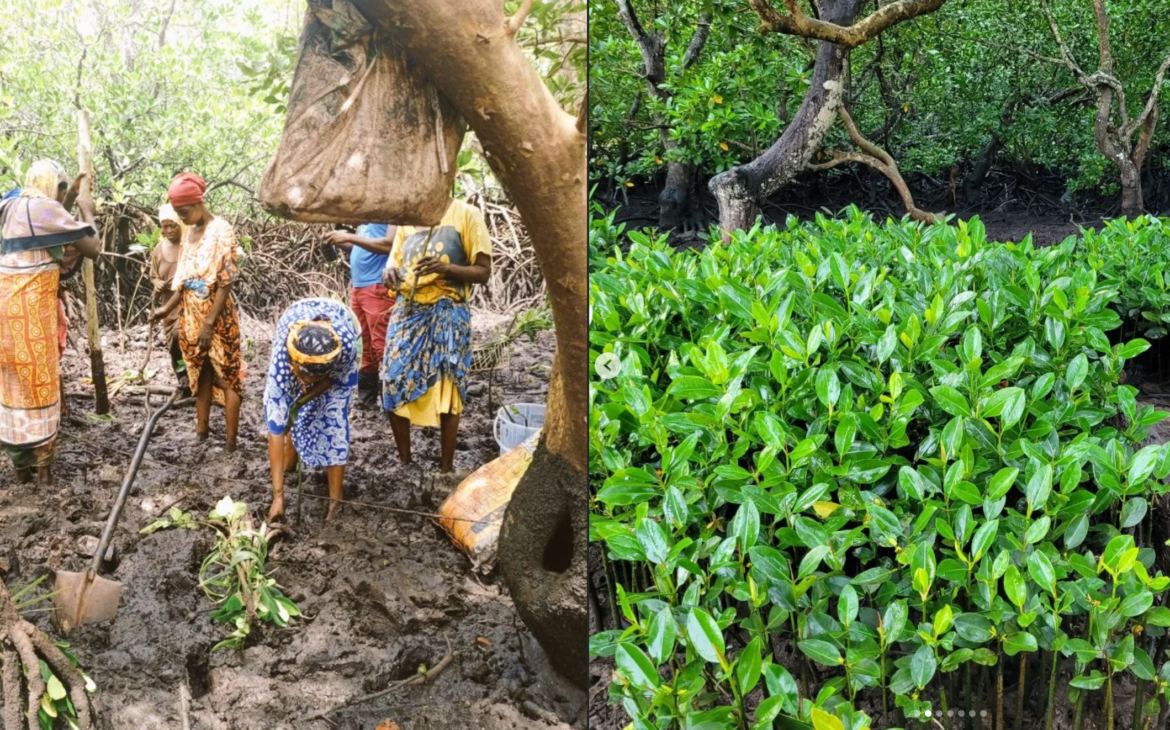
MPI’s work is rooted in Funzi Island, where the organisation partners with 48 indigenous women on mangrove restoration, an ecosystem that anchors coastal livelihoods, protects shorelines, and stores carbon.
MPI’s work is rooted in Funzi Island, where the organisation partners with 48 indigenous women on mangrove restoration, an ecosystem that anchors coastal livelihoods, protects shorelines from erosion, serves as a nursery for fish and marine life, and stores significantly more carbon than many terrestrial forests.
Together, the women have helped restore up to 20 hectares of degraded mangrove ecosystem, demonstrating how community-led conservation can strengthen both biodiversity and local livelihoods.
The group is now expanding into beekeeping, giving the women an additional income stream that does not depend on cutting down the very mangroves they are working to protect.
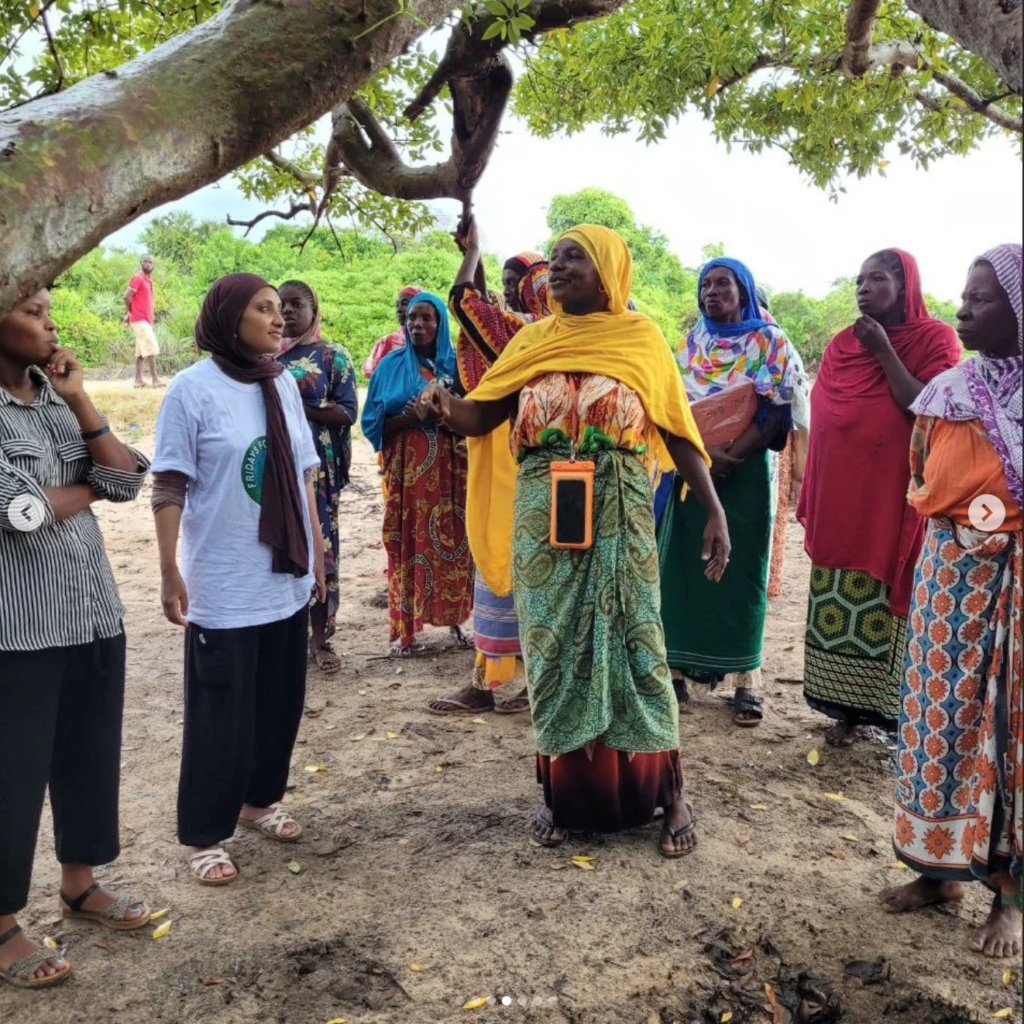
For Mugo, the logic is straightforward: communities with alternative livelihoods have fewer reasons to exploit the ecosystems they depend on, making conservation and economic resilience mutually reinforcing.
Mugo’s exposure to conference spaces started small and local, at Kenya Wildlife Service and Kenya Forestry Service meetings she attended during her university attachment.
The scale shifted dramatically when she attended the first Africa Climate Summit in Nairobi, which she describes as a turning point for the networks and connections it opened up. Offering the network that eventually carried her to COP28 in Dubai, where the unfamiliar, technical register of international negotiations initially left her feeling like an outsider in her own field.
Rather than retreat from the discomfort, Mugo adapted her approach. “I try to engage more in face-to-face kind of conversation,” she says of how she now works conference floors, treating each encounter as a chance to learn what others are doing and find room to collaborate.
The strategy paid off. Since COP28, Mugo has gone on to attend COP29 in Baku, the Local Conference of Youth (LCOY) in Mombasa, and the Environmental Defenders Conference, also held in Mombasa, each one building on relationships formed at the last.
A Legacy to Run With: A Homecoming at the 11th Our Ocean Conference
Behind the conferences, restoration projects and growing partnerships lies a simple motivation. Mugo says her passion for the environment, particularly trees and coastal ecosystems, continues to drive her work.
She also draws inspiration from the legacy of Nobel Peace Prize laureate Professor Wangari Maathai, whose community-centred approach to conservation reminds her that lasting change often begins locally.
“It doesn’t matter how small your community is, how small your work is, how small your impact is,” she says, “because at the end of it all, there’ll be a huge impact.”
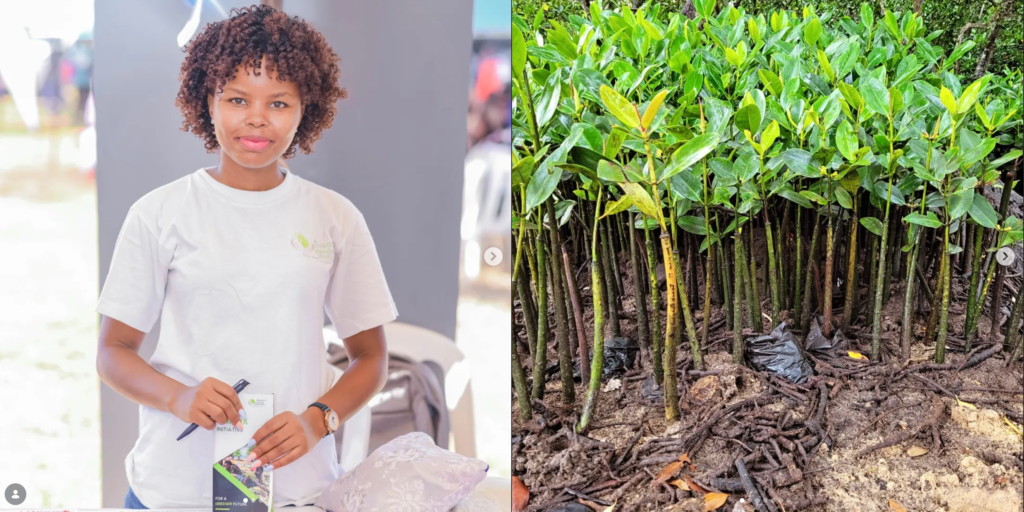
That belief, that small, sustained community action accumulates into something larger, threads through how she talks about her own work restoring mangroves on Funzi Island, one tree, one woman, one hive at a time.
The conference brought together scientists, policymakers, conservation organisations, Indigenous and community representatives, and youth leaders to explore solutions for protecting marine ecosystems while advancing a sustainable blue economy.
For practitioners like Mugo, it offered a rare opportunity to connect grassroots conservation with national and global ocean conversations.
To her, having the 11th Hour Ocean Conference held in Mombasa, her own locality, carried particular weight. She came into the conference with a clear purpose: to represent the women she works with on Funzi Island, and to use the platform to draw in partners and collaborators who could help elevate that work.
Her biggest takeaway from the conference was a line she heard in one of the sessions: that the ocean is not just an ecosystem, but wealth, identity, and economy all at once. For her, that reframing reinforces the case for including youth voices in the national processes that shape ocean policy.
“When we include all these different stakeholders, we are going to benefit more,” she says, “and also we are going to be part of the solution, not the problem.”
The Message She Is Bringing Home
Back on Funzi Island, Mugo’s task is less about grand strategy and more about morale. Funding for community conservation work is often unpredictable, and she is candid about the toll that takes on the women she works with.
Her message to them is simple: the absence of funding is not a reason to stop. “If we say that we don’t have funding, we’re not going to plant mangroves,” she says, “it’s just going to destroy and destroy.” For Mugo, the small, unfunded actions- another mangrove seedling planted, another hive installed- still count.
To other young people considering similar work, especially those in Kenya’s more remote counties, her advice is to keep going regardless of scale or location, and to use the reach of social media to tell their story. “Go to TikTok, go to Instagram, go to LinkedIn, go to Facebook, go to Twitter, make them professional,” she says, “and let the world know what is so-and-so doing in this area.”
It is a message shaped by her own journey, from a five-person university study group to international climate negotiations in Dubai and Baku.
Yet despite the global platforms, her focus remains firmly rooted in Funzi Island, where every mangrove seedling planted and every livelihood created contributes to the restoration of an ecosystem that has already seen up to 20 hectares brought back to life.
For Mugo, meaningful climate action is measured not only in international agreements, but in the steady transformation of communities working together, one tree, one woman and one opportunity at a time.


