
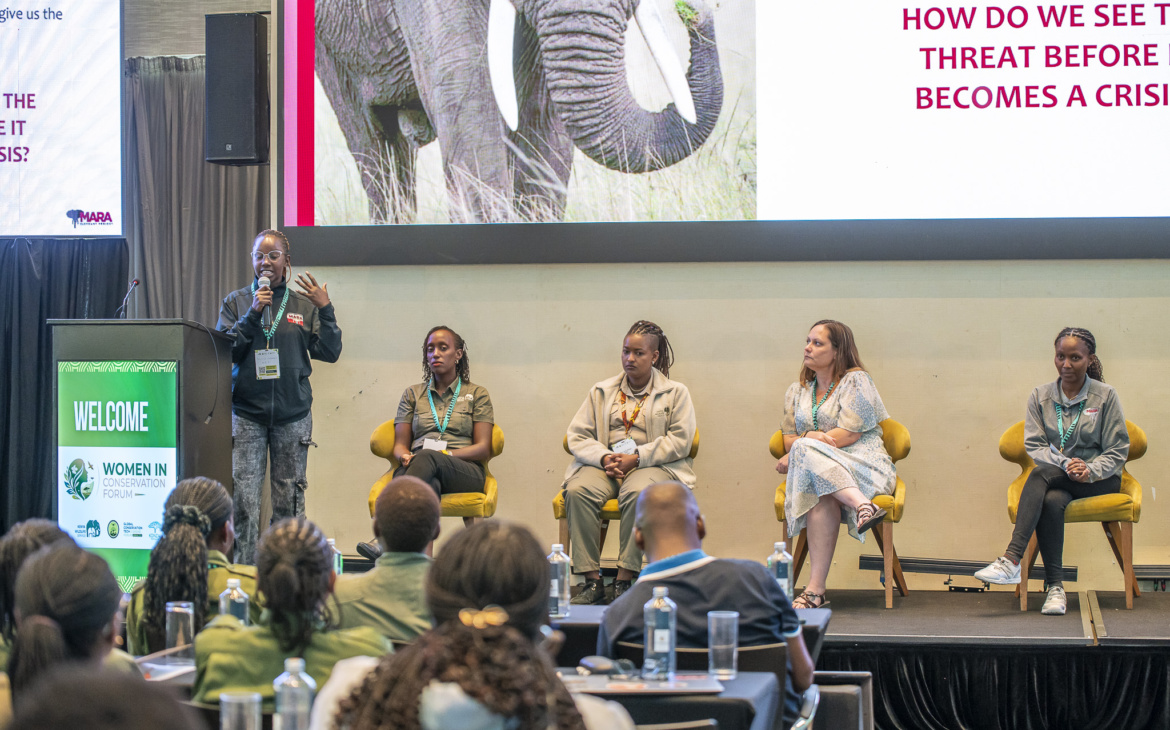
On a Monday afternoon at the Global Conservation Tech and Drone Forum, the applause was more than ceremonial, symbolizing how the women in conservation are leading transformation.
Opening the session, Arnolda Shiundu, chairperson of Kenya Wildlife Trust, pointed out that this is not just a gathering, but a decision to be at the table while making an impact.
The Women in Conservation Forum challenged a familiar phrase: women need a seat at the table with speakers revealing that further that being invited to sit is not the same as being heard. Ms. Shiundu added that being heard is not the same as shaping decisions.
In conservation, the table determines budgets, land use planning, technology investments, and policy direction. If women are implementing projects but absent from funding rooms, procurement committees, and governance boards, then, as Shiundu warned, they are not at the table that truly matters.
Across Kenya and Southern Africa, women conservationists are pushing beyond visibility toward structural influence in science, veterinary medicine, aerial surveillance, artificial intelligence, and human-wildlife conflict mitigation.

Technology at the Frontline of Co-Existence
At the center of the discussion of the Global Conservation Tech and Drone Forum, themed technology in service for nature, it became clear that the intersection of conservation and technology is essential for efficiency.
Researchers from the Mara Elephant Project outlined how drones, geo-fencing collars, and data systems are transforming elephant monitoring across the Greater Mara ecosystem. Revealing that times are evolving quickly since a decade ago, poaching was the primary threat, while right now the crisis is human-wildlife conflicts.
“The human population is increasing, the elephant population is increasing, but land is not increasing,” explained Sylvia Nyarangi Ondabu, a drone pilot and researcher with the Mara Elephant project.

As space shrinks, human-wildlife conflicts have intensified, as evidenced by crop destruction, property damage, and fatalities, which have risen as elephants move through farms and settlements in search of food and water.
Notably, how technoogy especially the embrace of drones, has eased the safeguarding of wildlife since traditional ground patrols often struggled with early detection, a case that drones have changed that equation.
Sylvia gives details that when a community hotline receives a report, teams deploy aerial units equipped with thermal imaging and speakers to locate and redirect elephants before damage escalates. “We have adopted Geo-fencing collars on selected elephants that trigger alerts when animals approach farms, enabling rapid response from ranger teams,” said Sylvia.
According to project data shared during the forum, drone-assisted interventions have significantly reduced crop damage incidents and accelerated response times.
“Technology has really aided conservation in a big way,” said Dr. Vanessa Mukami, a veterinary doctor at the Kenya Wildlife Service (KWS).
“It helps us assess terrain, locate injured animals, and plan interventions more effectively.”
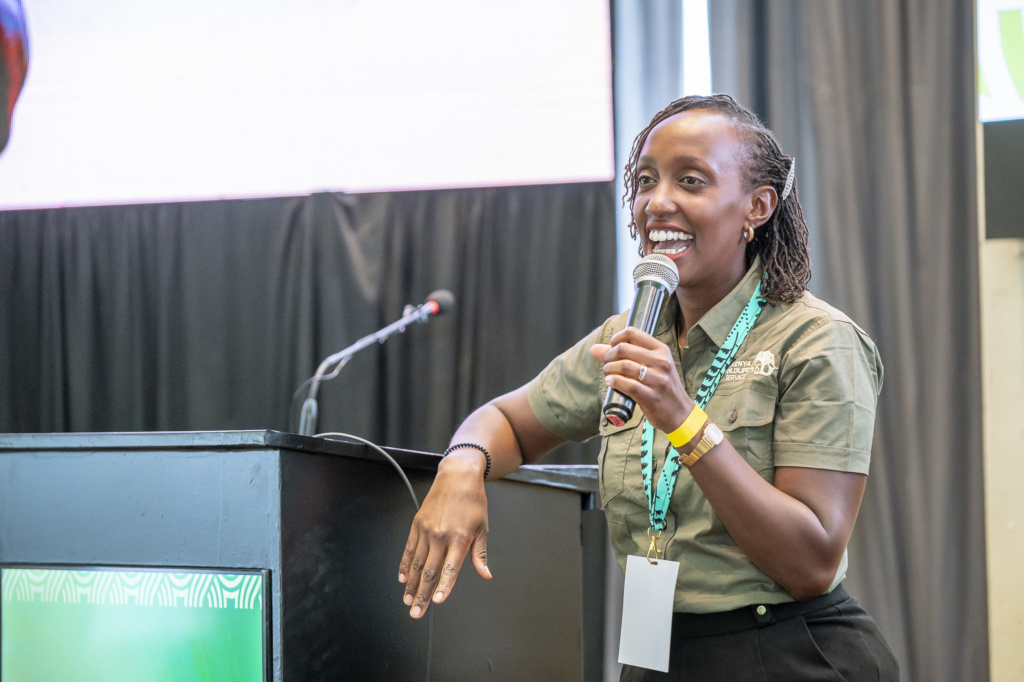
For veterinary teams treating elephants injured by arrows or spears during conflict incidents, aerial surveillance can mean the difference between life and death, as it enables direct pinpointing of the locations and urgency.
Yet speakers cautioned that technology alone is not the solution.
“Technology is not neutral,” added Arnolda Shiundu, “It reflects the priorities of the people who design it. If women are not shaping what problems are prioritized and how systems interact with communities, we risk building systems that overlook realities on the ground.”
Author Profile

-
Seeker.
Inspire AFRIKA.
Latest entries
 Biodiversity23 October 2026Inside Kobe’s Grassroots Effort to Train the Next Generation of Biodiversity Leaders
 Animals23 October 2026As COP17 Meets, World’s Rarest Great Ape Faces a Make-or-Break Test in Indonesia
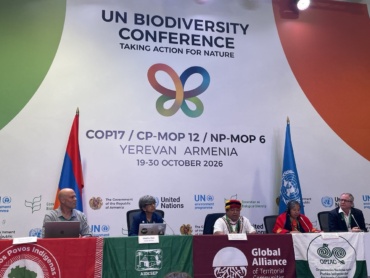 Biodiversity22 October 2026One in Five Tropical Biodiversity Sites Overlapped by Mining Concessions, COP17 Report Finds
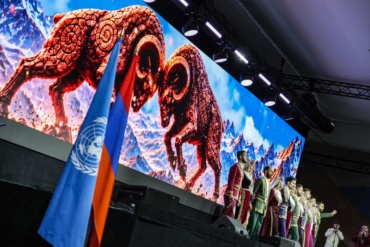 Biodiversity21 October 2026COP17 Opens in Armenia with Global Biodiversity Progress Under Scrutiny


