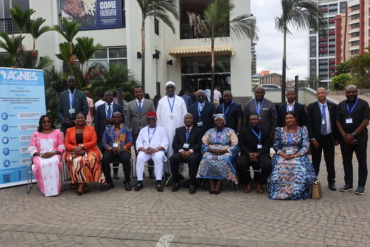
The 72nd Greater Horn of Africa Climate Outlook Forum (GHACOF 72) has kicked off in Nairobi, Kenya, bringing together regional climate experts, policymakers, and development partners to strengthen community resilience against climate shocks and extreme weather events.
Held under the theme “Advancing Climate Services for Resilient Communities and Sustainable Development in the Greater Horn of Africa,” the forum convenes government officials, climate scientists, regional institutions, development partners, and private sector actors from across the IGAD region and beyond at a time when climate-related risks are intensifying, with the heaviest impacts borne by vulnerable communities.
The convening has drawn meteorologists and climate practitioners from across the IGAD region, including Burundi, Rwanda, Somalia, Ethiopia, and Djibouti.
Participants are taking stock of past progress, ongoing challenges, and emerging opportunities, while engaging in forward-looking discussions on capacity building, regional collaboration, and the sharing of best practices suited to diverse national and ecological contexts.
Opening the forum, Kenya’s Principal Secretary for Environment and Climate Change, Eng. Festus K. Ng’eno, CBS, emphasized the critical role of climate information, early warning systems, and science-based decision-making in addressing the region’s growing climate risks.
He noted that scientific data and analysis are crucial for enhancing preparedness, facilitating early action, and minimizing the loss of lives and livelihoods when climate shocks occur.

The PS also commended the long-standing collaboration between the Kenyan government, the Intergovernmental Authority on Development (IGAD), the IGAD Climate Prediction and Applications Centre (ICPAC), and the World Meteorological Organization (WMO), advancing these conversations and actions.
“Climate services enable governments, communities, and the private sector to anticipate risks, plan, and take early action. They support farmers to make informed agricultural decisions, pastoralists to manage grazing and mobility, health systems to anticipate disease outbreaks, energy planners to optimise generation, and disaster management agencies to protect lives and livelihoods,” said PS Ng’eno.
He reaffirmed the government’s commitment to working with regional and international partners to ensure that climate forecasts are translated into actionable early warning systems that support community resilience and safeguard development gains.
The IGAD region represents a shared climatic landscape, but one characterised by diverse local contexts and varying responses to weather variability and climate change. Enhanced collaboration and partnerships, participants noted, remain critical to improving early preparedness and supporting sustainable development, particularly for the region’s most vulnerable communities.
At the regional level, ICPAC has played a central role in coordinating climate services across IGAD member states. According to Dr Abdi Fidar, Director of ICPAC, the institution’s operations over the years, working closely with National Meteorological and Hydrological Services, line ministries, the World Meteorological Organization (WMO), and development partners, have made significant progress in strengthening regional climate prediction, monitoring, and the delivery of user-oriented climate services.

“GHACOF remains central to this effort, serving as a mechanism for co-producing seasonal climate outlooks and translating climate information into actionable guidance for key sectors,” added Dr Fidar during GHACOF 72.
As part of the forum, GHACOF 72 is set to release the seasonal climate outlook for the March–April–May (MAM) period, a critical season for food production, water availability, and disaster preparedness across much of the region. The forecast will provide regionally synthesised climate information developed by experts across multiple scientific disciplines.
The GHACOF 72 outlook is expected to guide decision-making across key sectors, including agriculture, health, energy, and disaster risk management. Once downscaled to national levels, the forecasts will inform sector-specific advisories that will be communicated to local communities through various channels, with the media playing a central role in dissemination.
Discussions at the forum have amplified the need for strengthened partnerships and sustained regional cooperation as vital in enhancing climate resilience and ensuring long-term sustainable development across the Greater Horn of Africa.

Kenya Meteorological Department Director Mr Edward Muriuki reiterated that the department, alongside other National Meteorological and Hydrological Services (NMHSs), remains committed to continuously providing accurate weather and climate information.
He emphasized that these efforts are aimed at safeguarding lives, protecting property, and conserving the natural environment, not only at the national level but also at the grassroots through county meteorological offices.
“Our efforts are further strengthened through the National Climate Outlook Forums and Participatory Scenario Planning workshops, which immediately follow the Regional Outlook Forum,” added Mr Muriuki.
Author Profile

-
Seeker.
Inspire AFRIKA.
Latest entries
 Climate9 October 2026Beyond Negotiations: Africa Expects Concrete Outcomes from Antalya
 Animals7 October 2026In Kajiado’s Drylands, Collective Selling of Small Herds Is Changing the Livestock Trade
 Oceans6 October 202640 Years of Ocean Cooperation: The Western Indian Ocean’s Next Test Is Implementation
 Adaptation5 October 2026Africa Is Financing Its Own Survival as Climate Adaptation Money Falls Short