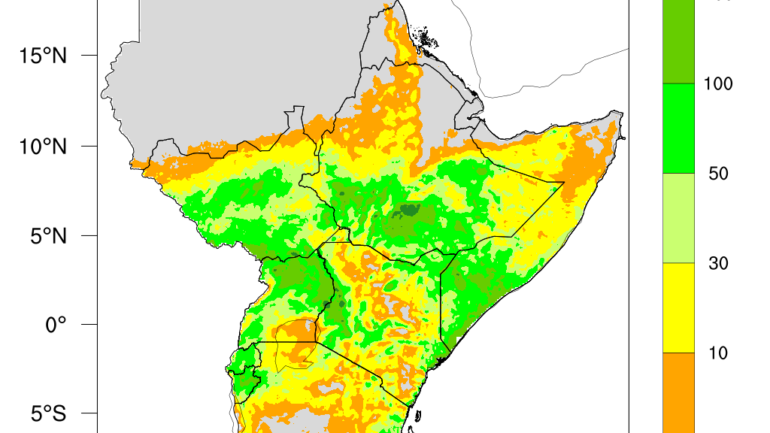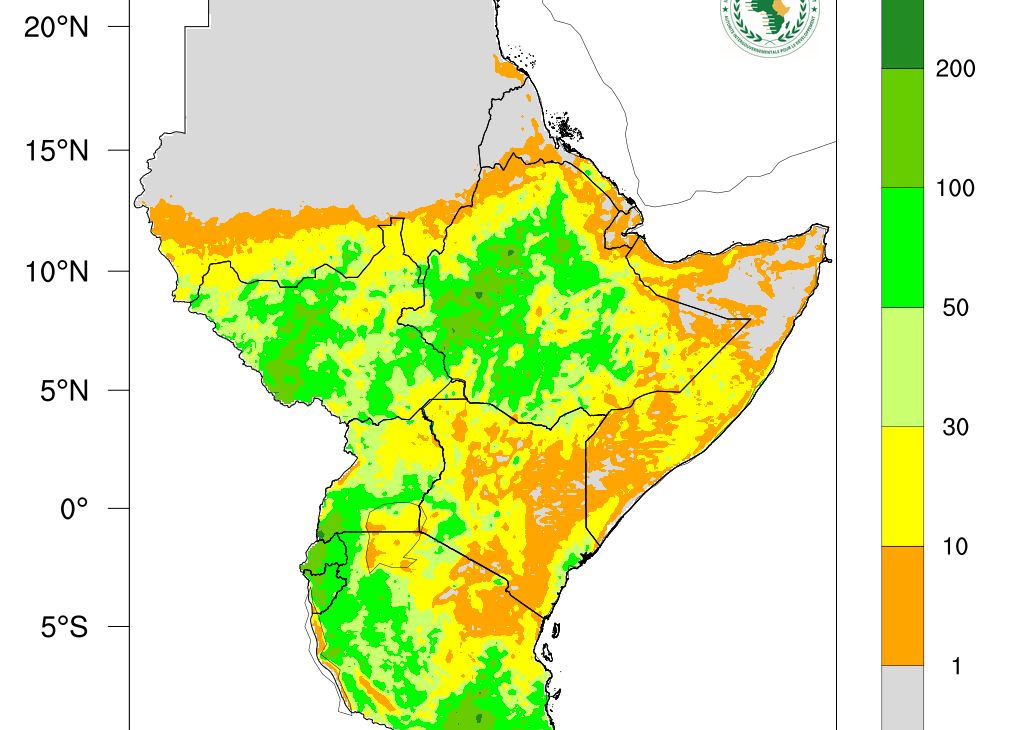
The Greater Horn of Africa is set to experience a mixed weather pattern between March 24 and March 31, 2026, with enhanced rainfall forecast across several countries, even as heat stress remains a concern in arid and lowland regions.
According to the IGAD Climate Prediction and Applications Centre, moderate to heavy rainfall is expected over large parts of South Sudan, Ethiopia, Rwanda, and Uganda, signaling a continuation of the March–May rainy season across the region.
“Moderate rainfall of between 50–200mm is expected over most parts of Rwanda, Burundi, western and southern Tanzania, central and southern Ethiopia, as well as most parts of South Sudan,” the forecast indicates.
In contrast, “light rainfall of less than 50mm is expected over most parts of Kenya, Somalia, northern Tanzania, central to northern Uganda, south-eastern and northern Ethiopia, and southern parts of Sudan,” pointing to uneven rainfall distribution across the region.
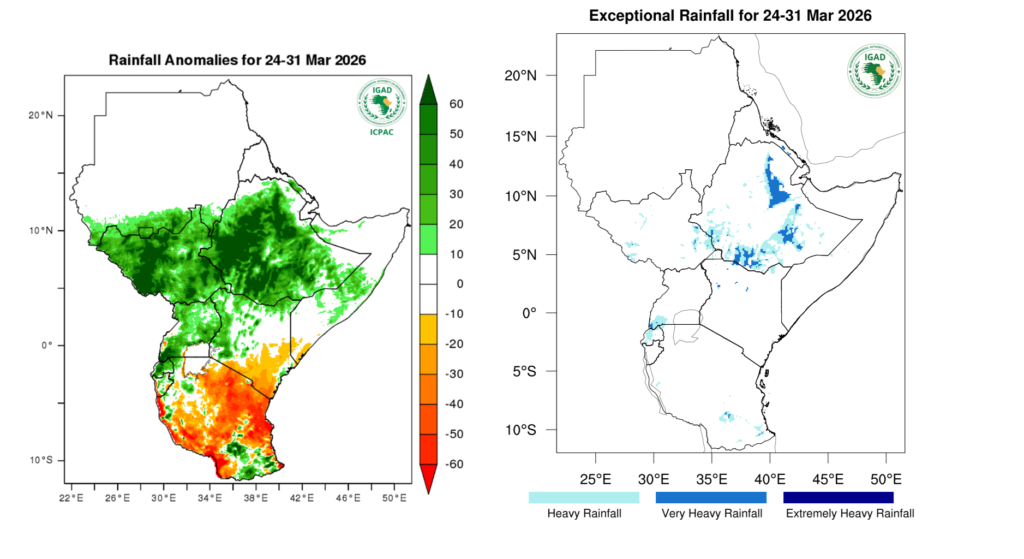
Rainfall anomalies show that wetter-than-usual conditions are likely over much of South Sudan, Ethiopia, Uganda, Rwanda, and western Kenya, while drier-than-usual conditions are expected over southern Kenya and most parts of Tanzania.
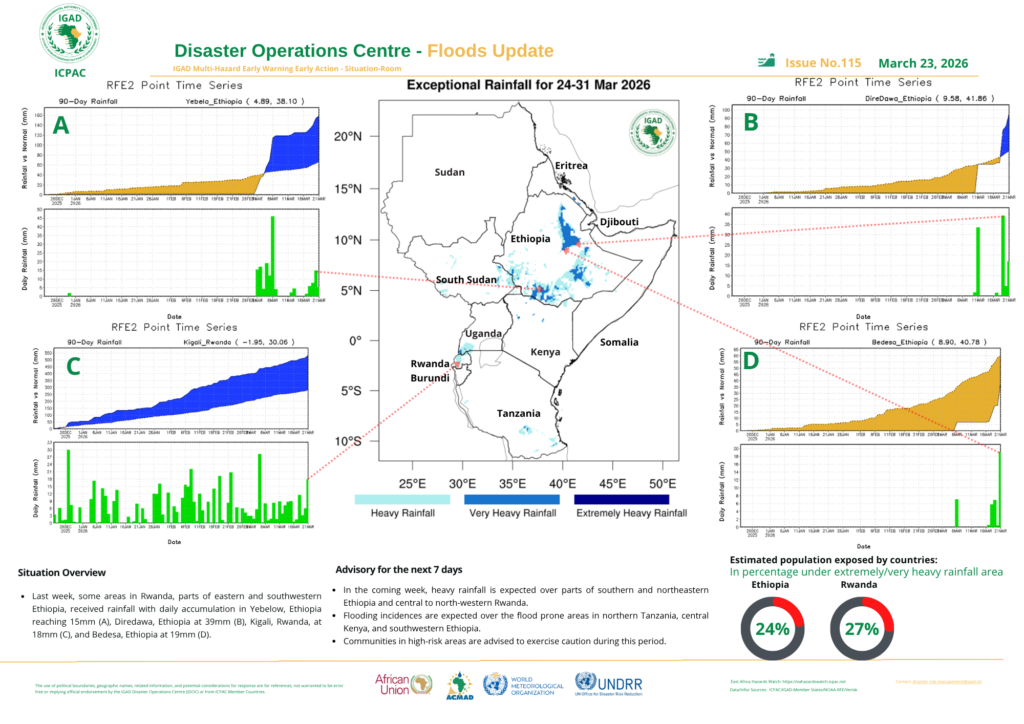
Notably, exceptional rainfall, exceeding the 90th percentile, is forecast over parts of southern and north-eastern Ethiopia.
This raises the risk of flooding, particularly in flood-prone areas of southern and north-eastern Ethiopia and central to north-western Rwanda, where communities are advised to remain alert.
Temperature patterns across the region are expected to remain largely moderate to high, ranging between 20°C and 32°C.
However, cooler conditions of below 20°C are likely over the Ethiopian highlands, central to western Kenya, and parts of Rwanda and Burundi.
Despite these cooler pockets, “warmer-than-usual temperatures are expected over most parts of Sudan, Eritrea, Djibouti, Somalia, Tanzania, and eastern Ethiopia.”
At the same time, cooler-than-usual conditions are projected over central to eastern South Sudan into western Ethiopia and highland regions across the Greater Horn of Africa.
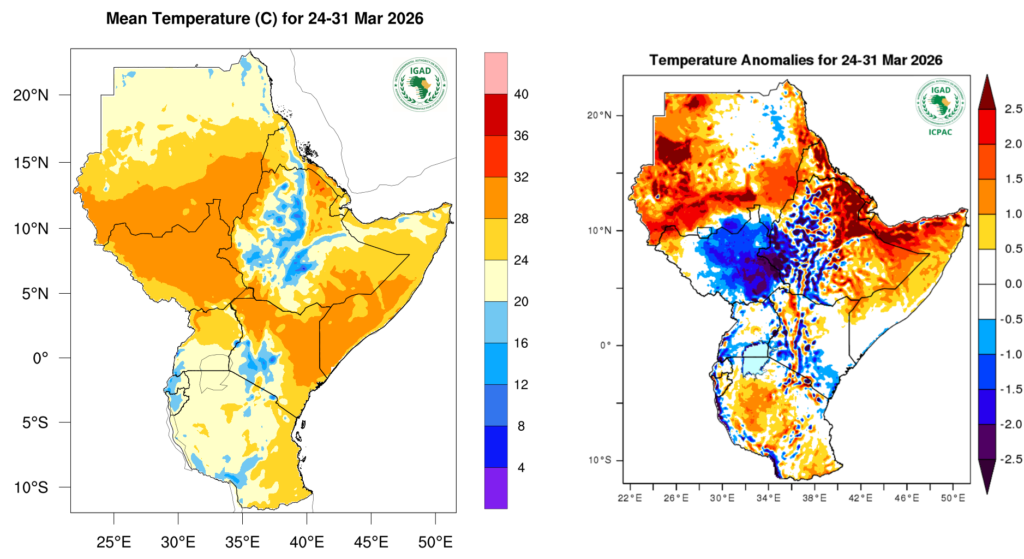
Heat stress is also expected to intensify, particularly across South Sudan, southern Sudan, eastern Kenya, coastal Tanzania, and southern Somalia, where conditions may reach extreme caution levels. In Ethiopia’s Afar region, heat stress could escalate to dangerous levels on some days.
ICPAC forecast notes that 1mm of rainfall is equivalent to 1 litre of water per square metre, highlighting the significant moisture expected in high-rainfall zones.
The regional body continues to issue weekly forecasts, urging users to complement this guidance with localized updates from national meteorological services for more precise planning.
As the rainy season unfolds, the outlook highlights the dual risks of flooding in high rainfall areas and heat stress in drier zones, reinforcing the need for preparedness across the region.