
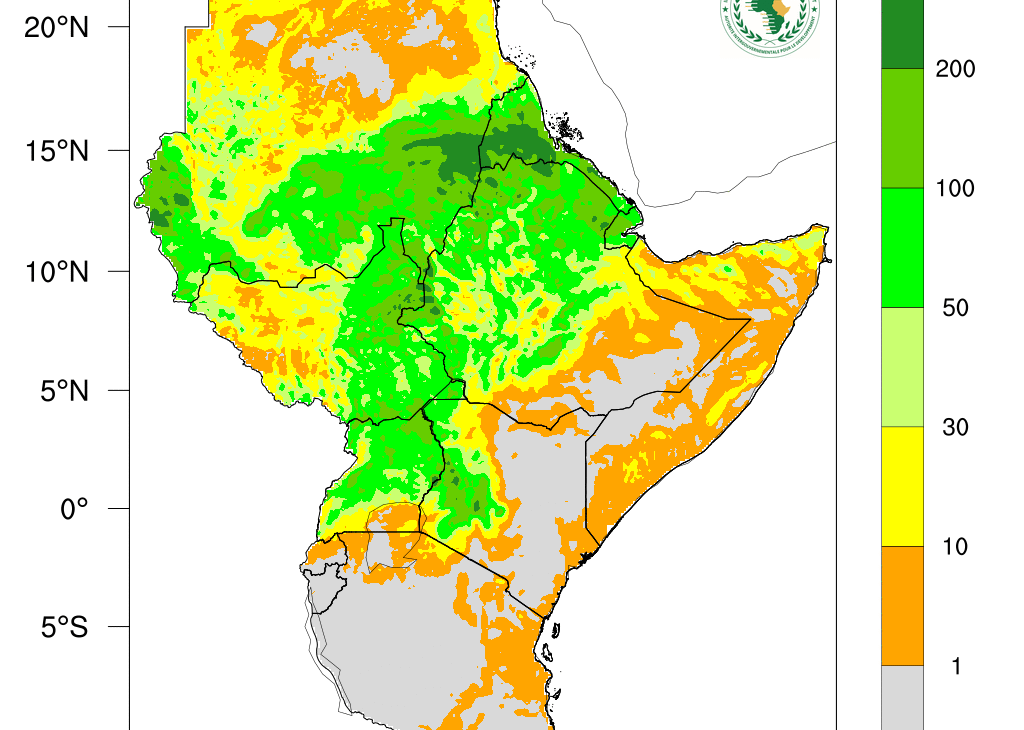
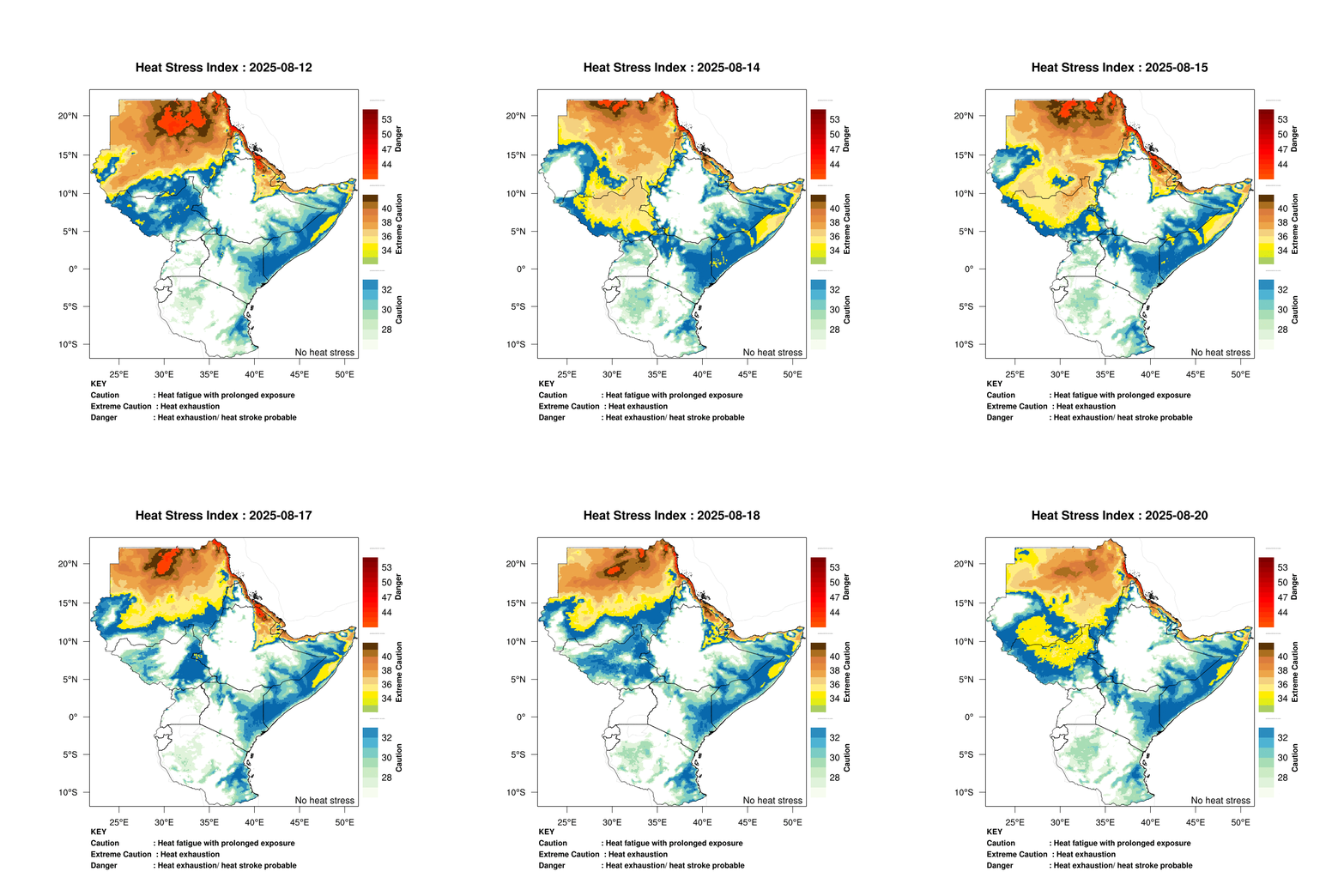
The Intergovernmental Authority on Development (IGAD) Climate Prediction and Applications Centre has issued a forecast warning of more than usual rainfall and elevated heat stress across parts of East Africa between 20 and 27 August 2025.
Heavy downpours of over 200mm are expected in the cross-border areas of western Eritrea and south-eastern Sudan.
Central to southern Sudan, eastern South Sudan, Uganda, central and western Kenya, and much of Ethiopia are forecast to receive moderate rainfall ranging between 50 and 200mm.
Lighter showers of less than 50mm are expected over parts of Somalia, Rwanda, South Sudan, and northern Sudan.
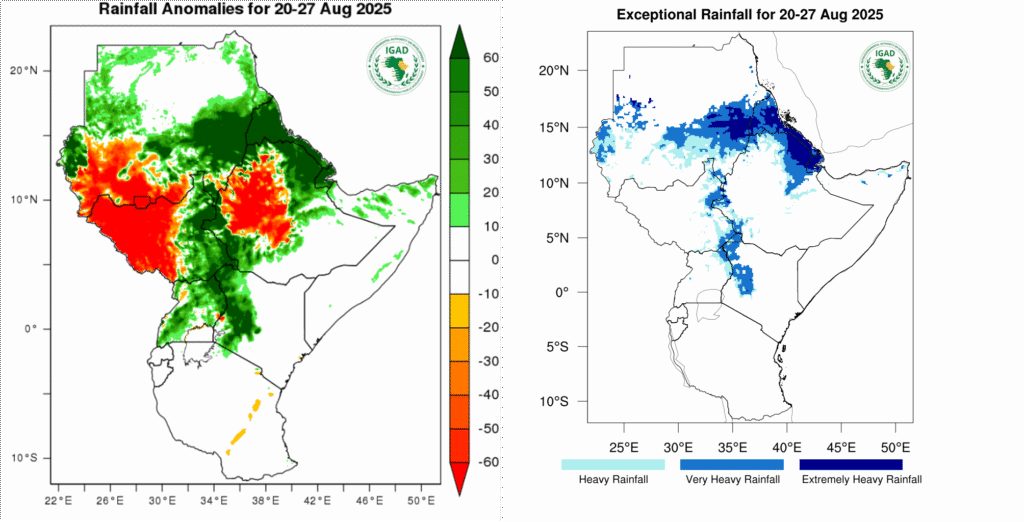
Meteorologists warn that rainfall in some regions will be significantly above average, particularly in western Kenya, Uganda, eastern South Sudan, Eritrea, and Sudan.
Conversely, southern Sudan, central South Sudan, and western Ethiopia are likely to record below-average rainfall during this period.
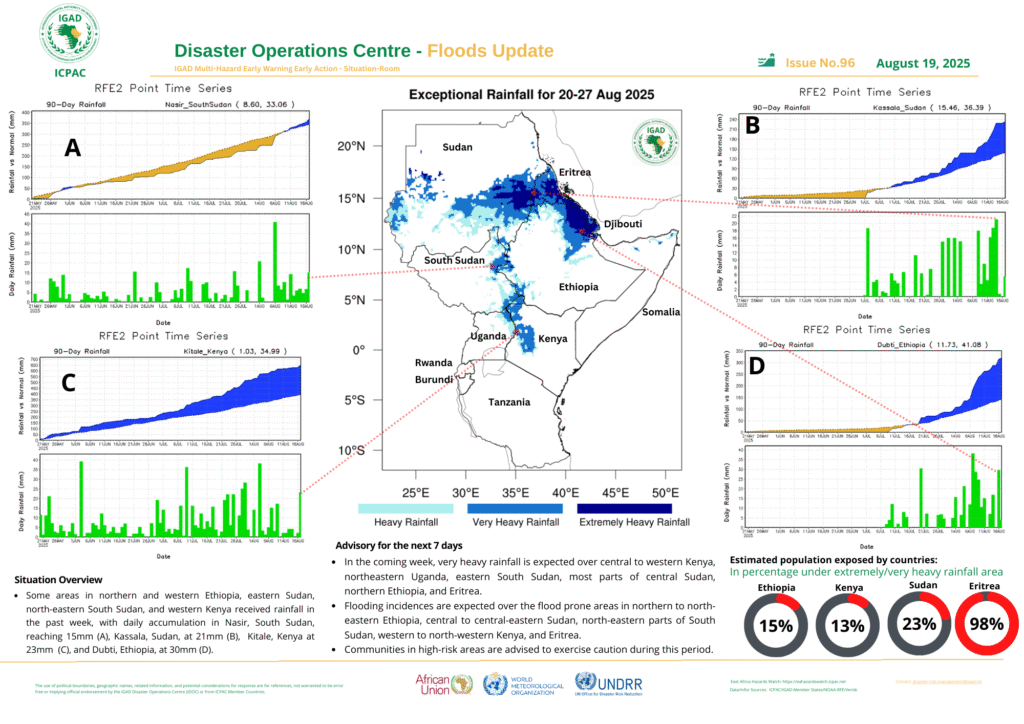
Communities in flood-prone areas, including northern Ethiopia, central Sudan, north-eastern South Sudan, western Kenya, and Eritrea, face an elevated risk of flooding as rainfall is expected to exceed the 90th percentile, meaning it will fall within the wettest 10% of historical records.
Temperature Forecast
High temperatures above 32°C are projected in northern Sudan and along the Red Sea coastal corridor. Moderate to high temperatures (20–32°C) will persist across Somalia, Djibouti, South Sudan, Uganda, Kenya, and Tanzania.
Cooler conditions below 20°C are expected in parts of western Rwanda, Burundi, Uganda, and the Rift Valley regions of Kenya, Ethiopia, and Tanzania.
Unusually warm conditions are likely across most of East Africa, except eastern South Sudan, Eritrea, and western Kenya, which may experience slightly cooler-than-normal temperatures.
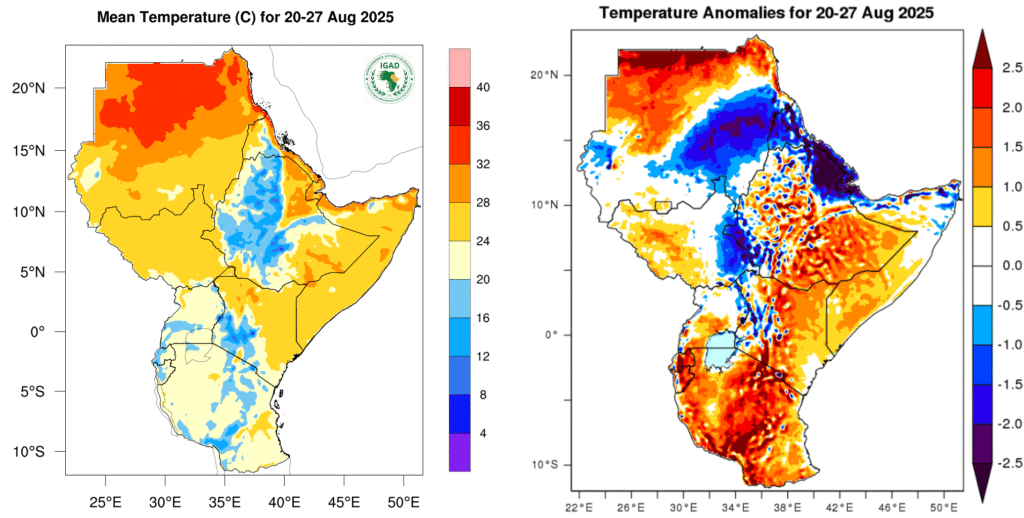
Experts caution that heat stress levels will rise in northern Sudan, Djibouti, Somalia’s coastline, and Ethiopia’s Afar region, increasing risks for both human health and livestock.
The forecast indicates an increased risk of floods, crop losses, and heat-related health issues. Authorities and humanitarian agencies are urging communities in vulnerable areas to remain alert and take precautionary measures.
Author Profile

-
Seeker.
Inspire AFRIKA.
Latest entries
 Corporate15 October 2026Water, Sanitation and Digital Learning at the Centre of Garissa School Upgrade
 Agriculture14 October 2026Africa’s Food Systems Future Depends on Listening to Farmers
 Weather Forecasts13 October 2026Rain and Rising Temperatures Forecast Across the Greater Horn of Africa
 Climate9 October 2026Beyond Negotiations: Africa Expects Concrete Outcomes from Antalya


