|
Getting your Trinity Audio player ready...
|
A complex weather pattern is expected across the Greater Horn of Africa between April 21 and April 28, 2026, with enhanced rainfall forecast in parts of southern Ethiopia and eastern Tanzania, even as much of the region faces below-normal rainfall and rising temperatures.
The latest outlook from the IGAD Climate Prediction and Applications Centre (ICPAC) highlights a fragmented seasonal pattern, marked by localized heavy rains, flood risks, and expanding heat stress across several countries.
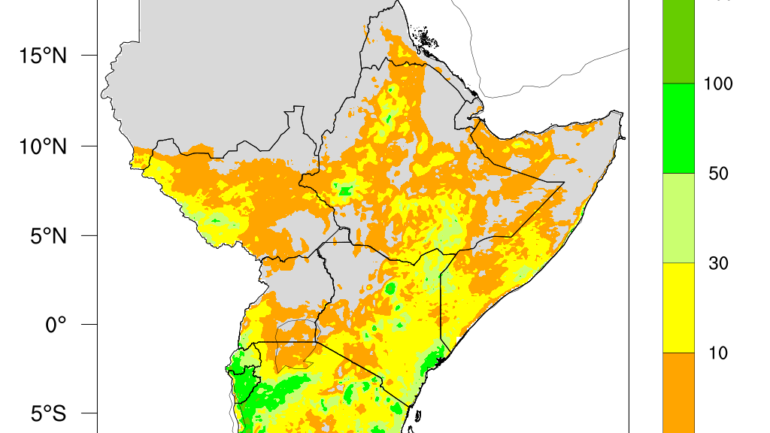
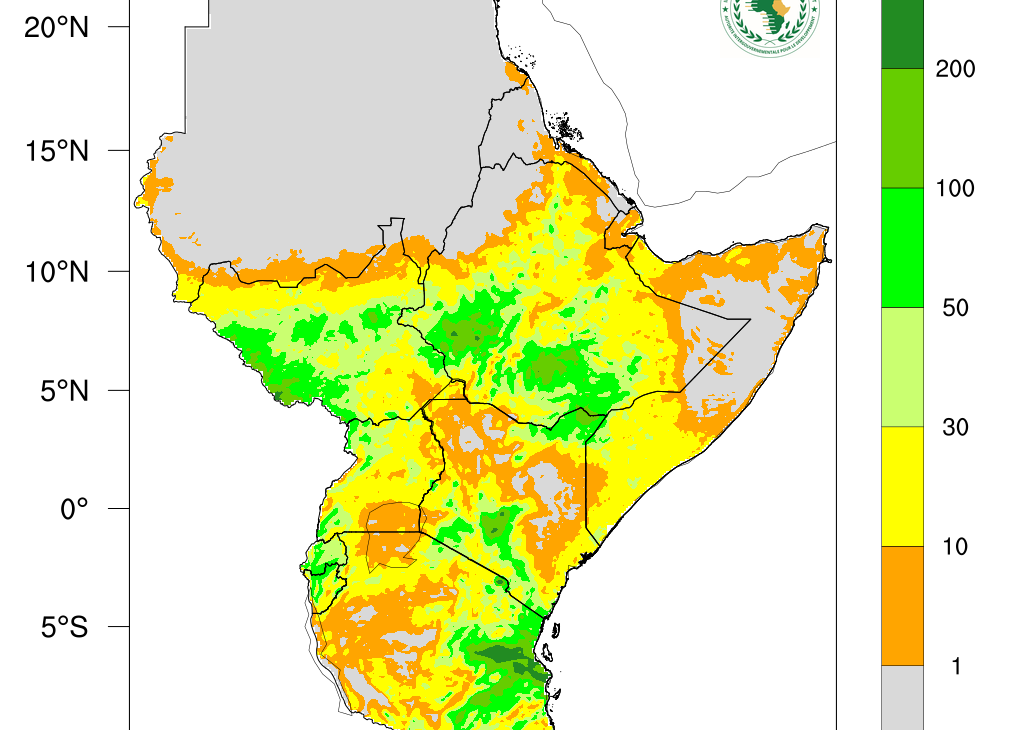
Forecasts indicate heavy rainfall exceeding 200 millimeters over parts of eastern Tanzania, making it one of the wettest zones in the region during the period.
Elsewhere, moderate rainfall between 50 and 200 millimeters is expected across parts of western South Sudan, southern Ethiopia, central Kenya, and most areas of Rwanda and Burundi.
However, much of the Greater Horn of Africa is projected to receive light rainfall below 50 millimeters, particularly across large parts of South Sudan, Ethiopia, Djibouti, Uganda, Tanzania, Kenya, and both northern and southern Somalia.
Meteorologists note that 1 millimeter of rainfall is equivalent to one litre of water per square meter, underscoring the limited water input expected across areas forecast to remain relatively dry.
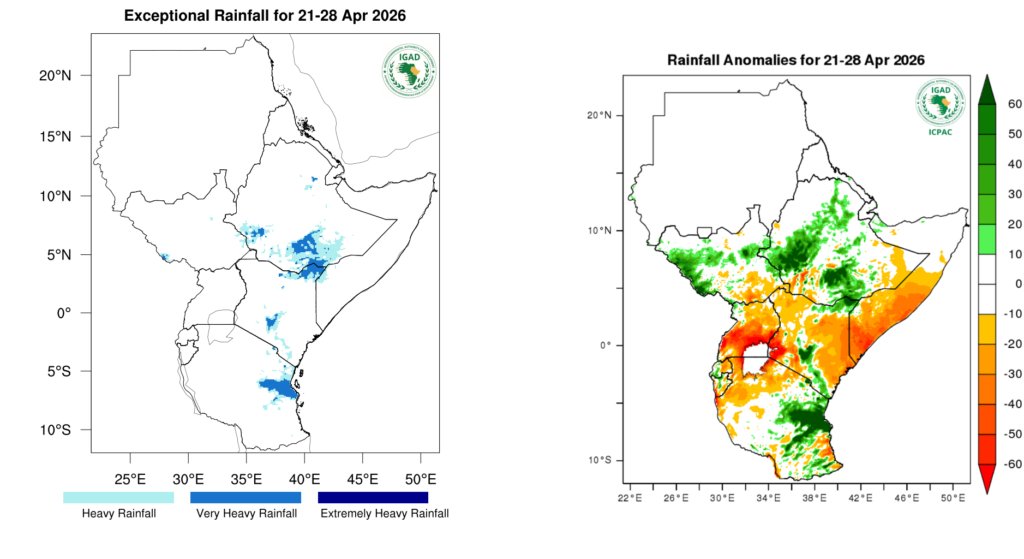
Rainfall anomalies point to above-average precipitation over parts of eastern Tanzania, central to southern Kenya, central to western Ethiopia, and western South Sudan.
At the same time, below-normal rainfall is expected across most parts of Uganda, Kenya, central to southern Somalia, and northern Tanzania, reinforcing a broader trend of suppressed rainfall across key agricultural zones.
This uneven distribution continues to reflect shifting rainfall patterns, where localized surges in precipitation occur alongside widespread deficits.
Risk of Flooding in Areas of the Greater Horn of Africa
Despite generally reduced rainfall in many areas, exceptional rainfall events are expected in several regions.
Rainfall totals exceeding the 90th percentile are forecast over southern Ethiopia, parts of northern and central Kenya, and parts of eastern Tanzania, raising the likelihood of intense downpours within short periods.
These conditions increase the risk of flooding, particularly in southern Ethiopia, northern and central Kenya, and parts of eastern Tanzania, where communities in flood-prone areas are advised to remain cautious.
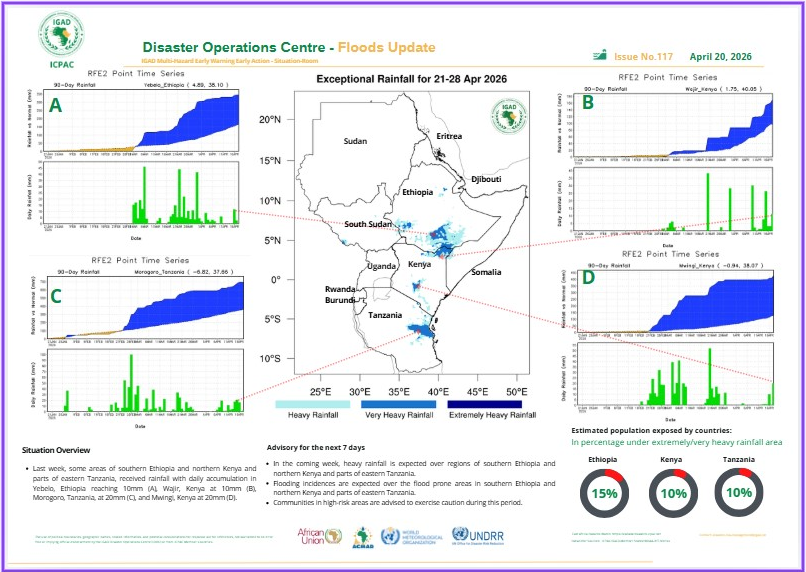
Flooding during this period could disrupt transport, agriculture, and settlements, especially in low-lying and poorly drained areas.
Temperatures Remain Elevated
Alongside the rainfall patterns, temperatures are expected to remain moderately high across most of the region.
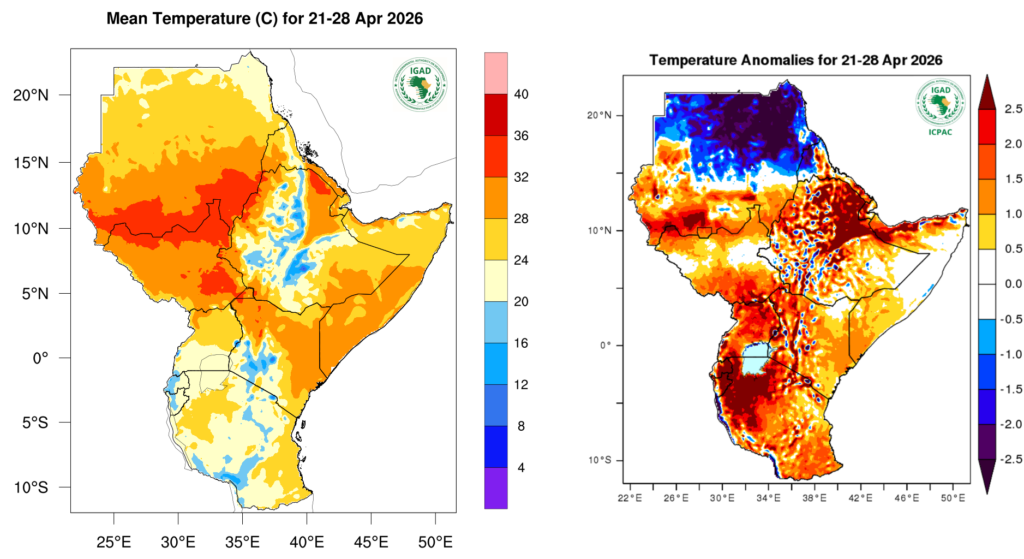
Temperatures exceeding 32°C are forecast over parts of eastern South Sudan and cross-border areas between northern South Sudan and southern Sudan.
Elsewhere, moderate to high temperatures ranging between 20°C and 32°C are expected across much of the Greater Horn of Africa, while milder conditions below 20°C are likely over highland areas.
The broader outlook indicates warmer-than-usual temperatures across most parts of the region, continuing a pattern of sustained heat.
However, parts of central to northern Sudan and north-western Eritrea may experience slightly cooler-than-normal conditions, though these remain localized.
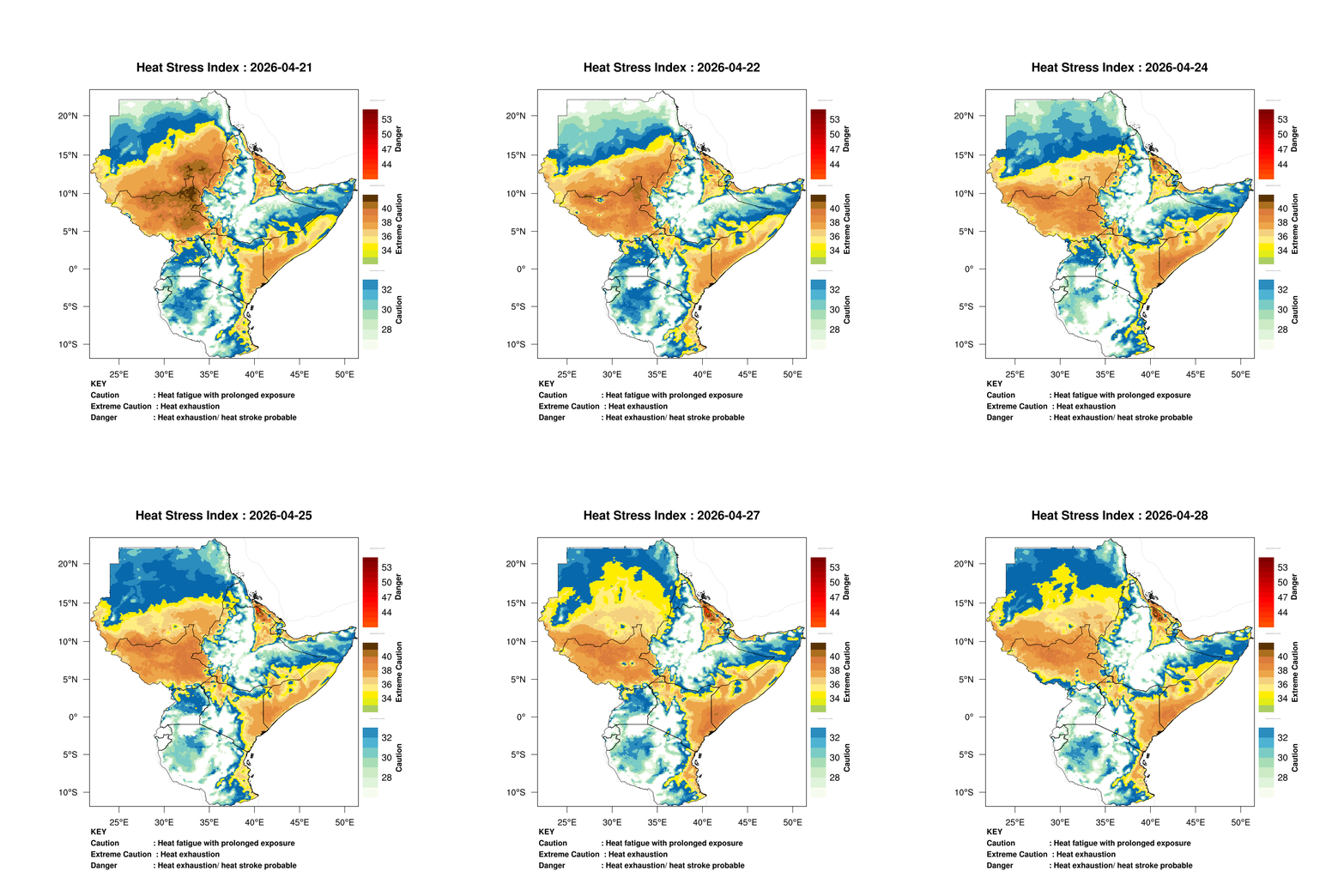
The combination of elevated temperatures and reduced rainfall is expected to intensify heat stress across several regions.
Parts of the Afar region in Ethiopia are forecast to experience heat stress within the “Danger” category, while the “Extreme Caution” category is expected across:
- Most parts of South Sudan
- Northern and eastern Kenya
- Central to southern Somalia
These conditions heighten the risk of heat-related illnesses, particularly among vulnerable populations and those engaged in outdoor activities.
A Season of Contrasts
The latest outlook outlines a season defined by contrasts, with localized heavy rainfall and flood risks occurring alongside widespread dryness and rising temperatures.
While areas such as eastern Tanzania and southern Ethiopia may benefit from increased rainfall, much of the region faces reduced precipitation and intensifying heat, posing challenges for agriculture, water resources, and livelihoods.
As climate variability continues to shape weather patterns across the Greater Horn of Africa, experts emphasize the importance of close monitoring and preparedness to manage both immediate weather risks and longer-term climate pressures.