The IGAD Climate Predictions and Applications Center (ICPAC) forecasts a predominantly hot and dry period across the Greater Horn of Africa (GHA) between 07 and 14 January 2026, with Tanzania and Burundi emerging as the region’s most notable rainfall zones.
According to ICPAC’s weekly regional outlook, Tanzania is expected to receive moderate rainfall, while Kenya, Somalia, Ethiopia, South Sudan, Sudan, and Rwanda will remain largely dry, with warmer-than-average temperatures dominating most low-lying areas.
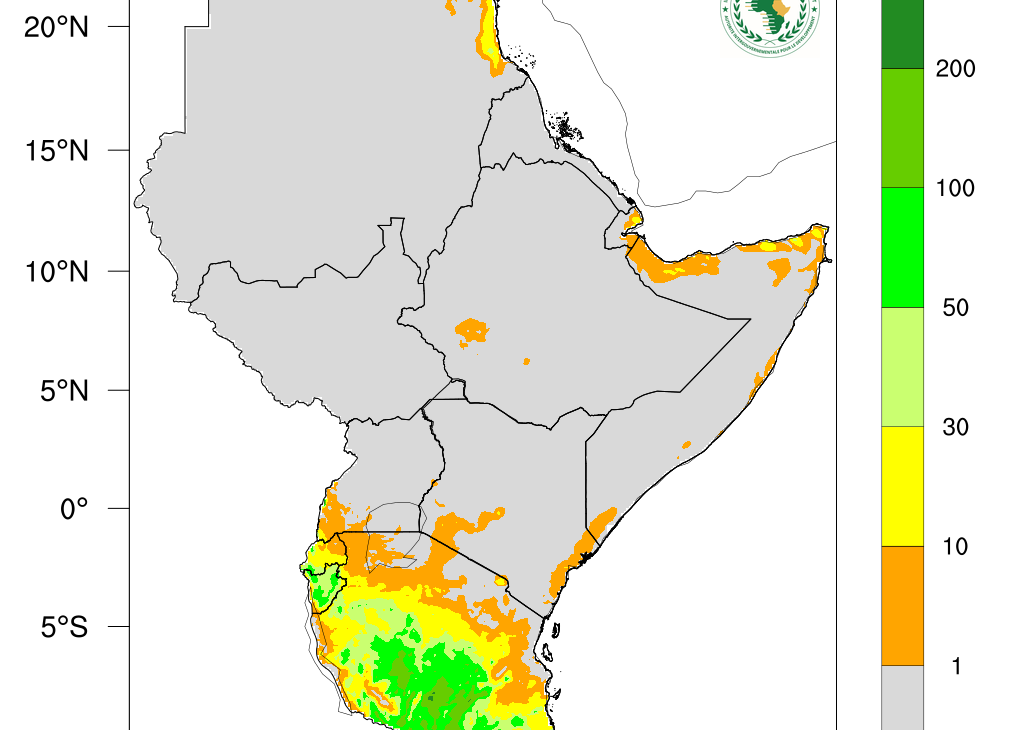
Rainfall projections indicate that 50–200 mm of precipitation may fall over parts of central to southern Tanzania and most of Burundi. Light rainfall below 50 mm is also possible in northern and western Tanzania, as well as isolated areas of northern Rwanda.
For context, 1 mm of rain equals 1 liter of water per square meter, meaning moderate rains could provide short-term moisture gains but also increase runoff and localized flood risk, particularly in low-lying regions.
Southern Tanzania is highlighted as the strongest precipitation zone, with rainfall intensity reaching 100–200 mm in some areas. This may enhance soil moisture and contribute to surface water recharge, but also signals a heightened risk of localized flooding in vulnerable landscapes.
The forecast map shows a clear south-to-north moisture decline, confirming that rain activity weakens significantly toward the equatorial and northern GHA.
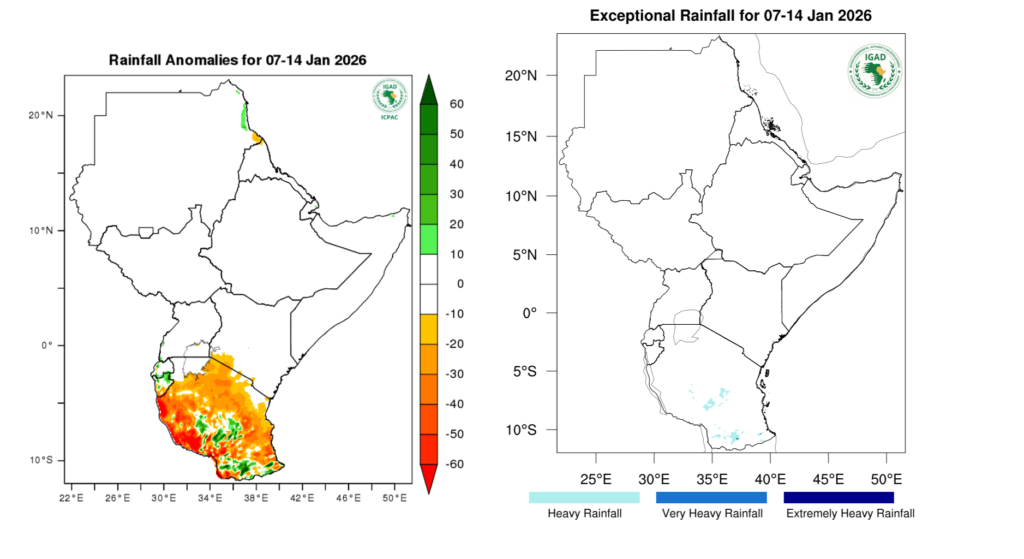
Rainfall anomalies further reveal above-normal precipitation in isolated sections of southern Tanzania and eastern Burundi, while many other parts of Tanzania may record below-normal weekly averages. Exceptional rainfall above the 90th percentile is expected in small pockets of southern Tanzania.
Temperature patterns reinforce a heat-dominated week across the GHA. Average temperatures are forecast to range between 20°C and 32°C across Tanzania, Kenya, Uganda, Somalia, South Sudan, and parts of eastern and southern Sudan.
Cooler conditions (below 20°C) are associated with elevated terrains, including the Ethiopian highlands, central to western Kenya, northern Somalia, and north-western Sudan.
The hottest zones, shaded grey and orange on the map, span Sudan, South Sudan, northern Kenya, Somalia, and parts of Tanzania, where daytime highs may climb toward 40°C.
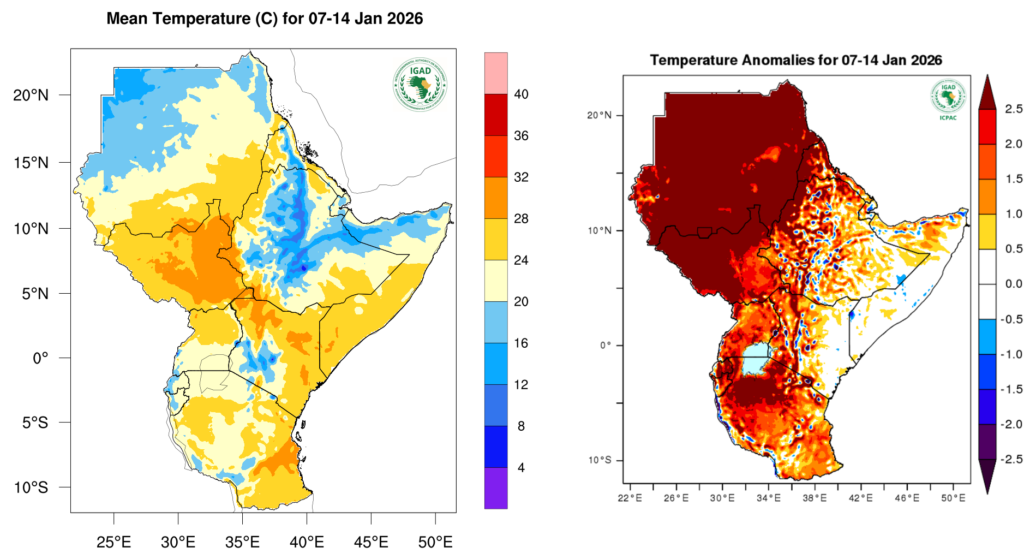
In contrast, the blue and purple shades over central Kenya and the Ethiopian highlands reflect cooler conditions driven by elevation, not rainfall.
Regional temperature anomalies show that most parts of the GHA will be warmer than usual, increasing the likelihood of heat stress, higher evaporation rates, prolonged dry spells, and related climate risks.
While Tanzania and Burundi may record short-term rainfall gains, the broader GHA remains exposed to persistent dryness and rising temperatures, emphasizing continued climate stress across water-scarce and heat-vulnerable zones.
More detailed updates are available on the East Africa Hazards Watch platform, hosted by ICPAC.