
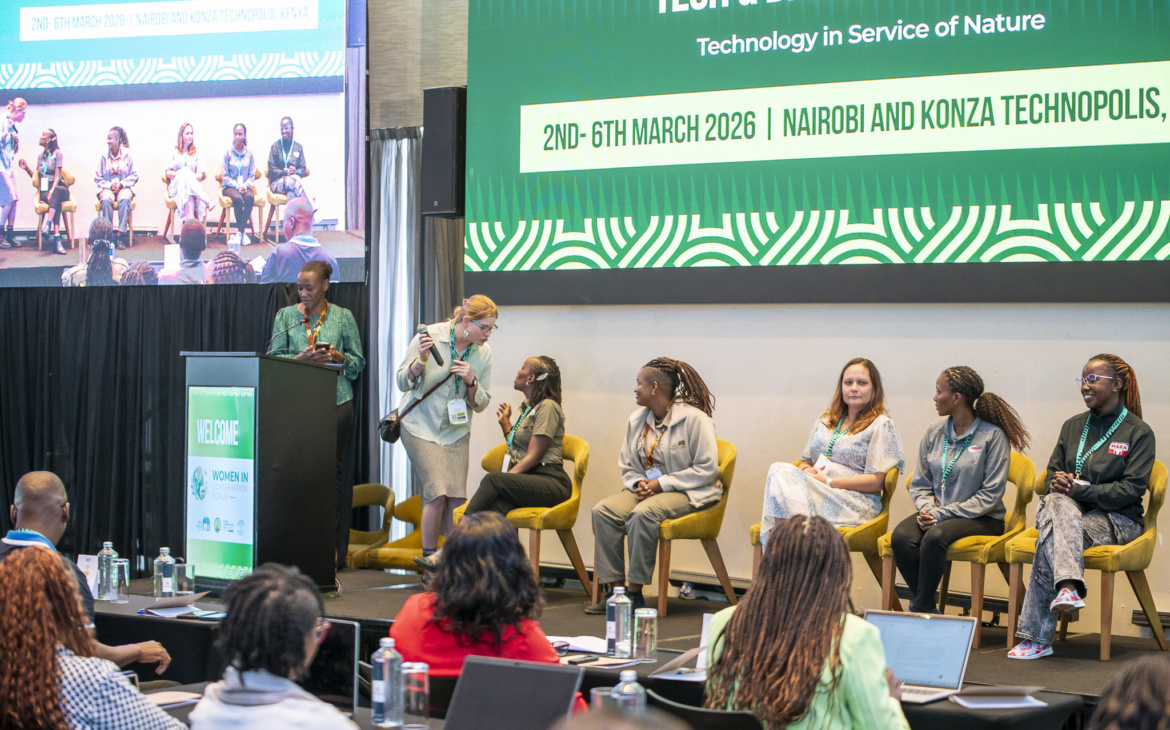
Across Kenya’s conservation landscape, from wildlife corridors in the Maasai Mara to regional policy forums, women are increasingly shaping how nature is protected, monitored, and governed.
Beyond drones, data is reshaping wildlife management as conservation actors track individual animals and ecosystems with growing precision. In a country grappling with rising human-wildlife conflict and expanding infrastructure, these tools are becoming central to smarter decision-making.
At the Mara Elephant Project, researchers rely on a long-running identification database known as the Elephant Book, launched in 2001, to catalogue individual elephants based on ear notches, tusk shape, tail characteristics, and distinctive body features.
Over the years, thousands of sightings have been recorded, enabling conservationists to track family units, births, injuries, and movement corridors. The system is now being integrated with artificial intelligence, allowing elephants to be identified from a single photograph, significantly accelerating monitoring and response time.
“By understanding individuals one by one, we understand the population,” said Sarafina Sironka, a senior project lead at Mara Elephant Project. “Through understanding the population, management can make smarter decisions.”
Those decisions include corridor protection, habitat planning, early conflict detection, and targeted mitigation strategies.

For young girls in surrounding communities, seeing women operate drones, interpret wildlife data, and contribute to tech-driven conservation systems is transformative.
“It’s not because I’m a girl,” Sylvia Ondabu, a colleague of Sarafina at Mara Elephant, said. “It’s because I’m able to do it.”
The visibility of women in technical roles is gradually shifting perceptions about who designs and manages conservation systems.
Creating Safe Spaces and Structural Change
Representation, however, remains uneven across Africa’s conservation landscape.
Emily Bennitt, an Associate Professor in large-scale ornithology at the University of Oxford, organized the Women Conserving Southern Africa Congress after observing limited representation of African women at international conservation conferences.
More than 250 women applied, with 116 selected from 11 Southern African countries. The Congress created a women-only space designed to foster open dialogue, networking, and collaboration.
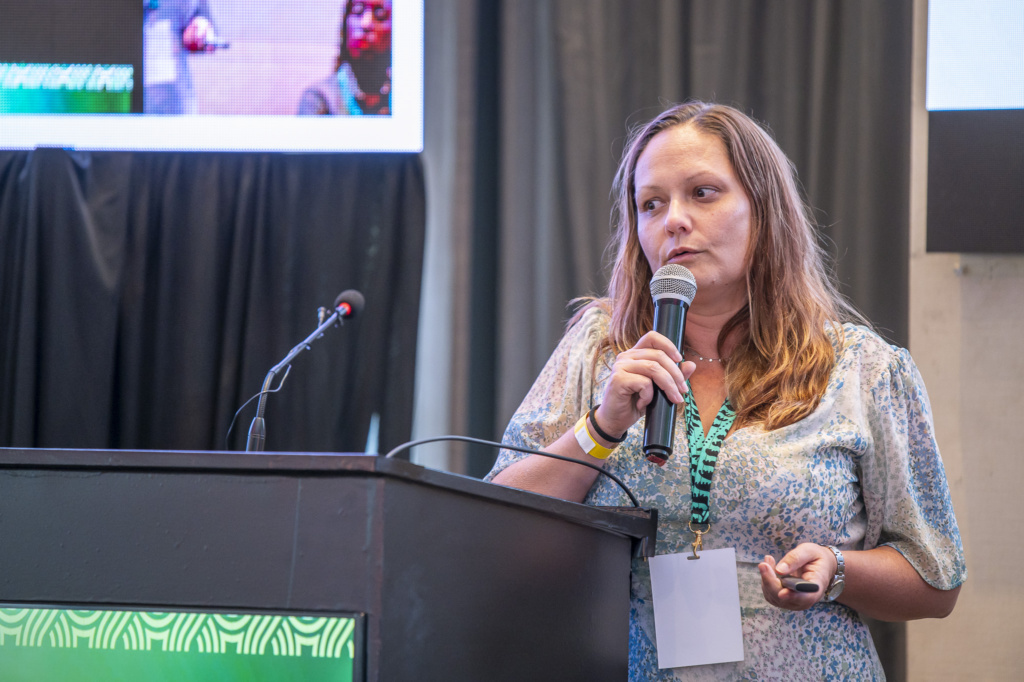
Themes ranged from community-based natural resource management and climate change to indigenous knowledge systems and gender equality.
“We wanted an environment where women could relax, share experiences, and build networks without hesitation,” Bennitt explained.
She said the impact extended well beyond the event itself. Participants reported renewed motivation to pursue advanced studies, sustain conservation enterprises, and establish national hubs to continue collaboration. A follow-on grant was also created to fund joint conservation initiatives among attendees.
For many participants, it was the first time they had been explicitly encouraged not just to participate in conservation work, but to lead it.
From Participation to Power
Throughout the forum, one message stood out: women are often celebrated for resilience and dedication in fieldwork, yet excluded from strategic decision-making spaces.
Discussions revealed that the gap is structural. Improving conservation outcomes requires addressing systems of governance, financing, and leadership, not just increasing visibility.
Dr. Vanessa Mukami, a veterinary officer with Kenya Wildlife Service, reflected on the realities of wildlife veterinary work, unpredictable hours, emergency callouts, and significant physical and emotional demands.
“Conservation fieldwork is not an eight-to-five job; it’s work that calls on you at any time of the day or night,” she said. “But saving lives and seeing communities engage in conservation is deeply satisfying.”

She noted that some community members initially doubt a woman’s expertise, particularly in high-pressure conflict situations. Competence, she said, shifts perceptions.
“When you arrive at a conflict site, some people may doubt you. But once you do the work and do it well, perceptions change.”
Speakers at the forum argued that the next phase of conservation leadership is not participation alone; it is power.
Power in conservation means influence over budgets, board decisions, policy frameworks, and the design of emerging technologies. It means shaping how artificial intelligence tools are developed, how data systems are governed, and how investment flows are directed.
“When women shape conservation systems,” Arnolda Shiundu, the chairperson of Kenya Wildlife Trust, jibed, “conservation becomes stronger, smarter, and more sustainable.”
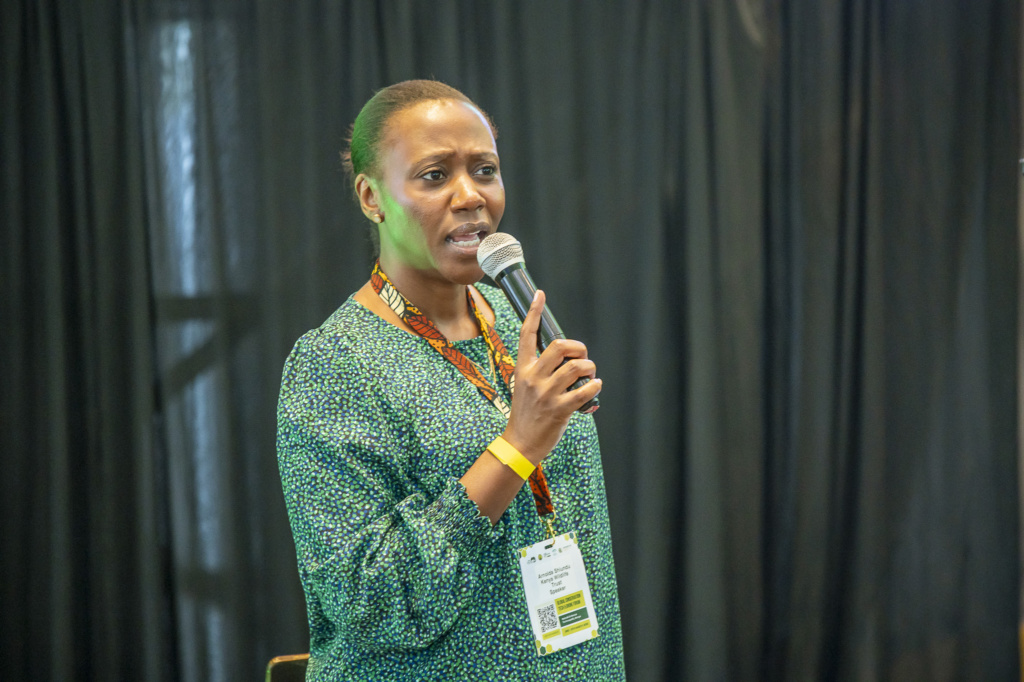
As Kenya navigates rising human-wildlife conflict while embracing technological innovation, the message from the Women in Conservation Forum was clear: the future of conservation will not only be monitored from the skies, it will be designed in boardrooms, and women intend to shape both.
Author Profile

-
Seeker.
Inspire AFRIKA.
Latest entries
 Biodiversity23 October 2026Inside Kobe’s Grassroots Effort to Train the Next Generation of Biodiversity Leaders
 Animals23 October 2026As COP17 Meets, World’s Rarest Great Ape Faces a Make-or-Break Test in Indonesia
 Biodiversity22 October 2026One in Five Tropical Biodiversity Sites Overlapped by Mining Concessions, COP17 Report Finds
 Biodiversity21 October 2026COP17 Opens in Armenia with Global Biodiversity Progress Under Scrutiny


