
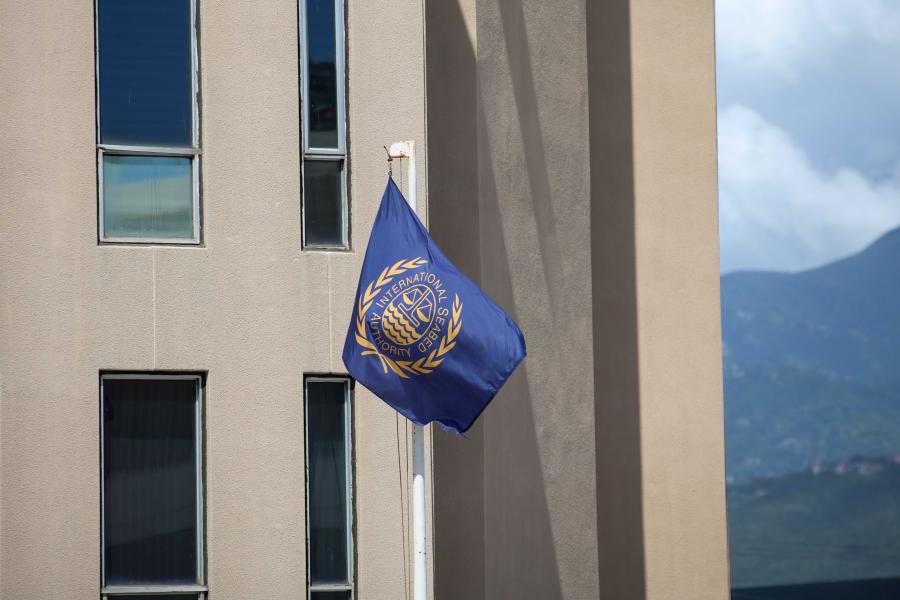
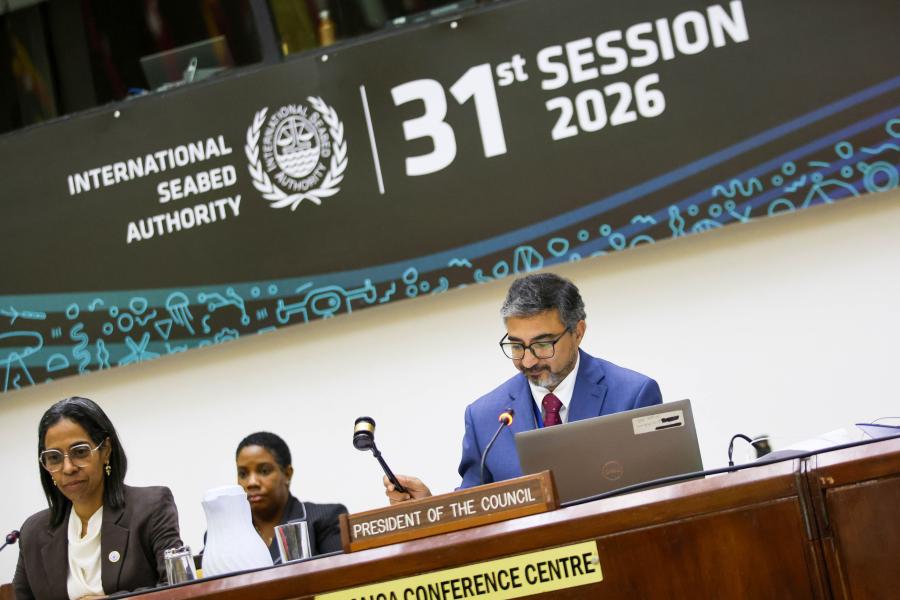
The first part of the 31st session of the International Seabed Authority (ISA) Council has concluded with renewed focus on shaping regulations for commercial deep-sea mining, even as concerns grow over gaps in the standards needed to guide the process.
Chaired by Council President Mayank Joshi, delegates made incremental progress on draft exploitation regulations that will govern the extraction of mineral resources on the ocean floor. However, discussions increasingly highlighted the urgent need for a structured roadmap for standards and guidelines, which many described as an “integral component” of the mining code.
In response, the Council endorsed a proposal requesting the Legal and Technical Commission (LTC) to “consolidate and revise” the list of standards and identify those that must be ready by the time the regulations are adopted. The LTC is also expected to develop a rollout timeline ahead of the Council’s July 2026 meeting.
Debate also emerged around the scope of resources covered under the regulations. While some members argued that the rules should apply strictly to polymetallic nodules, citing the need for resource-specific approaches, others supported retaining broader references to “mineral resources,” suggesting that differentiation could instead be addressed through targeted standards and guidelines.
Questions of “transparency versus confidentiality” featured prominently in the discussions. Delegates broadly agreed that data linked to exploitation contracts and plans of work should be publicly accessible, except where confidentiality is clearly justified.
Environmental data, however, proved more contentious. While some supported limited and time-bound confidentiality, many emphasized that baseline and monitoring data should remain non-confidential to ensure credible environmental oversight.
Differences also surfaced over who should be allowed to challenge confidentiality claims. Some delegates called for broader stakeholder inclusion, while others cautioned against expanding this role beyond the LTC, warning of potential politicization.
On the handling of data after contract termination, Council members acknowledged that the ISA currently lacks the capacity to store biological and geological samples. Several recommended transferring such materials to scientific institutions with the expertise to manage them effectively.
The question of “sequencing the mining code” remains unresolved. Some countries proposed decoupling the adoption of standards from the regulations to accelerate progress. In contrast, others insisted that both processes must advance in parallel to ensure a coherent and enforceable framework.
Despite these divergences, there was consensus on the need for structured intersessional work, with revised draft texts expected by June 2026. Closing the session, ISA Secretary-General Leticia Carvalho commended delegates for their engagement and emphasized the importance of maintaining momentum.
As global demand for critical minerals continues to rise, driven in part by the clean energy transition, the outcome of ISA negotiations will be pivotal in determining whether deep-sea mining proceeds under a precautionary and science-based framework or outpaces the regulatory systems designed to govern it.
Author Profile

-
Seeker.
Inspire AFRIKA.
Latest entries
 Agriculture14 October 2026Africa’s Food Systems Future Depends on Listening to Farmers
 Weather Forecasts13 October 2026Rain and Rising Temperatures Forecast Across the Greater Horn of Africa
 Climate9 October 2026Beyond Negotiations: Africa Expects Concrete Outcomes from Antalya
 Animals7 October 2026In Kajiado’s Drylands, Collective Selling of Small Herds Is Changing the Livestock Trade


