
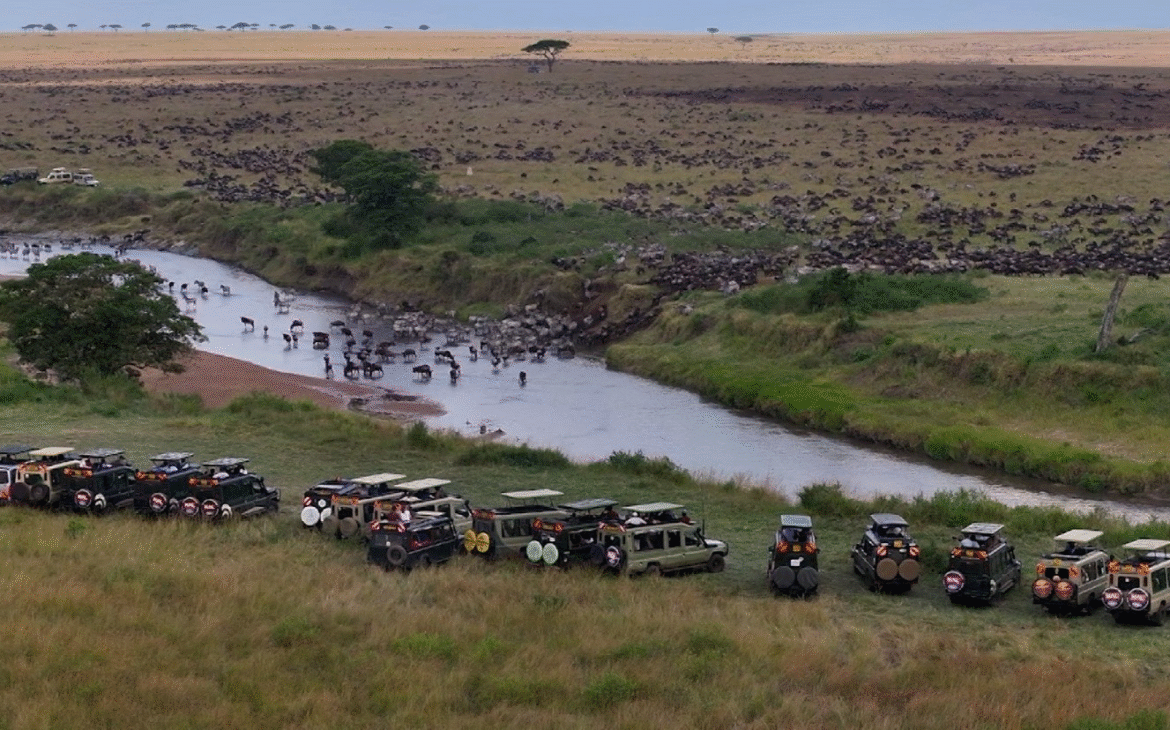
As global travel surges, Africa’s iconic wildlife parks like the Masai Mara are grappling with the pressures of popularity, which means doubled numbers. Apparently, this challenge is more acute in Kenya’s Masai Mara National Reserve, a cornerstone of the country’s tourism and a sanctuary for one of nature’s last great spectacles.
The Mara is the stage for the Great Migration, an annual trek of over a million wildebeests and zebras, among other wildlife. Yet, in a troubling paradox, the very wonder that draws visitors is under threat, as evidenced by a reduction in herd numbers, while tourist vehicles increase.
As indicated by H.E. Patrick Ole Ntutu, Governor of Narok County, overtourism is a massive, massive problem. “You see the streams of vehicles, the people arriving from every corner of the globe. Managing this influx is our greatest challenge,” he said.
The dilemma remains indeed profound since this tourism, while disruptive, is also a vital economic engine, fueling a significant portion of Kenya’s $3.5 billion tourism industry. “The Masai Mara is the heart of the safari experience,” explains Mohanjeet Brar, Managing Director of Gamewatchers Safaris and Porini Camps. “Virtually every visitor to Kenya has it on their list.”
In a bold move to manage the crowds, the government more than doubled park fees for the peak season in 2023. The result was a dramatic increase in annual revenue, which county officials confirm is being reinvested into ranger patrols, community health and education, and critical monitoring systems.
Governor Ntutu defends the policy, urging a broader perspective: “The decision wasn’t easy. But when you look at the price, don’t see just a number. See the generations of local communities who have lived alongside this wildlife. They must see a benefit from its preservation.”
However, hope has increasingly grown within and on the borders of the reserve as expansion is sought. The conservancy movement has successfully expanded the protected area around the Masai Mara, creating a crucial buffer zone for wildlife. However, new threats are emerging from beyond the park boundaries.
“With a growing population, people need land and places to live,” Brar notes, pointing to a rapid rise in fencing. “This has created blockages, disrupting ancient wildlife corridors and leading to significant population declines.”
Brar warns that the pressures facing the Mara are a preview of what awaits other African nations. “Kenya is a decade ahead of its neighbors in this cycle,” he says. “With relentless population growth and land conversion, we have a narrow window to learn from this, to prevent further degradation and protect the irreplaceable wilderness we have left.”


