
Nigeria has issued its first industrial-scale carbon removal credits through Releaf Earth, marking a significant milestone in Africa’s participation in the fast-growing global carbon removal market.
The credits, developed by climate and agriculture technology company Releaf Earth, were purchased by leading global firms, including Salesforce, through Milkywire, an international platform funding high-impact climate initiatives. The transaction signals growing international confidence in Africa’s capacity to deliver high-integrity, durable carbon removals.
According to Releaf Earth CEO and co-founder Ikenna Nzewi, the issuance represents a broader shift in Africa’s positioning within the global climate economy.
“With this issuance, we are sending a clear signal that Africa is ready to lead this new era of climate action. We are removing carbon dioxide more cost-effectively than anywhere else,” said Ikenna.
From Agricultural Waste to Permanent Carbon Storage
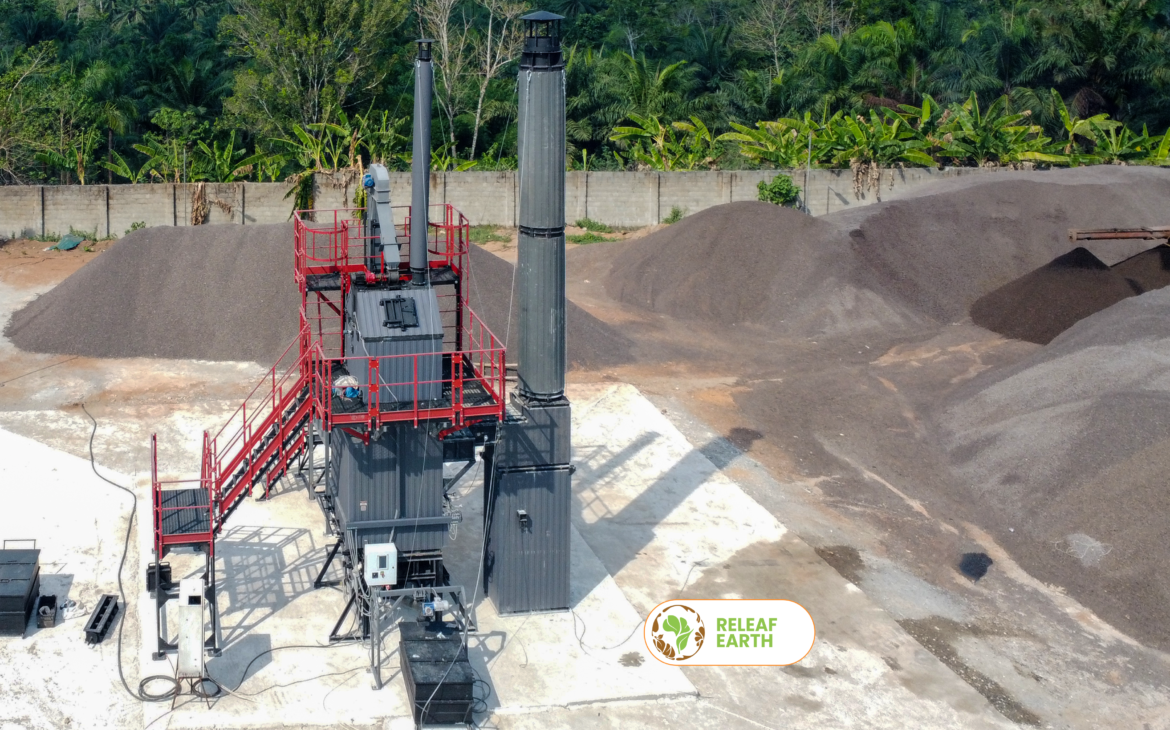
The inaugural issuance, a verified tranche of 190 tonnes of carbon dioxide equivalent (tCO₂e), was generated at Releaf Earth’s biochar production facility in Iwuru, Cross River State.
At the facility, agricultural residues are converted into biochar through pyrolysis, a process that heats biomass in a low-oxygen environment. This thermally stabilizes the carbon into a solid, inert form capable of remaining locked in soil for centuries, effectively removing carbon dioxide from the atmosphere.
Unlike traditional forestry-based offsets, which carry risks of reversal due to deforestation, fire, or land-use change, biochar-based removals are considered highly durable. The chemically stable carbon structure significantly reduces the risk of re-release, offering buyers greater long-term storage certainty.
Releaf Earth issued the credits through the Rainbow Standard, a registry focused on high-durability removals aligned with global benchmarks, including ICROA, CRCF, and ICVCM frameworks. The company’s process is further backed by Inertinite Gold Certification, which verifies the quality and permanence of stored carbon.
To enhance transparency, Releaf Earth integrates its geospatial tracking system, known as SITE, with the Rainbow Protocol, enabling traceability of biomass from farm-level sourcing to final soil application.
“It’s a landmark moment for us at Releaf Earth, but more importantly, it’s a landmark moment for Nigeria and the continent,” Nzewi said, describing the development as a fundamental shift in how Africa participates in the global climate economy.
Releaf Earth Positions Africa in a Trillion-Dollar Market
As global decarbonisation efforts intensify, demand for high-integrity carbon removals is projected to rise sharply. Analysts estimate the sector could scale into a trillion-dollar industry in the coming decades as countries and corporations seek durable solutions to neutralize residual emissions.
Africa, which produces more than a billion tonnes of biomass annually, holds considerable untapped potential in this emerging market. Releaf Earth’s issuance demonstrates how agricultural residues, often treated as waste, can be transformed into climate finance assets.
The milestone also aligns with Nigeria’s broader climate and economic diversification strategy. President Bola Tinubu recently approved a national framework targeting $3 billion annually in carbon market revenue by 2030, positioning carbon finance as part of the country’s post-oil development pathway.
If scaled responsibly, carbon removals could allow Nigeria to export verified climate solutions alongside traditional commodities, attracting foreign investment while strengthening rural economies.
Beyond carbon markets, Releaf Earth’s model seeks to connect mitigation with rural development.
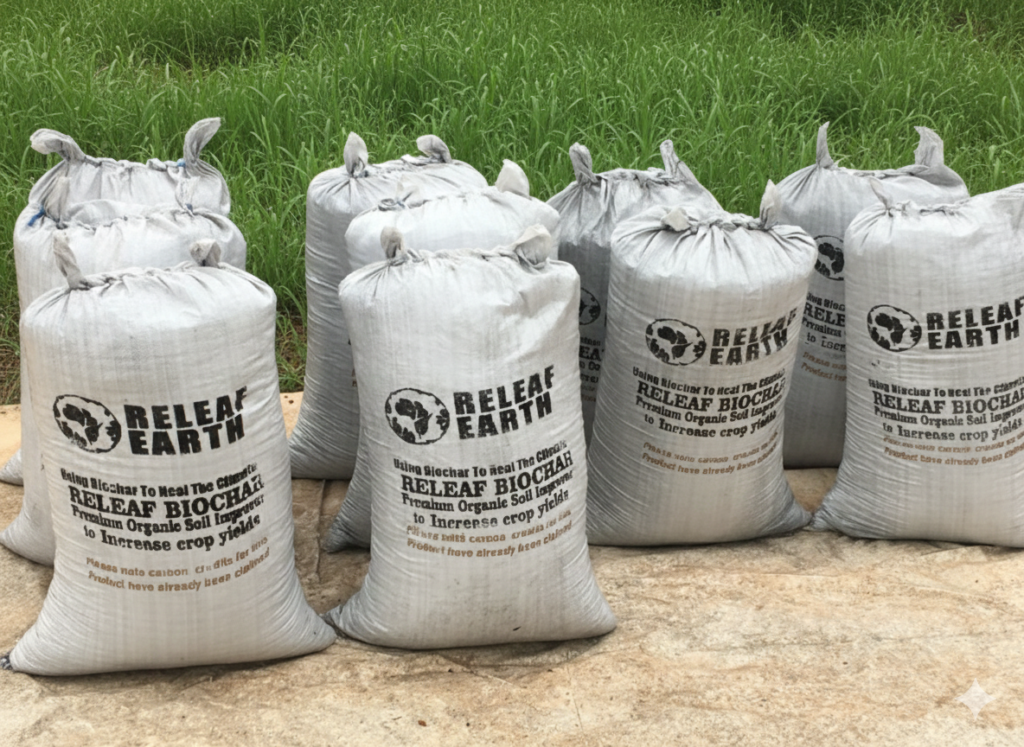
Biochar produced at the facility is returned to smallholder farmers as a soil amendment. According to the company, integrating biochar into degraded soils can increase crop yields by up to 23 percent, particularly in regions facing soil nutrient depletion and volatile fertilizer prices.
In addition, monetizing agricultural residues that were previously discarded or burned creates an additional revenue stream for farmers. Releaf Earth projects that, when fully scaled, the combined impact of yield improvement and biomass monetization could raise smallholder incomes by more than 50 percent.
A Test Case for High-Integrity Carbon Markets in Africa
The issuance comes amid heightened scrutiny of voluntary carbon markets, with growing emphasis on transparency, additionality, and permanence. High-durability removals such as biochar are increasingly viewed as essential to complement emissions reductions, particularly for hard-to-abate sectors.
Releaf Earth’s entry into the market, therefore, serves not only as a commercial milestone but as a test case for whether African-led climate technology companies can meet evolving global integrity standards while delivering measurable local benefits.
If successfully scaled, Nigeria’s first industrial carbon removal credits could mark the beginning of a new chapter, one in which climate action is not only an environmental imperative but a catalyst for sustainable development and rural prosperity.


