The world is walking a tightrope, a reality evidenced by the rising frequency and intensity of unprecedented climate disasters, from Hurricane Melissa in Jamaica to the typhoon in the Philippines. These events are increasingly linked to fossil fuel power-driven global warming, affecting the most vulnerable highly hence heightened calls for a Just Energy Transition.
Ironically, while the climate crisis worsens, economies are hungrier than ever for power to fuel industries, data centres, transport, and artificial intelligence. Yet for Africa, this remains a distant aspiration as the continent still grapples with an overwhelming energy poverty.
It is apparent no that ever that energy is no longer just a commodity but that it has become a geopolitical fault line. This has been the highlight of 2025, with governments finding themselves juggling energy security, affordability, and climate action amid rising global competition.
The International Energy Agency’s World Energy Outlook 2025 (WEO), released just two days after the opening of COP30, boldly asserts that the world has entered an era where energy decisions determine national security.
During the opening plenary, African Group of Negotiators Chair Dr. Richard Muyungi called on COP30 to adopt a decision that embeds equity and real sustainability into the transition.
“The Just Transition Pathways Work Programme is not just a technical exercise. It is a vehicle to operationalise equity and justice under the Paris Agreement,” said Dr. Muyungi.

Africa’s Strategic Crossroads
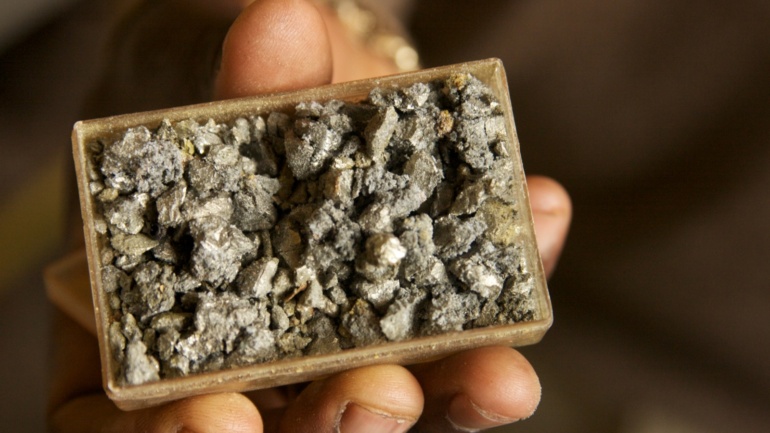
Unlike previous decades, when energy risks centered mainly on oil and gas, today vulnerabilities stretch across every fuel and technology. For the first time, tensions extend from LNG supply to the minerals powering solar panels, batteries, and electric vehicles.
Just Transition expert Dean Bhebhe cautions that failing to invest in local processing could trap Africa in a new form of dependence that will be more difficult to evade in the near future.
“Africa does not just need energy access; it needs energy sovereignty. This requires building local value chains, investing in public infrastructure, and centering people over profit,” added Dean. He stresses that its important we dont lose sight of the fact that whoever controls the minerals will control the energy future.

The Age of Electricity
The WEO report reveals a major turning point needed at a crucial point of the century, as the electricity demand is noted to be rising faster than total energy demand in every scenario. This is the fourth industrial revolution that is entirely built on electricity and tremendous technology.
Electricity already absorbs half of global energy investments, as much as it still accounts for only 20% of energy used today. Thus, the gap between demand and supply must be balanced before it widens further.
IEA Executive Director Fatih Birol warns that there is no other time when energy security tensions have applied to so many fuels and technologies at once.
If grids, storage, and transmission fail to keep up, he adds, the clean energy revolution could stall before it even begins.
Is COP30 Africa’s Moment to Go All-In?
Africa, home to the world’s highest solar potential, stands to benefit more than any other region from the booming electricity economy. Here, clean energy is not a climate burden but poses as one of the vantage points of Africa’s industrial opportunities.

Mohamed Adow, Director of Power Shift Africa, would emphasize how the movement to adopt clean and renewable energy is a train that has already left the station.
“The march of clean energy is now unstoppable, for We have an abundance of wind and solar potential that can power our development,through fully embracing a Just Energy Transition,” he remarks.
The WEO shows that by 2035, 80% of new global energy demand will come from regions rich in solar resources, many of them in Africa and across the Global South. Without deliberate investment, Africa risks repeating history, exporting raw minerals and importing finished products.
Despite geopolitical tensions, fossil fuel supplies remain abundant in the short term, but demand is flattening. Why? Because renewable energy has become cost-competitive, thus aids in the speed of the Just Energy Transition.
Economist Fadhel Kaboub explains how the fossil-fuel era’s ending is inevitable and is one that can’t be attributed to political courage demonstrated, but to the economics of renewables winning.
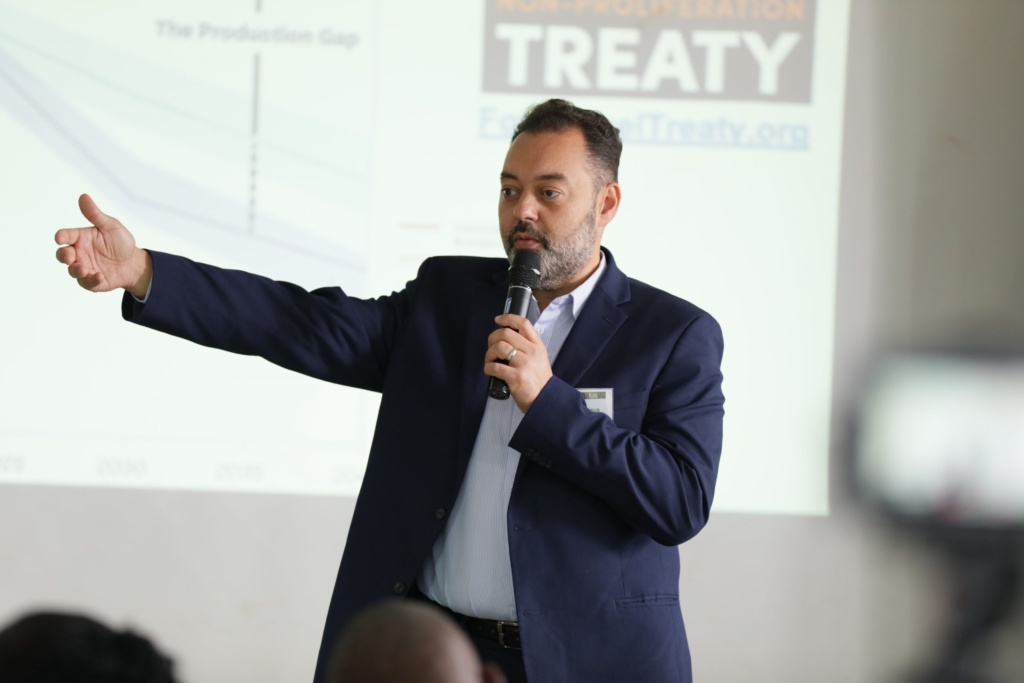
“Africa cannot transition by importing clean technology while exporting its minerals unprocessed. That would repeat colonial dependency under a green label,” said Fadhel.
The Human Truth in a Real Just Energy Transition
Even with technological advancements, 730 million people still lack electricity, and almost 2 billion still cook using polluting fuels.
Dr. Muyungi, echoing this reality, would speak on the continent’s plights with clean cooking issues, reminding that Just Transition pathways must move from talk to delivery, supporting initiatives like the Mission 300 into a reality.
“The Just Transition Pathways cannot remain a dialogue. It must deliver concrete outcomes that transform lives, providing clean cooking and expanding energy access,” added Dr. Muyungi.
Meanwhile, climate impacts worsen annually, with statistics showing that in 2023, weather-related damage to energy infrastructure affected more than 200 million households globally.
Bhebhe sums it up powerfully: “The real Just Energy Transition is not just technological, it is political. Africa must not sleepwalk into a future designed elsewhere.”
The WEO concludes that the world overshoots 1.5°C in every scenario, unless emissions fall dramatically.
Science still leaves a window of optimism coupled with actions open; if emissions decline rapidly enough, temperatures can return below 1.5°C later this century.
It’s openly noticeable how the world is thirsty for energy, but the future, whether resilient or repeating past injustices, depends on choices made today.
COP30 is proving that the transition will not be won by resources, but by political will.
Author Profile

-
Seeker.
Inspire AFRIKA.
Latest entries
 Climate9 October 2026Beyond Negotiations: Africa Expects Concrete Outcomes from Antalya
 Animals7 October 2026In Kajiado’s Drylands, Collective Selling of Small Herds Is Changing the Livestock Trade
 Oceans6 October 202640 Years of Ocean Cooperation: The Western Indian Ocean’s Next Test Is Implementation
 Adaptation5 October 2026Africa Is Financing Its Own Survival as Climate Adaptation Money Falls Short