From my reverie as I watching the foothills of Kilimanjaro roll past along the dusty road as the van made its slow descent down a dry creek and up again, the notification from my phone pulled me.
‘Welcome to Tanzania,’ it read, ‘…. Roam at the lowest rates on Airtel Tanzania…’ On it went.
“I can’t get any bars,” my colleague was complaining beside me.
“Look at this, roaming network, I showed him.”
“We’re deep in the savanna now, more than an hour since leaving the Kajiado-Namanga Highway, we’d have been at the border were we going to Jirani’s…”
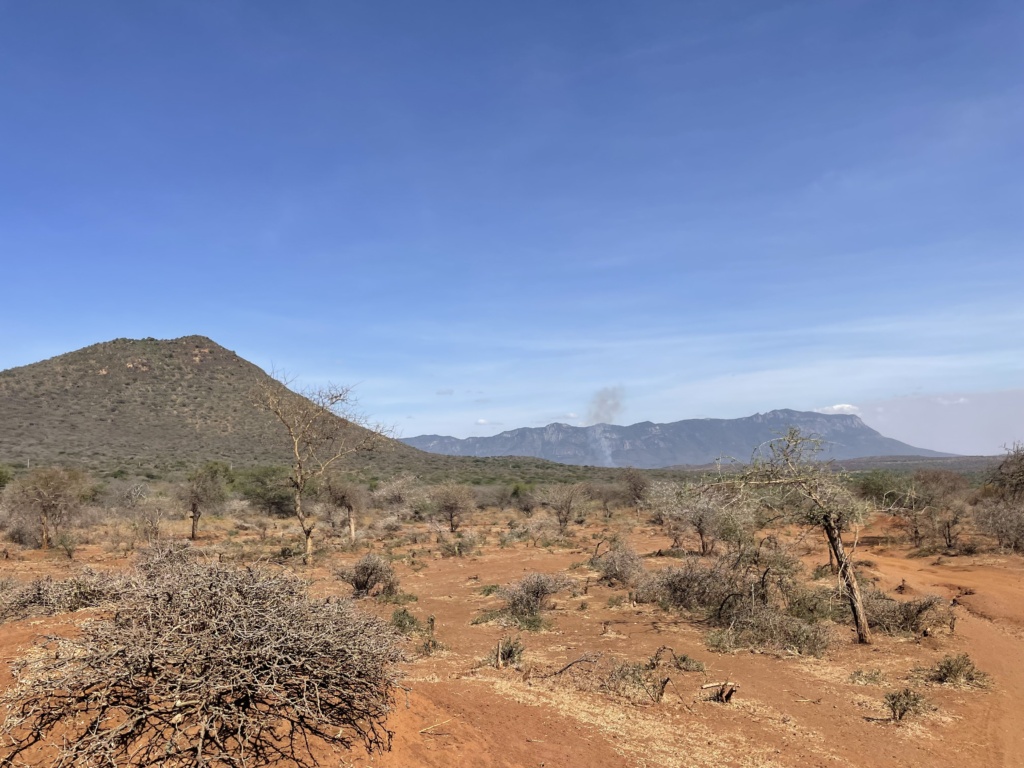
The conversation went on as the we wound past rolling plains of the dry grassland, and acacia and giant anthills standing like scattered sentries.
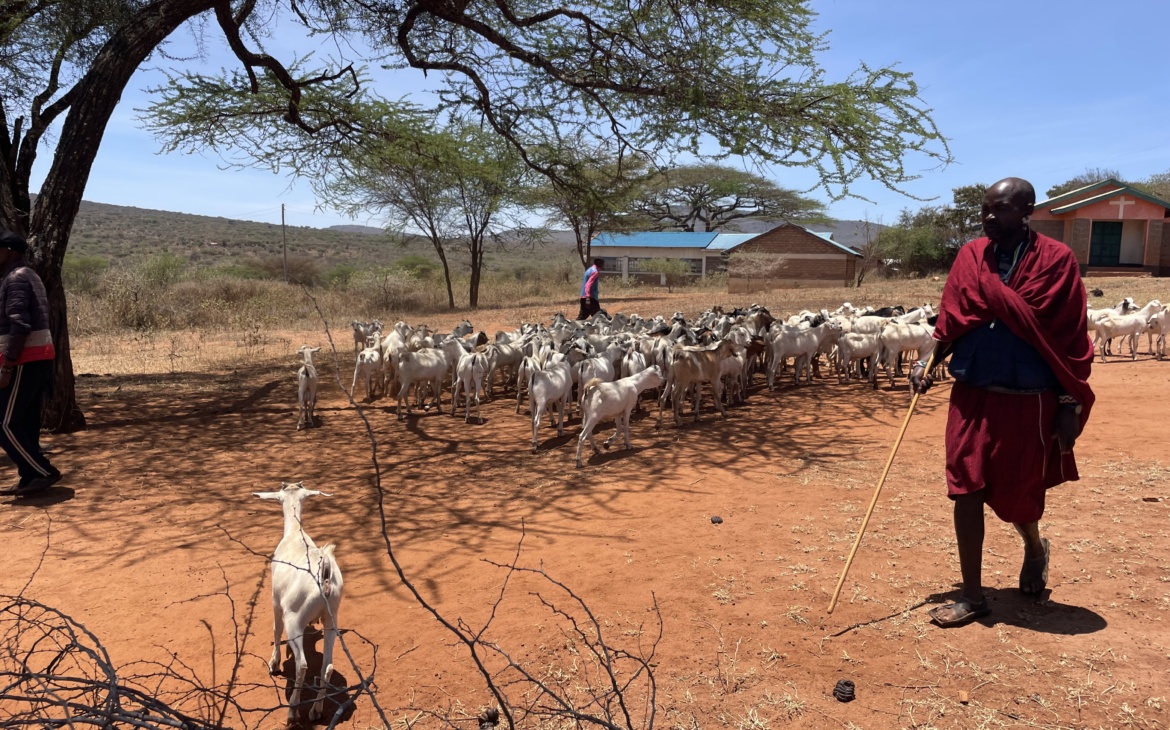
Accompanying experts and leads from Heifer International, we were going to Kumpa Meto, a small village ringed by hills and mountains, in Kajiado Central, to witness how Heifer International’s Kenya Livestock Marketing and Resilience Project(KLMR) project is supporting livestock producers to strengthen producer organizations, improve production, access private-sector services and create greater opportunities for Youth and women.
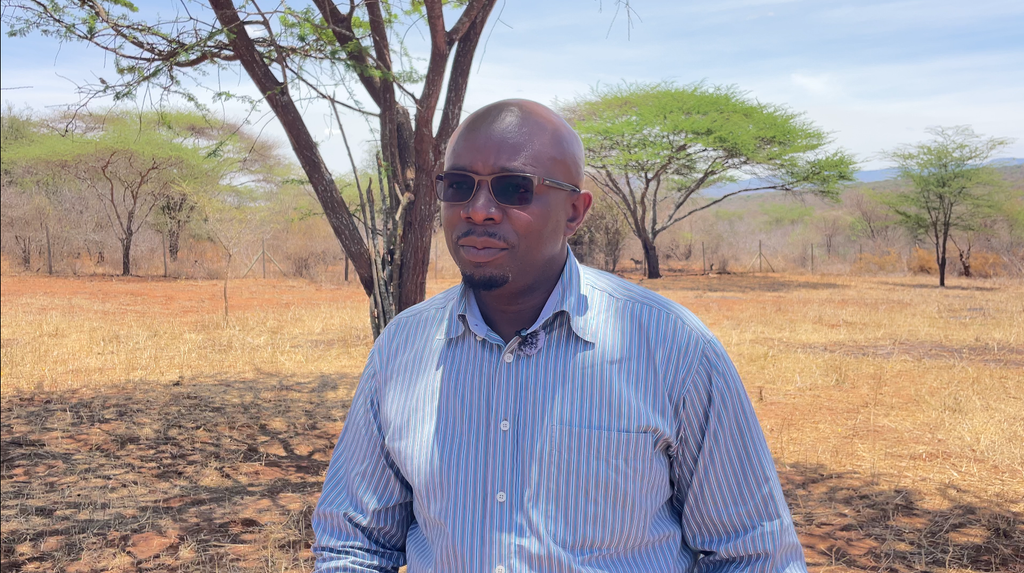
But first, we got to talking to Bernard Muhande, Heifer International’s enterprise development coordinator, who is supporting the KLMR project.
And there was something about the place that made our conversation about livestock feel less like a discussion about an enterprise and more like a conversation about survival.
“Kumpa Meto is a very dry area,” Muhande begins, gesturing towards the landscape. When the rains fail, he says, the land can become dry within weeks.
For the livestock keepers here, that dryness is not simply a backdrop. It determines how much feed is available, how many animals the land can sustain and, ultimately, how much a farmer can make from the animals they keep.
There are many animals, Muhande says, but that does not necessarily translate into better livelihoods.
One of the immediate problems is the market.
Farmers have animals to sell, but accessing a market that can offer a fair price has not always been easy. And even when they find a buyer, the quality and breed of the animals can determine what they are willing to pay.
“The type and breed of animals that they were rearing, especially the goats, they could not be able to fetch good prices in the market,” he says.
So, part of the work with the community has been to improve the quality of the animals, including introducing different breeds of rams to improve the goats.
But there was another problem, less visible than the dry grass and bare patches of earth around us: information.
Farmers did not always know what their animals were fetching in different markets.
“Providing them with that has been a key game changer in ensuring that they have information and they’re able to negotiate depending on the quality of animals that they have,” Muhande says.
It is a simple shift, but an important one. A farmer who knows what the market is paying walks into a transaction differently from one who has no idea what an animal is worth beyond what a buyer standing in front of them is willing to offer.
And then there is the other part of the equation: numbers.
A single farmer may have only one or two goats ready for sale. That gives a broker who has come looking for a few animals considerable room to dictate the terms. But when dozens, or hundreds, of farmers bring their animals together, the arithmetic changes.
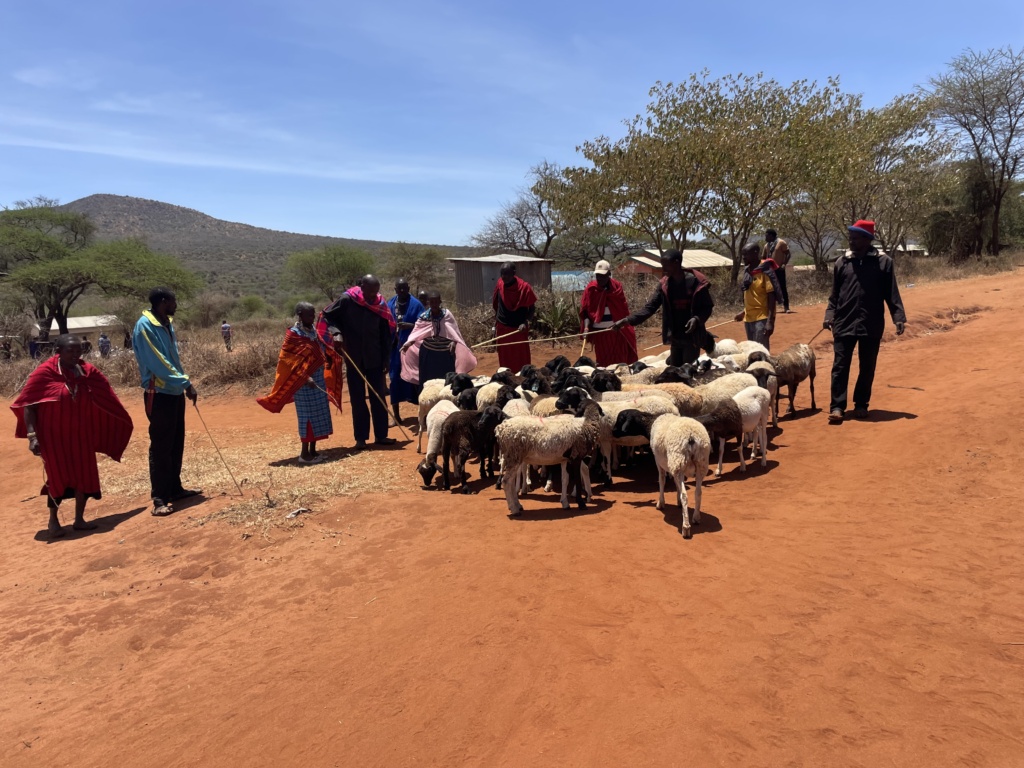
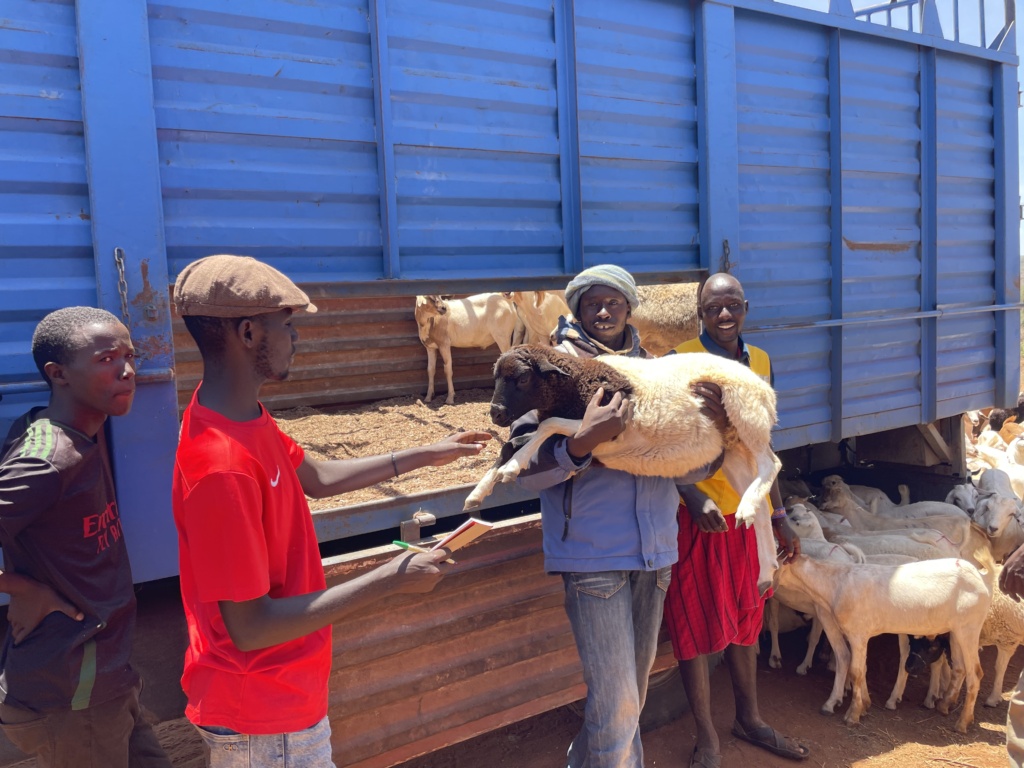
“What you just witnessed here is hundreds of community members who have brought in one or two of their goats, bringing them together, but you’ve actually seen that it has filled a lorry,” Muhande says.
That lorry, in many ways, is the point.
Aggregation turns scattered livestock into a marketable volume. It gives farmers something they may not have had individually: bargaining power.
“With that, they’re able to dictate the price. They’re able to negotiate even on the prices,” he says.
The ambition is to make this more than an occasional exercise. Muhande wants the community to consistently aggregate animals and build relationships with processors that need a reliable supply of livestock.
He mentions potential market destinations including KenMeat, Choice Meats, Farmers Choice and the Kenya Meat Commission.
But there is an intriguing climate dimension to this seemingly straightforward market intervention.
In a dryland community, more animals are not necessarily the same thing as more security.
“Access to market indirectly leads to managing the stock size,” Muhande says.
Without a structured and predictable market, families can keep large numbers of animals without knowing when or where they will sell them. When pasture is scarce, that can place additional pressure on already fragile natural resources.
A reliable market, therefore, can change the calculation. If farmers know there is somewhere to take animals and have a better sense of the price they can expect, they can plan how many animals to sell and when.
The project is also working with the community on measures aimed at restoring the land and improving the availability of fodder.
Half-moons are being dug to capture rainwater and support the regeneration of degraded areas, while fodder is being planted to provide feed that can withstand some of the shocks associated with the changing climate.
The thinking is that a healthier landscape can support healthier animals, while healthier animals that meet market requirements can generate better returns for their owners.
It is a cycle that begins, perhaps surprisingly, with the market.
And for Mohande, the ultimate measure of the intervention will not be how long the project remains in the community, but what the farmers can do after the support is gone.
“My message is to teach them how to fish, not to give them fish,” he says.
The fishing, in this case, is not literal. It is knowing the market, improving the animal, bringing together enough volume to negotiate and building relationships with buyers.
The next ambition is to take that relationship a step further.
“What I would really want to see is for this community to have probably a contractual arrangement with the processors so that we cement this relationship,” Muhande says.
Back in Kumpa Meto, the dryland remains what it was when we arrived: expansive, dusty and unforgiving.
But somewhere within that landscape, a different calculation is beginning to take shape.
One goat may be a household asset. Hundreds of goats, aggregated and connected to a reliable market, could become something more: a pathway to income, better livestock management and, perhaps, greater resilience in a place where the rains cannot be taken for granted.
Read Also: Africa Turns to Homegrown Solutions to Close Livestock Productivity Gap
Author Profile

- How can we learn if we don't question?
Latest entries
 Oceans22 October 2026Seamounts Under Threat: Can Governments Turn Ocean Promises into Protection?
 Events21 October 2026New Guide Links Animal Welfare to Biodiversity and Human Health
 COP1717 October 2026The World Has a Plan to Save Nature. Can It Deliver by 2030?
 Agriculture16 October 2026“There Is No Shortcut”: A Kiambu Grower’s Decade in Mushrooms