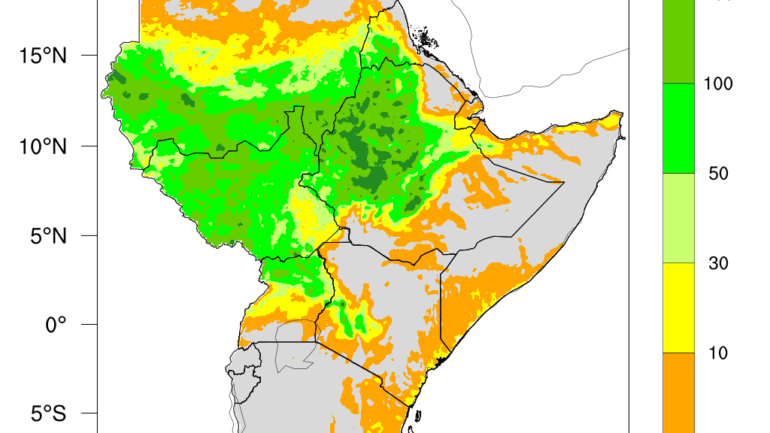
As September transitions into October, the Greater Horn of Africa (GHA) is facing a week of weather extremes, with soaking rains in some regions and searing heat in others, as outlined in the forecast from 30th September to 7th October.
The latest climate outlook from IGAD-ICPAC paints a picture of a region where excessive water and excessive heat collide, raising concerns about floods, crop losses, and increased human vulnerability.
Heavy Skies Over South Sudan and Ethiopia
Based on the forecast, communities in central to northern South Sudan and western Ethiopia are expected to experience a surge, with forecasts pointing to rainfall above 200 millimeters in just one week.
Such volumes are not just numbers; they translate into swollen rivers, impassable roads, and potential displacement in flood-prone zones.
The situation is further complicated by projections of exceptional rainfall, levels that rank among the highest 10% ever recorded in these areas.
Similar risks loom in parts of northern Somalia and central to northern Uganda, where flash floods could disrupt livelihoods.

When the Rains are Too Much, or Too Little
Across other parts of the Greater Horn of Africa, Uganda, Rwanda, northern Burundi, and western Kenya, rainfall between 50 to 200 millimeters is forecast, largely considered normal but still significant for farming communities eager to save crops from the harsh dry spells earlier this year.
However, the picture shifts drastically southward: central and southern Somalia, along with southern Ethiopia, are likely to receive below-average rains. For already drought-stressed regions, this shortfall could worsen food insecurity.

Heat Rising Across the Horn
Even as some regions grapple with floods, others will swelter. The Afar region of Ethiopia and parts of Sudan are expected to see temperatures climbing above 32°C, with elevated heat stress levels threatening both human health and livestock survival. The Red Sea coast is flagged as a hotspot for dangerous heat conditions.
Across much of the GHA, including Eritrea, Djibouti, Somalia, and eastern Kenya, temperatures between 20°C and 32°C will prevail, though warmer-than-average trends suggest climate stress is mounting.
Only a handful of regions, such as central Ethiopia and the highlands of Rwanda and Burundi, will enjoy mild relief with sub-20°C conditions.

Floods, Heat, and the Human Toll
The forecast outlines the fragile balance that communities in the Horn must navigate: too much rain in some areas, too little in others, and heat that pushes health systems and agriculture to their limits.
Experts warn that north-central Uganda, western Ethiopia, and central South Sudan are particularly vulnerable to flooding, which could damage infrastructure and displace thousands.
Meanwhile, farmers in Somalia and Ethiopia’s southern zones worry about yet another below-par season, deepening food crises. Health experts also caution that prolonged heat spells may drive up cases of dehydration, vector-borne diseases, and livestock deaths, adding pressure to already strained resources.
A Region on the Climate Frontline
For the Greater Horn of Africa, these forecasts are not isolated events; they reflect the broader story of a region on the frontline of climate change. Weather extremes have become more frequent, less predictable, and more punishing.
From the prospect of floods to the menace of heatwaves, communities must brace not only for survival but also for resilience-building.

As October begins, the skies will dictate the rhythm of life in the Horn. Whether through pounding rains or scorching heat, nature is once again reminding the region of its vulnerability and its urgent need for adaptive responses.