
The World Meteorological Organization (WMO) has reaffirmed forecasts indicating a high likelihood of El Niño developing in the coming months, a development that could influence weather patterns across many parts of the world.
According to the WMO, tropical Pacific sea surface temperatures continued to rise as of mid-May, supporting forecasts that El Niño conditions are very likely to emerge. The organization estimates an 80 percent probability of El Niño developing during the June–July–August 2026 period, while the likelihood of neutral ENSO conditions stands at around 20 percent.
For the remainder of the forecast period, including July–September, August–October and September–November, El Niño is expected to become firmly established. Forecast models indicate that the probability of El Niño could rise to around 90 percent, while the likelihood of ENSO-neutral conditions declines to approximately 10 percent.
The WMO notes that the redevelopment of La Niña remains unlikely throughout the forecast period. However, it emphasizes that ENSO forecasts should be considered alongside regional and local climate factors when assessing potential impacts.
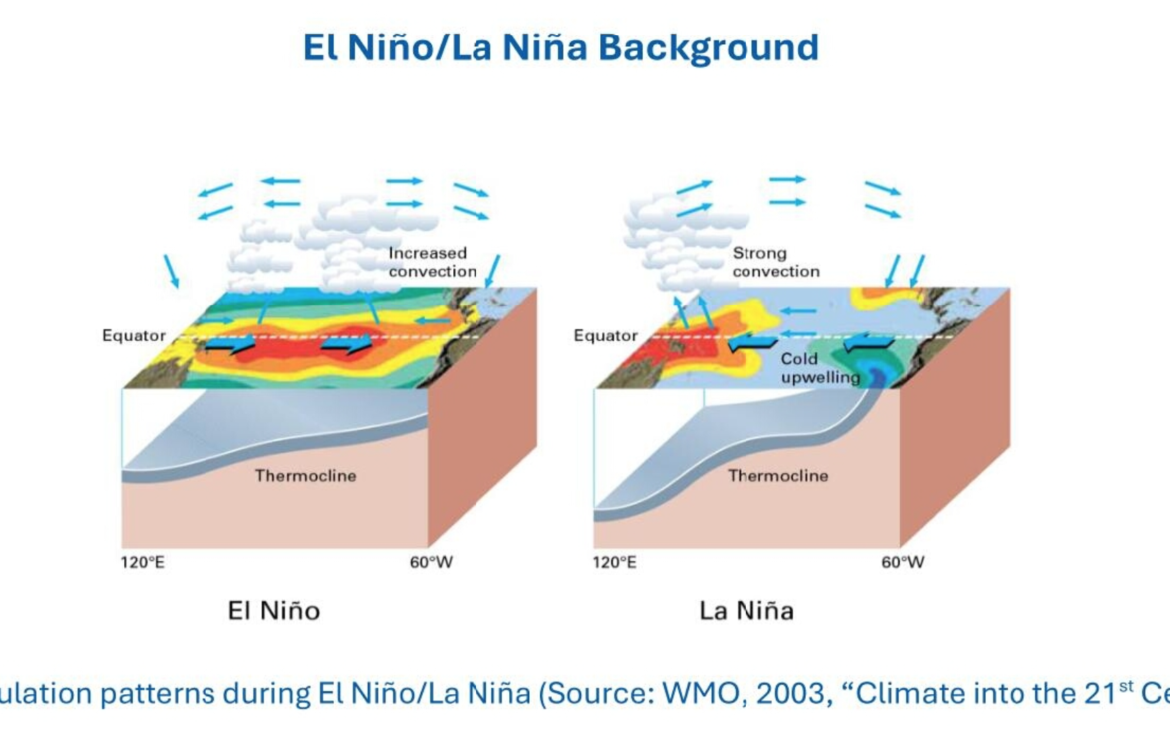
Research over recent decades has highlighted the important role of interactions between the atmosphere and ocean in the tropical Pacific Ocean in shaping global weather and climate patterns.
El Niño occurs when sea surface temperatures in the central and eastern tropical Pacific become significantly warmer than average. In contrast, La Niña develops when these waters become cooler than normal. These temperature changes can trigger shifts in weather patterns worldwide and often persist for 12 months or longer.
One of the most notable El Niño events occurred in 1997–1998 and was followed by a prolonged La Niña episode that lasted from mid-1998 to early 2001. While El Niño and La Niña events influence the likelihood of certain climate outcomes, no two events produce identical impacts.
Although stronger El Niño events generally result in more pronounced climate effects, even moderate events can generate significant consequences in some regions. Their impacts may include changes in rainfall patterns, increased drought or flood risks, disruptions to agriculture and water resources, and broader implications for food security and livelihoods.
As climate experts continue to monitor conditions in the Pacific Ocean, governments, communities and sectors dependent on climate-sensitive activities are being encouraged to remain informed and prepared for potential impacts associated with the developing El Niño event.
Author Profile

-
Seeker.
Inspire AFRIKA.
Latest entries
 Corporate15 October 2026Water, Sanitation and Digital Learning at the Centre of Garissa School Upgrade
 Agriculture14 October 2026Africa’s Food Systems Future Depends on Listening to Farmers
 Weather Forecasts13 October 2026Rain and Rising Temperatures Forecast Across the Greater Horn of Africa
 Climate9 October 2026Beyond Negotiations: Africa Expects Concrete Outcomes from Antalya


