
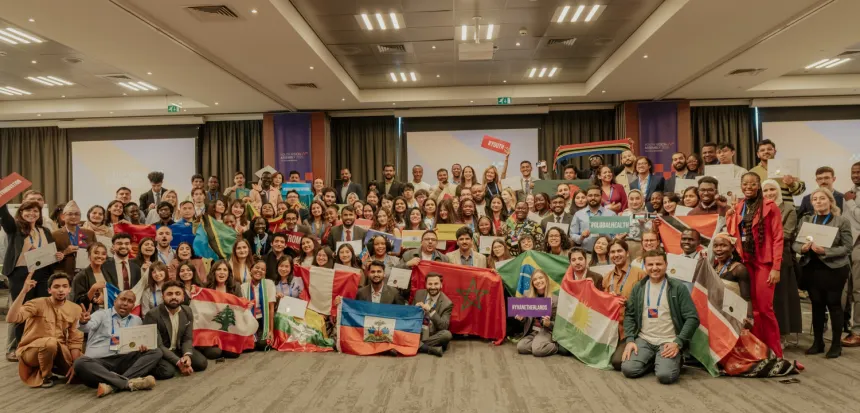
Young people are demanding a greater role in shaping global environmental policy, warning that they remain disproportionately affected by climate change, biodiversity loss, and pollution despite being largely excluded from decision-making systems.
The call was amplified through the Global Youth Declaration on the Environment presented by the Children and Youth Major Group to UNEP (CYMG), which urges governments to embed intergenerational equity into environmental governance and institutionalise meaningful youth participation at all levels.
The declaration argues that youth engagement must move beyond symbolic representation and instead include clear accountability mechanisms, dedicated funding, and structured participation in the design and implementation of national climate and biodiversity frameworks such as Nationally Determined Contributions (NDCs), National Adaptation Plans (NAPs), Long-Term Strategies (LTS), and National Biodiversity Strategies and Action Plans (NBSAPs).
Speaking during the 2025 Youth Environment Assembly in Nairobi, UNEP Deputy Executive Director Elizabeth Mrema highlighted the growing influence of young people in environmental governance.
“Over 2,000 youth leaders showed once again that youth are not the future; they are partners shaping the world of today,” she said.
She further praised young people for bringing energy and science-driven advocacy into multilateral processes, noting that youth spaces within environmental negotiations are becoming increasingly substantive rather than symbolic.
According to UNEP, more than 1,000 young people from over 70 countries gathered ahead of UNEA-7 to discuss reforms in environmental governance, sustainable finance, pollution control, and climate resilience. Delegates repeatedly stressed the need for systems that are transparent, inclusive, and grounded in both science and lived experiences.
Moreover, the Global Youth Declaration also calls for governments to create youth advisory bodies, establish transparent online systems to track implementation of youth recommendations, and expand participation pathways through schools, universities, and youth organisations.
Special emphasis is placed on ensuring access for marginalised and underrepresented communities.
The push aligns with broader international commitments. UNICEF notes that the 2019 Declaration on Children, Youth and Climate Action was the first intergovernmental commitment specifically aimed at integrating children and youth perspectives into climate policy and action.
Environmental governance experts argue that intergenerational equity is central to sustainable development because environmental decisions made today will shape the wellbeing of future generations.
The principle was first strongly articulated in the 1972 Stockholm Declaration, which affirmed humanity’s responsibility to protect and improve the environment for both present and future generations.
Youth leaders involved in the declaration say the message is simple: young people should not merely inherit environmental decisions; they must help make them.
Author Profile

- How can we learn if we don't question?
Latest entries
 Oceans22 October 2026Seamounts Under Threat: Can Governments Turn Ocean Promises into Protection?
 Events21 October 2026New Guide Links Animal Welfare to Biodiversity and Human Health
 COP1717 October 2026The World Has a Plan to Save Nature. Can It Deliver by 2030?
 Agriculture16 October 2026“There Is No Shortcut”: A Kiambu Grower’s Decade in Mushrooms


