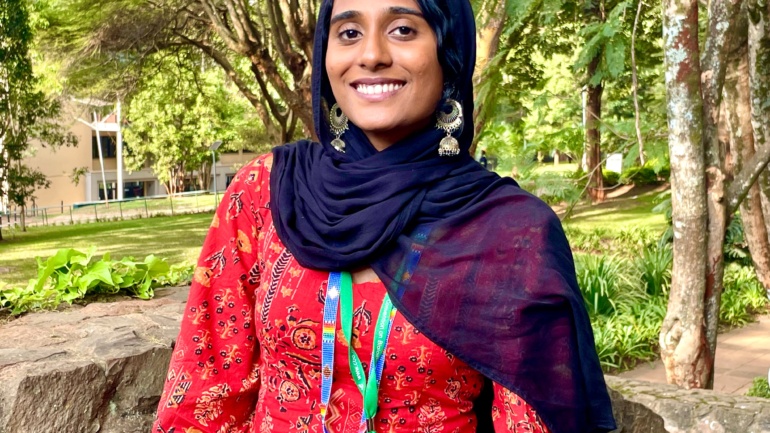
In most of our communities, the youth are rarely heard or considered in discussions to effect change. However, Riptoya Elema, a young change-maker from Marsabit County, an International Relations and Diplomacy graduate from the Catholic University of East Africa, with a vision born from scribbling in her notebook in high school, is defying the odds and leading from the margins.
“Move Northern Kenya is a vision born out of resilience and the need for culture-led climate action,” says the CEO of the youth-led organization.
In 2021, Kenya was ravaged by drought, and the arid northern part of the country bore the brunt of a drought that affected approximately 2 million households nationwide. An estimated 2.4 million livestock perished across Kenya, and Pastoralists faced increased distances to water sources, with return trekking distances from grazing areas to water points around 100–400% above average.
“When President Uhuru declared the drought a natural disaster, our community was greatly affected, and within my peer group, we knew we had to be part of a community-driven change rooted in lived experience to build a resilient future,” says Miss Riptoya.

Aligning with the SDGs
Since the adoption of the Sustainable Development Goals in 2015 by United Nations member states, sustainability has informed peace and prosperity for peace and the planet. “The SDGs are the blueprint of our organization,” she says.
To promote climate action (SDG13), Move Northern Kenya carries out training for both volunteers and communities and has executed several projects to this effect.
“We’ve implemented tree planting in schools and agricultural training in communities; beekeeping and organic strip farming,” says Miss Riptoya, adding that they also distribute seedballs to communities, which are cost-effective and easy to use to promote reforestation.
“You cannot implement projects without having consulted the community. Every community has its nuances, culture, and taboos. What is best for Nairobi may not be perfect for Northern Kenya,” she says, highlighting the core principle of SDG 11.
Pointing out the importance of understanding and respecting community practices, Riptoya admits that sitting down with elders was limited and fraught with hurdles as a young lady.
“To navigate, I always delivered our proposals through the chief, a fellow elder who would then present them on our behalf,” she says.
These simple initiatives have brought tangible impacts to the community.

“Some of the fruit trees from our school-level ecological greening efforts have borne fruit,” she says. She further adds that youth-led sustainable agriculture has grown in the communities.
“Youths, in a group of ten, after training by the organization, have started group farms, beekeeping, and organic strip farming.” This highlights the organization’s youth empowerment through agriculture, with sustainable and income-generating practices.
Funded through member contributions, family members, and donors, Move Northern Kenya emphasizes the value of the inclusion of every community member, in the principle of equity and participation.
“In principle of equity, we provide people with disabilities with artificial limbs, tricycles, and incorporate them in climate programs,” she says.
“During one of our training sessions in the community, a person with a disability said it was the first time they had seen young people take up their cause in the drive for meaningful change,” Riptoya says, adding that such stories inspire her and her organization to work even harder.
Community-led Climate Solutions
Riptoya emphasizes that development must be community-driven, not externally imposed. Reflecting on policy gaps and the real-world consequences, she highlights an incident where an organization built toilets and sanitation amenities for a community. A few months later, the buildings were vandalized, “and mabatis used to build mayattas.”
“This revealed the disconnect between policy design and local needs, emphasizing why participatory planning is critical in tailoring solutions to local realities,” says Riptoya.

To ensure success in engaging the community, Riptoya bridges cultural barriers with intermediaries.
“It is crucial to leverage the existing community structures to gain support,” she says.
Besides gender bias, Riptoya reveals that funding and limited access to global opportunities are major challenges to youth-led initiatives.
“Youth are limited to attending certain conferences, to interact and pitch ideas, due to the high charges on registration and logistics,” she decries.
She calls for greater access and equity for grassroots youth organizations to share ideas at global forums and secure broader funding.
“Also, youth need capacity building to understand the importance, and how to monitor, evaluate, and scale projects,” she says, adding that this will assure the success of projects.
Hopes for Northern Kenya
“Northern Kenya has been systematically marginalized, and devolution has not been optimal in delivery,” says Riptoya. She points out this is a key starting point for authentic and grounded development.

Move Northern Kenya envisions climate resilience and inclusive development with systems that can withstand climate shocks and support human development, and hopes to bridge the development gap.
Riptoya recounts her journey with Move Northern Kenya as one of growth and personal improvement.
“Leadership requires patience and tolerance. As a youth, it has been illuminating to understand that I cannot do everything, but I can do what I can,” she says.
Read Also: African Youth Take the Lead at the Upcoming CorpsAfrica Conference