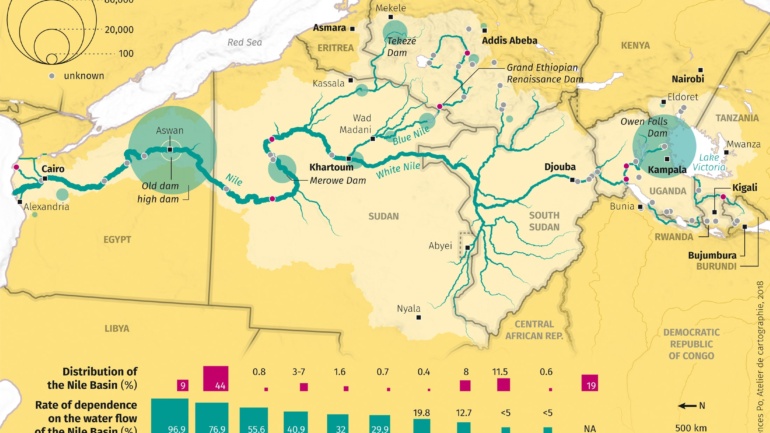
South Sudan is likely to experience lower-than-normal rainfall and hotter temperatures in the coming months, according to a new Seasonal Hydrological Outlook and Flood Advisory released by the Nile Basin Initiative.
The forecast, which covers the June–July–August–September (JJAS) 2026 season, was developed in collaboration with national hydrological services across the Nile Basin and supported by the IGAD Climate Prediction and Applications Centre (ICPAC).
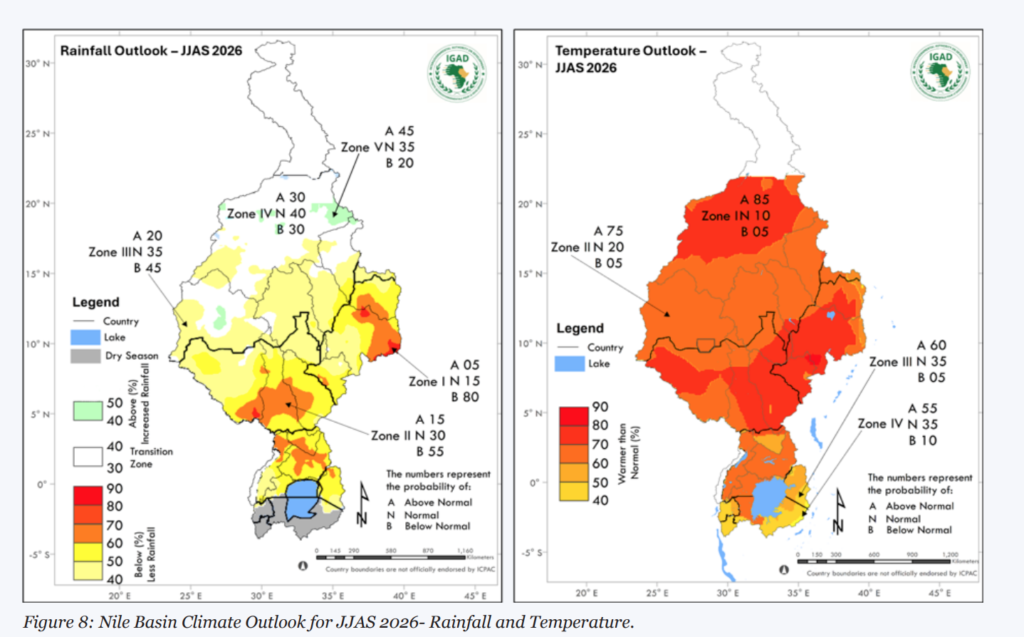
The outlook paints a concerning picture for many countries that depend on the Nile River system. Experts predict a high probability of below-average rainfall across much of the basin, including South Sudan, Uganda, Rwanda, Burundi, western Kenya, and the Ethiopian Highlands.
According to the Nile Basin Expert Working Group, the expected weather pattern closely resembles conditions experienced during the El Niño years of 1997 and 2023, which were marked by significant climate-related challenges in the region.
In South Sudan, where almost the entire country lies within the Nile Basin, experts forecast an over 80 percent chance of below-normal rainfall and an over 85 percent chance of above-normal temperatures across the Bahr El Ghazal, Sobat, Bahr El Jebel, and White Nile basins.
While some parts of northern Upper Nile, northwestern Unity, and northeastern Warrap may receive above-average rainfall, the likelihood remains relatively low.
The expected reduction in rainfall could affect river flows across the country. The report projects declining water levels at Mangala and Bor stations along the Bahr El Jebel, while river flows at Malakal are expected to increase due to water contributions from the Sobat River.
Although major flooding is not anticipated at most river monitoring stations, experts caution that flash floods could still occur in urban areas such as Juba and Kajokeji during intense rainfall events.
The forecast comes after the March–May 2026 rainy season brought above-average rainfall to the Equatorial Lakes region, leading to increased water levels in Lakes Victoria, Kyoga, and Albert. However, experts say these gains are unlikely to fully compensate for the expected rainfall deficit during the June–September season.
The projected weather conditions are expected to have implications for agriculture, water resources, transport, and energy production. Reduced rainfall combined with rising temperatures could increase water shortages, affect crop production, and place additional pressure on communities that rely on rain-fed farming and natural water sources.
To help communities prepare, the Nile Basin Initiative has urged governments and stakeholders to strengthen flood and drought preparedness measures.
Recommendations include clearing drainage channels, repairing damaged dykes, monitoring river levels, promoting water conservation, and improving public awareness of heat-related risks.
The report also calls for stronger cooperation among Nile Basin countries through the sharing of hydrological and meteorological information, investment in water infrastructure, and the adoption of nature-based solutions to manage floods and droughts.
Experts warn that the Ethiopian Highlands, which contribute about 85 percent of the Nile River’s flow, are also expected to receive below-normal rainfall. This could have far-reaching consequences for water availability, food security, energy generation, and ecosystems across the eleven countries that share the Nile Basin.
As the region enters the JJAS 2026 season, communities are being encouraged to remain vigilant, conserve water resources, and prepare for the possibility of drier-than-usual conditions in the months ahead.