
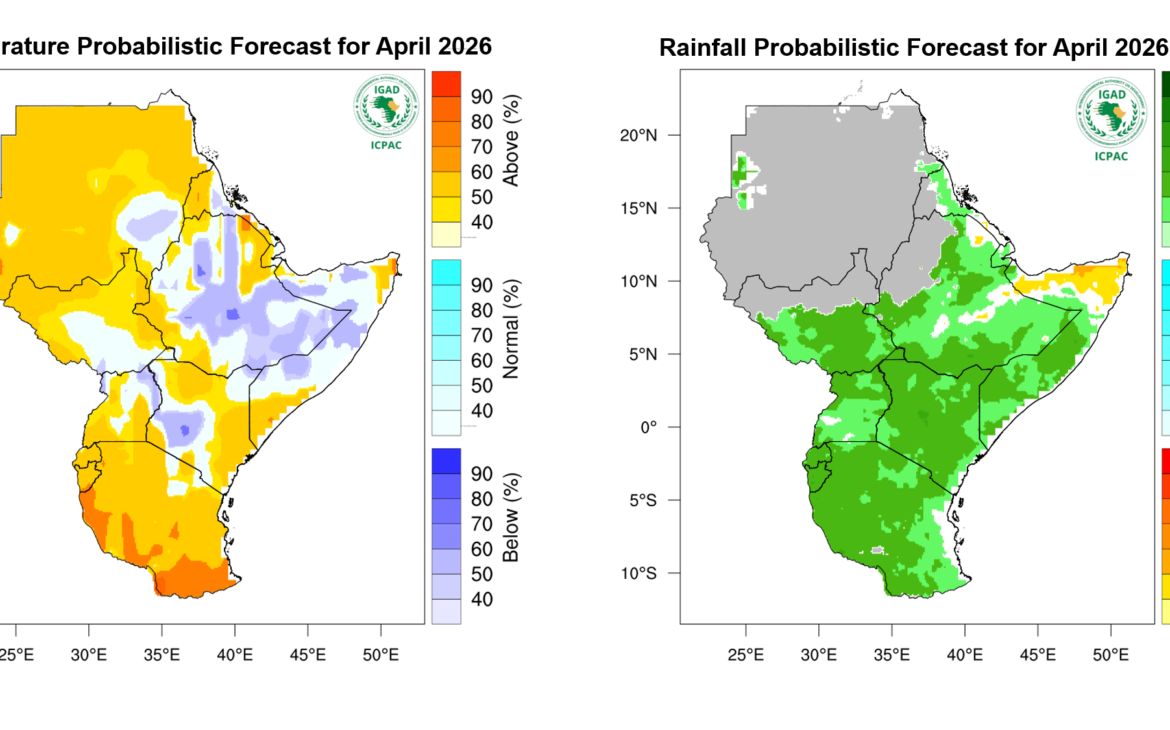
The IGAD Climate Prediction and Applications Centre has projected above-average rainfall across much of East Africa for April to June 2026, signaling a wetter-than-normal season likely to shape agriculture, water resources, and disaster preparedness across the region.
According to the latest outlook, most countries, including Ethiopia, Kenya, Uganda, Tanzania, Rwanda, Burundi, South Sudan, and parts of Somalia and Eritrea, are expected to receive enhanced rainfall. This trend is already evident in April, which marks the onset of the region’s long rains season.
However, localized dry conditions are expected in parts of northern Somalia, north-eastern Ethiopia, and southern Eritrea, highlighting uneven rainfall distribution across the region.
For April alone, the forecast indicates wetter-than-normal conditions across large swathes of East Africa, including Kenya and central to southern Somalia, while isolated dry pockets persist in the Horn of Africa.

Beyond rainfall, temperatures are also expected to remain largely above average. Warmer-than-usual conditions are projected across Sudan, South Sudan, Djibouti, Eritrea, Uganda, Tanzania, and parts of Kenya and Ethiopia.
The warming trend is expected to persist through the April–June season, with the highest probabilities concentrated in the northern parts of the region.
Still, some areas, including central to western Kenya, parts of Ethiopia, and northern Tanzania, may experience normal to cooler-than-average temperatures, offering slight relief from widespread warming.
The combined outlook of enhanced rainfall and rising temperatures presents a mixed scenario for the region.
On one hand, above-average rainfall could boost agricultural production, particularly in rain-fed systems that dominate much of East Africa. Improved soil moisture and water availability are expected to support planting activities during the critical growing season.
On the other hand, excess rainfall raises the risk of flooding, landslides, and infrastructure disruptions, especially in urban areas and flood-prone zones. Communities in low-lying regions and along river basins remain particularly vulnerable.

The forecast also outlines the growing variability of East Africa’s climate, where periods of intense rainfall are increasingly interspersed with localized dry spells, complicating planning for farmers and policymakers.
ICPAC has urged stakeholders to closely monitor updates from national meteorological services and utilize regional tools such as the East Africa Hazards Watch platform for timely risk information.
As the long rains season unfolds, the region faces a critical period where preparedness and adaptive planning will be key to maximizing benefits while minimizing climate-related risks.


