The Greater Horn of Africa(GHA) is set for a week of shifting weather conditions between 03 and 10 December 2025, with enhanced rainfall emerging in the east while most of the region continues to experience warmer-than-average temperatures.
The Earth Hazards Watch by the IGAD Climate Predictions and Applications Center(ICPAC)shows a notable split between areas expecting moderate rains and those remaining under lighter precipitation.
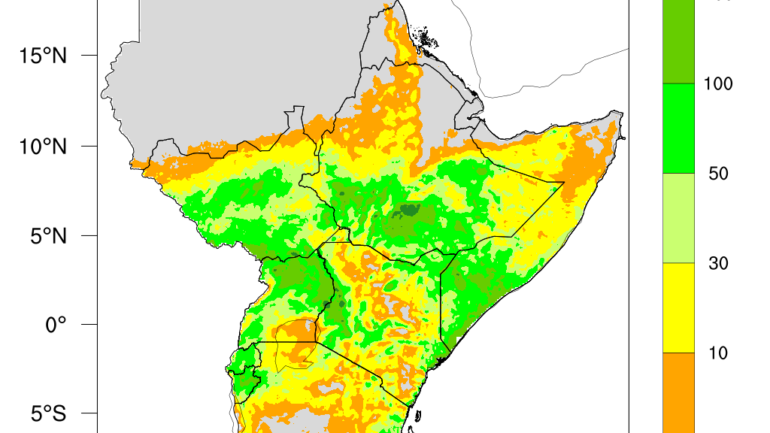
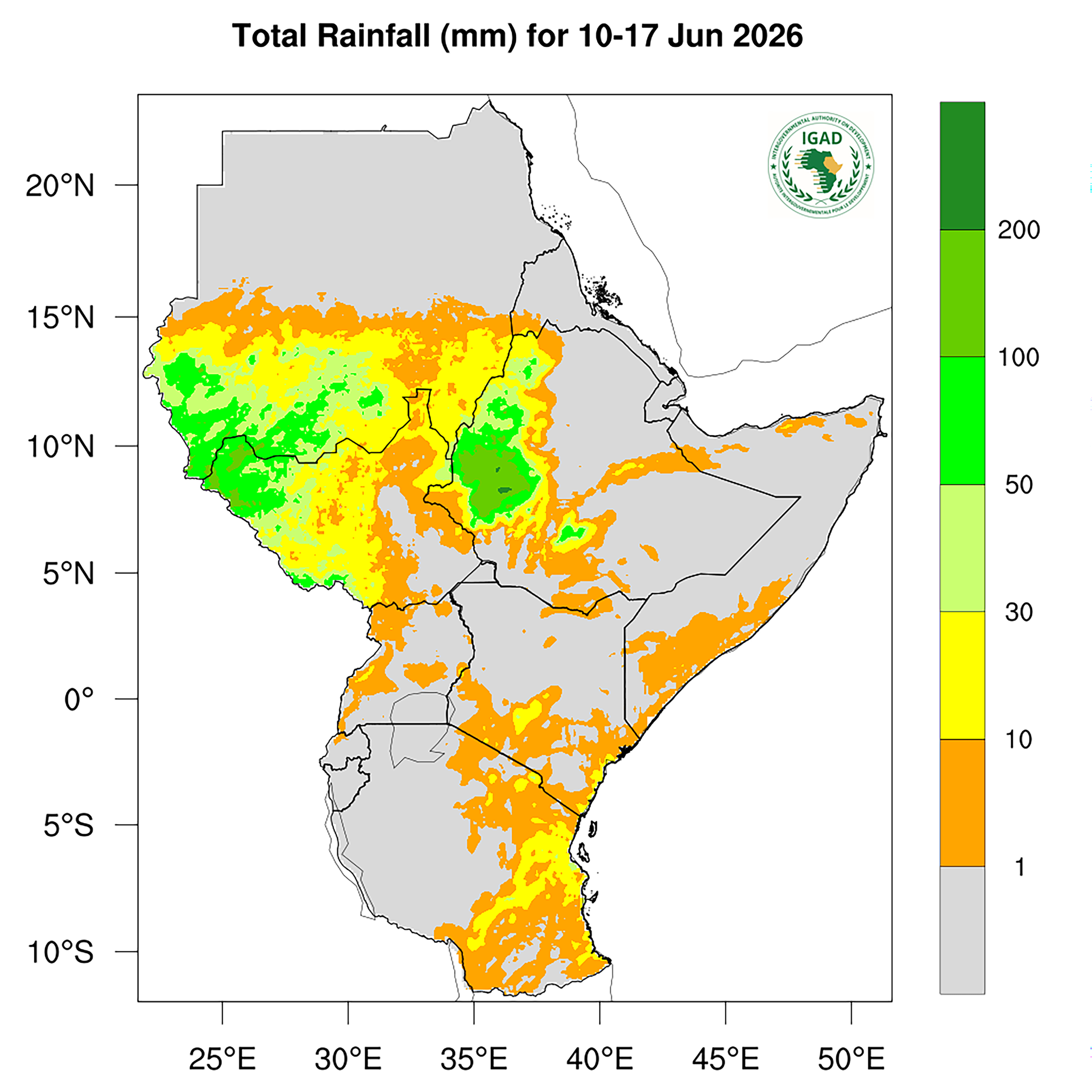
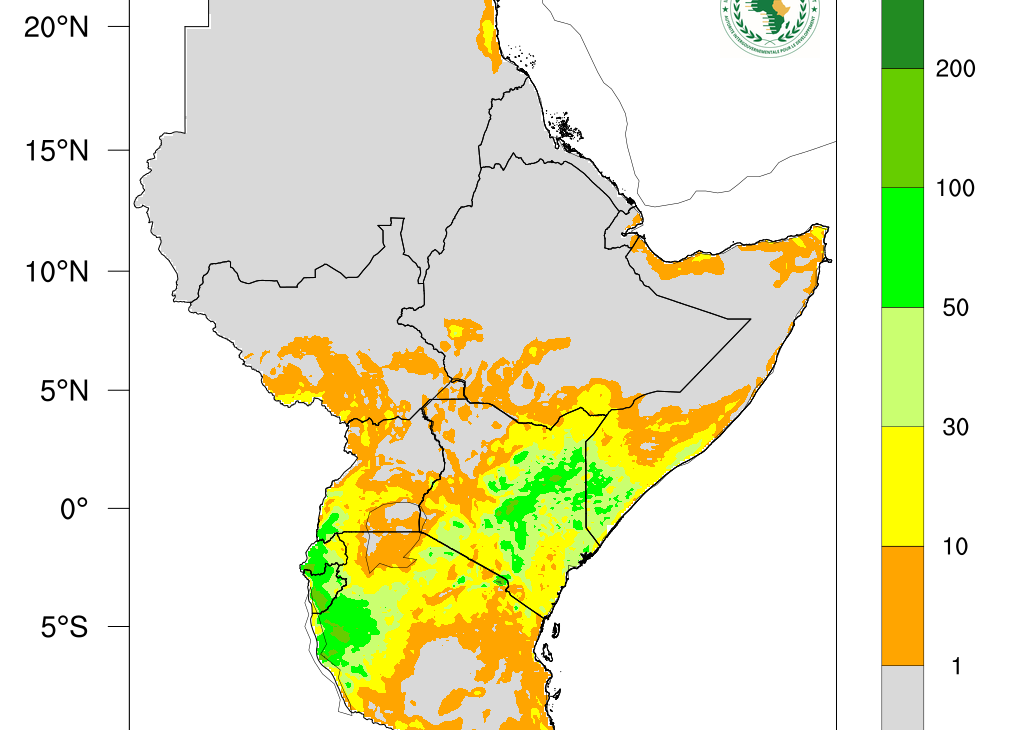
Moderate rainfall ranging between 50–200 mm is expected across central to western Burundi, Rwanda, and Tanzania, extending into central to eastern Kenya and southern Somalia. For the areas, these rains represent a short-term boost since they have recently been faced with increased dryness.
In contrast, light rainfall of less than 50 mm is likely over much of Kenya’s interior, coastal and northern Tanzania, western Uganda, and parts of southern South Sudan and Ethiopia.
Considering that 1 mm equals one litre of water per square meter, these lighter totals suggest limited recharge for soils and surface water systems.

Rainfall anomalies highlight a strong wet signal over eastern Kenya and southern Somalia, where precipitation is expected to exceed seasonal averages. However, deficits persist across most of Tanzania, Rwanda, Uganda, and the southern corridor of Kenya, reflecting continued spatial variability in the region’s rainfall distribution.
The forecast further reveals how North-eastern Kenya stands out, pointing to exceptional rainfall exceeding the 90th percentile, signalling a potential for intense, localized downpours.
The temperature forecasts show a continuation of warmer conditions across much of the Greater Horn of Africa(GHA).
It indicates that moderate to high temperatures (20–32°C) are expected broadly within the whole region. This will be accompanied by milder conditions below 20°C, confined to western Burundi and Rwanda, south-western Uganda, central to western Kenya, northern Somalia, and sections of central to northern Ethiopia.

Temperature anomalies reinforce the dominance of heat across the greater horn of africa region. Revealing that warmer-than-usual temperatures will cover most areas, driven by regional atmospheric patterns.
In addition to the diverse contexts in the region, there are to be cooler-than-usual pockets that remain limited, appearing in parts of north-eastern Kenya, coastal Somalia, and isolated zones in Ethiopia and Tanzania.
Heat stress remains a significant concern, hence a constant reminder that drinking water continuously during the day is vital. Elevated levels of heat are projected over eastern Tanzania, eastern Kenya, southern Somalia, and large parts of South Sudan.

This is anticipated to have implications for outdoor labour, livestock resilience, and public health, especially in urban and arid environments.
Generally, the forecast points to a week that will be characterized by enhanced rainfall in the east, persistent deficits elsewhere, and widespread warmth. It comes out as a stark reminder of how increasingly uneven weather patterns are shaping the region’s early December climate.