The Greater Horn of Africa is heading into a week defined by contrast rather than coherence, as the weather divides sharply between places drowning in water and others simmering in unexpected heat.
Based on IGAD Climate predictions and Applications Center (ICPAC), November 11–18, 2025, forecasts that the Horn is a region preparing for two opposing climate realities: heavy rainfall with flood risks on one side, and unusually warm, rain-deficient conditions on the other. It is a portrait of a climate system stretching communities in opposite directions.
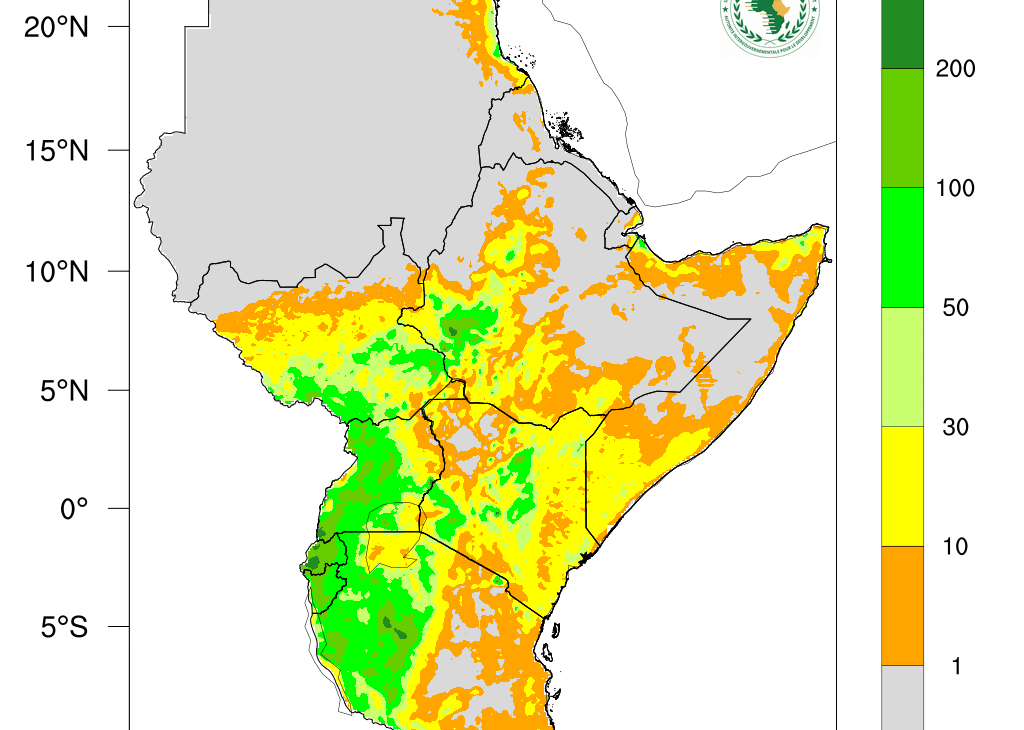
Across Rwanda, Burundi, western Tanzania, Uganda, and southern South Sudan, the atmosphere is heavily loaded. These areas are set to receive between 50 and 200 millimetres of rain, enough to swell rivers, saturate farmlands, and strain local drainage.
Yet it is not the quantity alone that raises concern, but the anomaly beneath it: several pockets, including central South Sudan, southwestern Ethiopia, western Tanzania, and western Uganda, will get more rain than they usually receive at this point in the season.
That deviation adds vulnerability to places whose homes, roads, and farmlands are simply not built for such excess.
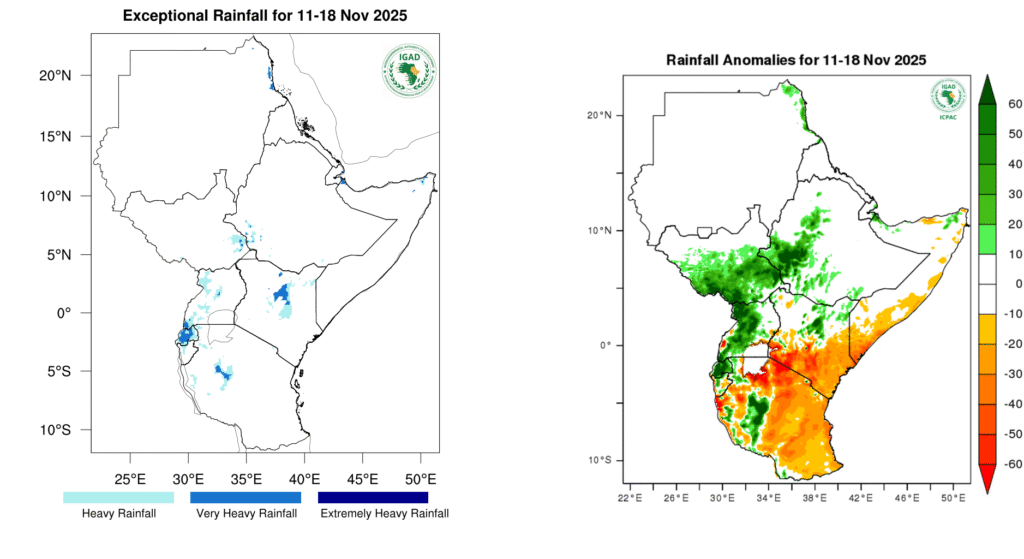
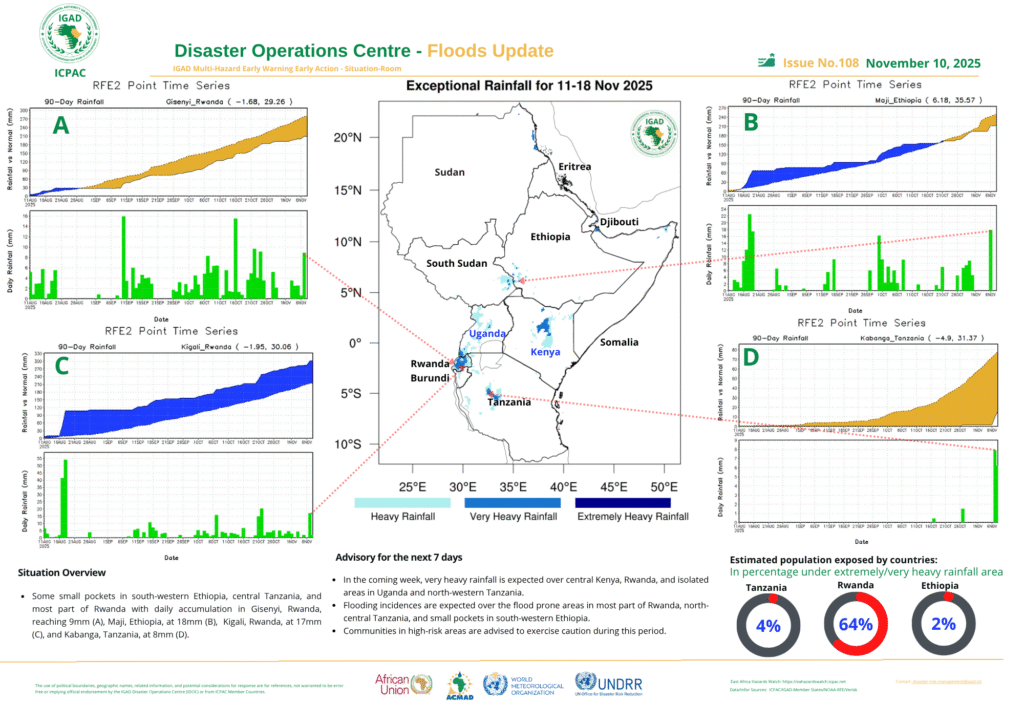
Even more alarming are the exceptional rainfall events expected in central Kenya, Rwanda, and isolated parts of Uganda and Tanzania, downpours crossing the 90th percentile threshold. In climate monitoring terms, this is the red zone.
Such events often trigger flash floods, landslides, and sudden displacement. The likelihood of flooding is already flagged for Rwanda, north-central Tanzania, and southwestern Ethiopia, where high rainfall totals intersect with above-normal anomalies and statistical extremes.
These are the areas where preparedness efforts could mean the difference between disruption and disaster.
Even though the rains dominate the story in some countries, others face their own quieter emergency. Despite being in the middle of what should be a dependable rainy period, central and southern Kenya, parts of Somalia, and a broad stretch of Tanzania are expected to receive less rainfall than usual.
This subtle shortfall can have outsized consequences: prematurely ending the season, limiting soil moisture for crops, and tightening pressure on already stressed water sources. It is an environmental contradiction: flood fears on one side of the region, moisture deficits on the other.
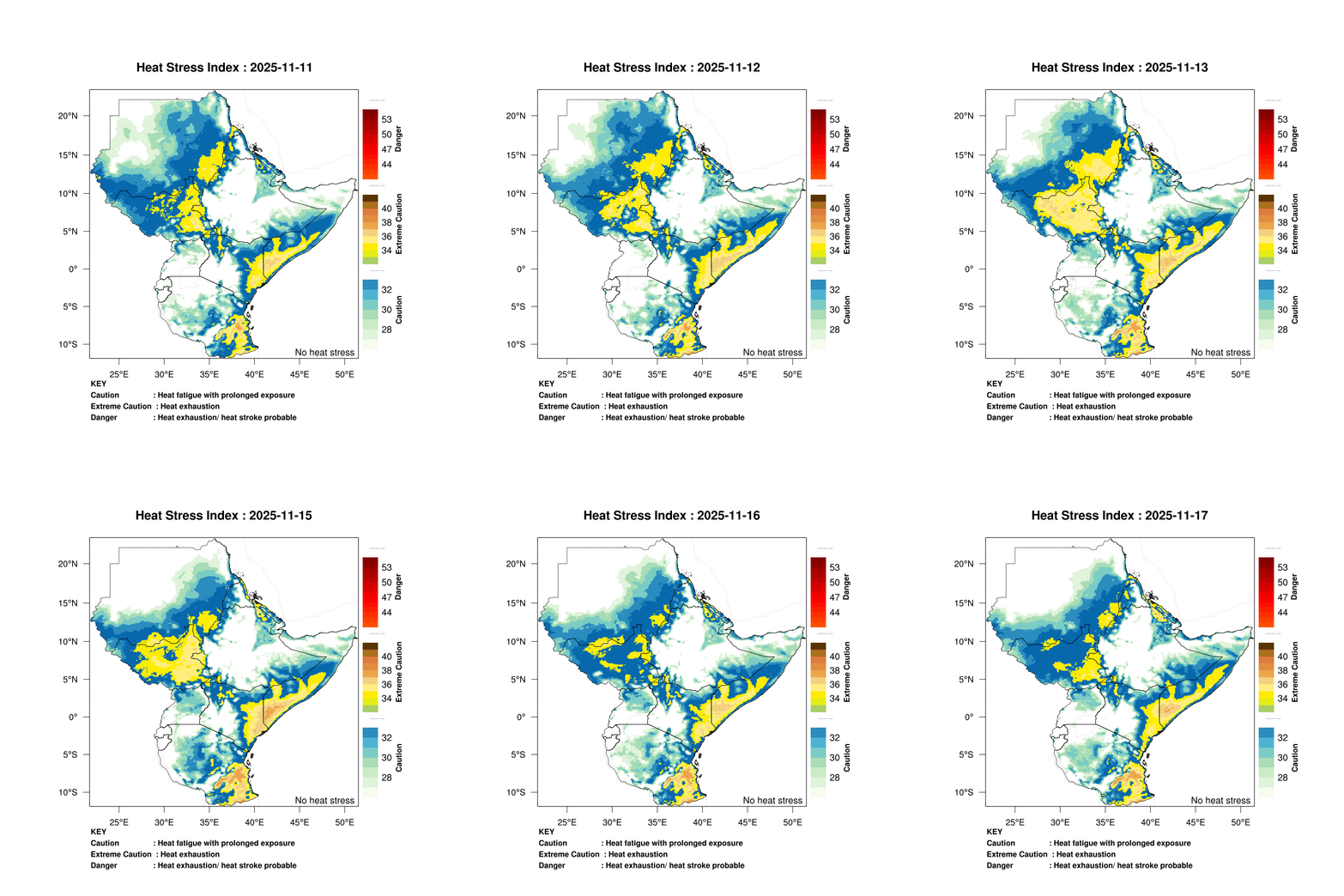
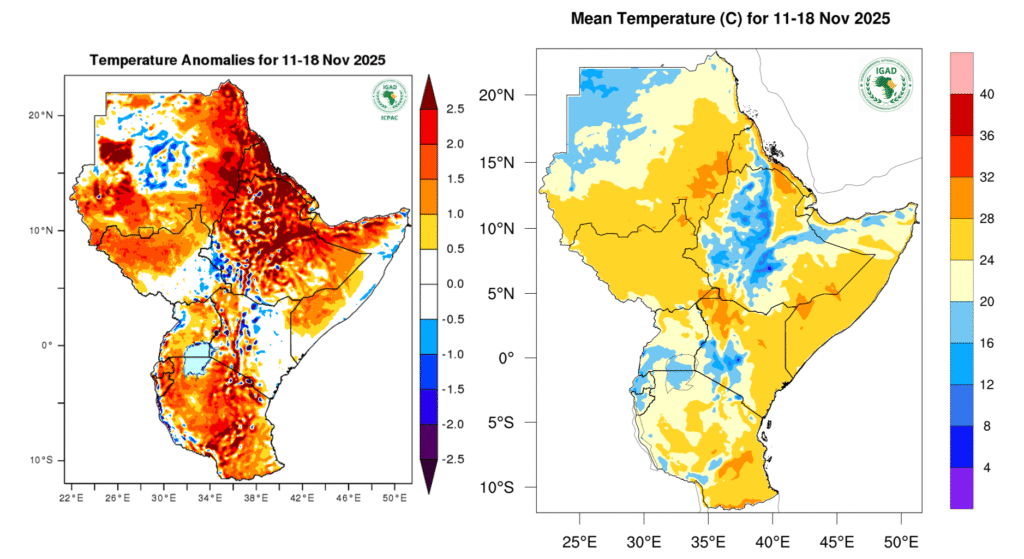
Layered over these diverging rain patterns is a blanket of warmer-than-average temperatures extending across nearly the entire GHA. In the wetter zones, heat will amplify humidity and slow down recovery after storms, creating muggy, health-challenging conditions.
In the drier zones, it will accelerate evaporation, strain vegetation, and deepen water scarcity. Southern Somalia and Tanzania’s coast face the harshest end of this heat, with elevated heat stress posing risks to outdoor workers, pastoralists, children, and older adults.
This mosaic of extremes highlights the complexity of climate threats in the region: too much water in some places, not enough in others, and a rising heat load binding everything together.
For communities in Rwanda, western Uganda, and north-central Tanzania, immediate flood readiness is essential. For central and southern Kenya, the priority shifts to water conservation and managing heat stress. Along the coast and in southern Somalia, public health takes center stage as temperatures climb.
For farmers, the message is fragmented and location-specific. Those in saturated zones must protect livestock and assets from flooding, while farmers in the drier-than-usual areas may need to prepare for crop stress, shifting planting choices, or adjusting water use where possible.
The week’s forecast is a reminder that the Greater Horn of Africa is no longer dealing with single, predictable weather patterns. Instead, it faces a layered climate puzzle where extremes coexist and often collide. Understanding these contrasts and preparing for them is becoming central to resilience planning across the region.