
As governments prepare to convene in Bonn, Germany, for the 64th Session of the UN Climate Change Subsidiary Bodies (SB64), civil society groups are urging negotiators to translate recent climate commitments into concrete implementation measures, particularly in the areas of Just Transition and Adaptation.
The Bonn Climate Talks, scheduled ahead of the next UN Climate Change Conference, serve as a critical platform where technical negotiations lay the groundwork for decisions that will later be adopted at future Conferences of the Parties (COPs). While often viewed as procedural, the discussions play a significant role in determining how climate goals are implemented and financed.
The Climate Action Network (CAN), the world’s largest civil society coalition on climate change, will be participating throughout the negotiations, bringing together organizations working across climate justice, energy transition, adaptation, labour rights, public health, food systems, human rights, and community-led climate solutions.
According to CAN, this year’s negotiations will be particularly important in advancing discussions on Just Transition and Adaptation, two areas that have gained increasing prominence as countries seek to move from climate pledges to implementation.
A key focus will be the proposed Belém-Antalya Mechanism (BAM), which emerged from decisions taken at COP30. The mechanism is intended to support a global Just Transition by helping countries align climate action with social and economic development objectives, including job creation, social protection, public investment, and support for workers and communities affected by the transition away from fossil fuels.
CAN argues that progress on the mechanism could help ensure that climate policies deliver tangible benefits for people while supporting broader economic transformation. The organization views the Bonn negotiations as an important test of whether governments are prepared to operationalize commitments made at previous climate conferences.
Adaptation is expected to be another major area of discussion during the SB64, with the global stage currently facing impacts of geopolitical shifts and triple planetary crises amidst war. As climate impacts intensify across many regions, particularly in developing countries, adaptation measures are increasingly viewed as essential for protecting communities from floods, droughts, heatwaves, food insecurity, and displacement.
At COP30, governments committed to working towards at least tripling adaptation finance by 2035. However, climate advocates note that existing adaptation funding remains significantly below estimated needs, leaving many vulnerable countries struggling to build resilience against worsening climate impacts.
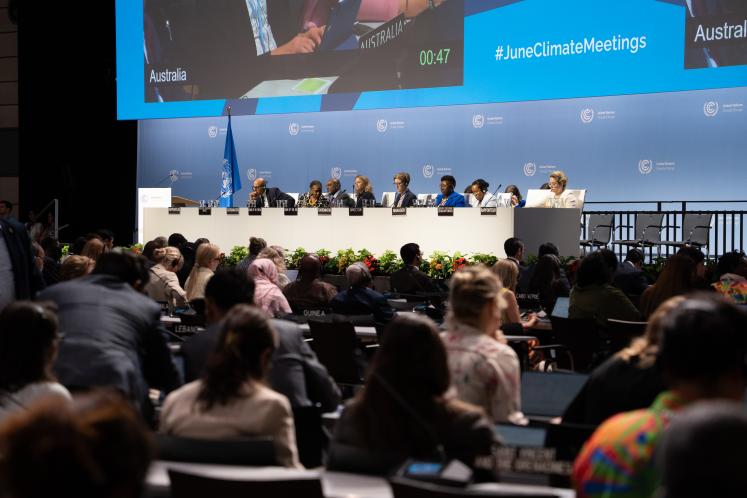
For African countries and other climate-vulnerable regions, progress on adaptation finance remains a priority issue. Observers say the discussions in Bonn could influence how adaptation support is mobilized and delivered in the years leading up to COP32, which is expected to take place in Addis Ababa, Ethiopia.
Beyond these individual agenda items, Just Transition is increasingly emerging as a cross-cutting issue within the climate negotiations, intersecting with discussions on fossil fuel transition, agriculture, health, finance, industrial development, and social protection.
As negotiations get underway, civil society organizations will be closely monitoring whether governments can bridge the gap between climate commitments and implementation, particularly in areas that directly affect livelihoods, resilience, and sustainable development.
The outcomes of SB64 are expected to provide an early indication of the political momentum heading into the next phase of global climate negotiations, with growing attention focused on ensuring that climate action delivers meaningful benefits for people and communities most affected by the climate crisis.
Author Profile

-
Seeker.
Inspire AFRIKA.
Latest entries
 Agriculture14 October 2026Africa’s Food Systems Future Depends on Listening to Farmers
 Weather Forecasts13 October 2026Rain and Rising Temperatures Forecast Across the Greater Horn of Africa
 Climate9 October 2026Beyond Negotiations: Africa Expects Concrete Outcomes from Antalya
 Animals7 October 2026In Kajiado’s Drylands, Collective Selling of Small Herds Is Changing the Livestock Trade


