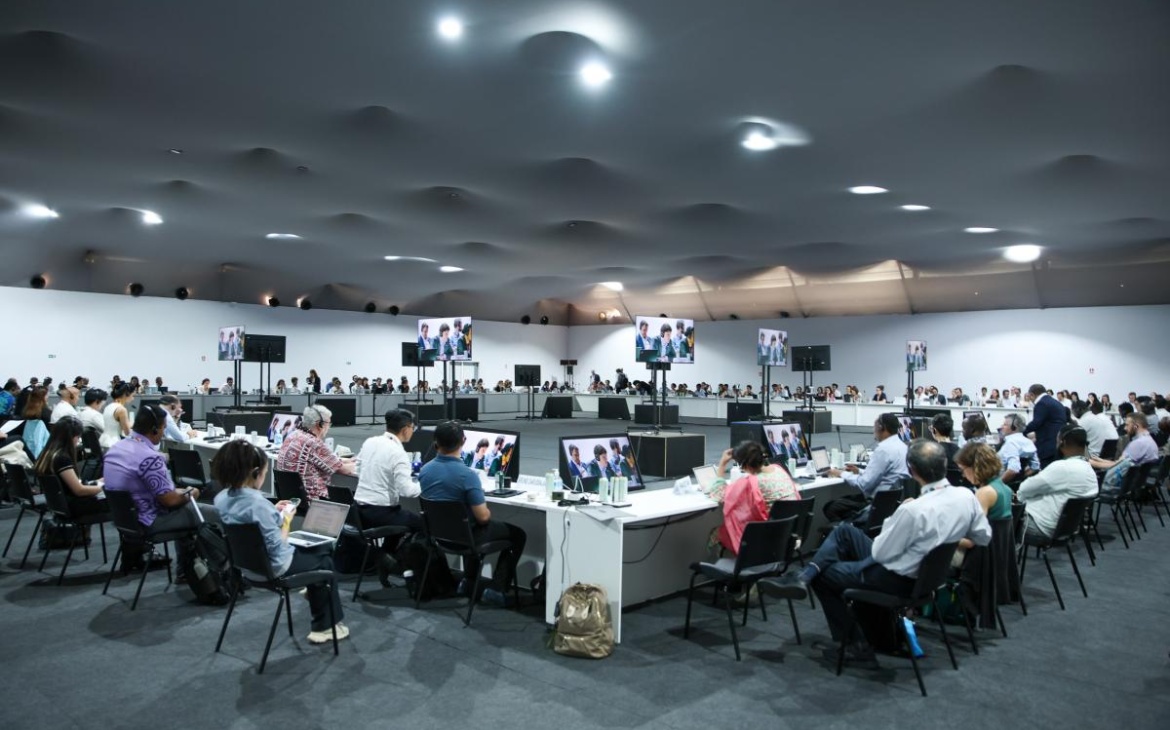
As COP30 enters its ministerial phase, discussions on climate finance and the New Collective Quantified Goal, adopted at COP29 in Baku, are gaining momentum.
The NCQG is targeted to mobilize at least $300 billion annually in public finance by 2035, scaling up to $1.3 trillion total from all sources.
Major tensions have emerged between Global North donors, who emphasize private mobilization and blended finance, and Global South countries, which are calling for grants, predictability, and substantial public funding to meet adaptation needs estimated at $300 billion annually.
Commenting on the operationalization of the NCQG, Mahmoud Mohieldin, UN Special Envoy on Financing the 2030 Sustainable Development Agenda, said, “The international finance architecture must be made fit to support climate action in developing countries, with mechanisms that properly assess risks, including the cost of inaction, and offer fair access to finance.”
The Flashpoint: Tripling Adaptation Finance
Under the Glasgow Climate Pact, countries agreed to double adaptation finance by 2025.
But at COP30, developing nations are pushing for a full tripling, citing the scale of need: global adaptation costs are now estimated at $300 billion per year, while current flows amount to only $26 billion.
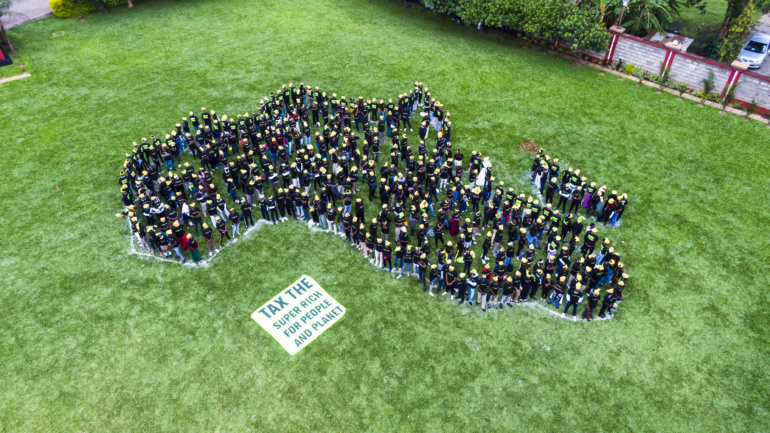
Africa, despite being among the most climate-vulnerable regions, receives less than 10% of this funding.
Negotiators warn that without a dedicated adaptation target within the new NCQG, adaptation will remain overshadowed, leaving developing countries feeling “hostage to mitigation.”
Uganda’s Minister of State for Relief, Disaster Preparedness, and Refugees, Lillian Aber, emphasized Africa’s priorities at COP30, pointing out the continent’s young population and adaptation as the top priority.
“We need predictable funding to turn vulnerability into opportunity,” she said, calling upon parties at COP30 in Belém to prioritize scaling adaptation finance, ensuring at least 90% is public and 70% grants or concessional.
“This is arithmetic justice, not generosity,” she said, stressing that aligning Global Goal on Adaptation (GGA) indicators with AU’s Agenda 2063 is essential for building resilient infrastructure, climate-smart agriculture, and sustainable job creation for Africa’s rapidly growing youth population.
What to Watch Next
As COP30 ministerial talks continue until 20 November, all eyes are on whether parties can strike a balance between justice and ambition.
A successful outcome would include a clear adaptation target, a strong link between finance and NDCs, and transparent delivery mechanisms to ensure commitments translate into real action.
Failure, on the other hand, would leave the NCQG weak, provide no standalone adaptation goal, and risk climate commitments becoming rhetoric without means of implementation.
COP30 President André Corrêa do Lago emphasized the spirit needed to succeed:
“We must work side by side, in task-force mode, to deliver the Belém Political Package swiftly, fairly, and with care for all, recognizing climate change as a shared human issue.”