Africa is warming faster than the global average, its glaciers are disappearing, seas are rising along its coastlines at rates above the global norm, and millions of people are already paying the price through deadly floods, droughts, and economic disruption.
A new report by the World Meteorological Organization (WMO) paints a stark picture of a continent increasingly exposed to climate extremes while still grappling with critical gaps in early warning systems and climate resilience.
According to the State of the Climate in Africa 2025 report released in Addis Ababa, at least 13 million people across Africa were affected by extreme weather and climate-related disasters in 2025 alone, with more than 3,000 reported deaths.
Floods emerged as the most frequently reported hazard, devastating communities from West and Central Africa to parts of Southern Africa.
In Nigeria, severe flooding in May killed more than 200 people, while floods in the Democratic Republic of Congo claimed over 160 lives in April. At the same time, drought tightened its grip across East Africa, affecting more than 8.5 million people.
Beyond the immediate humanitarian toll, the report warns that climate shocks are increasingly disrupting agriculture, fisheries, infrastructure, health systems and livelihoods across the continent.
“The signs of a changing climate are clear across Africa – from increasing temperatures and rising seas to damaging floods and drought,” said WMO Secretary-General Celeste Saulo.
The report shows that Africa’s rate of warming since 1991 has been substantially higher than in previous decades, with 2025 ranking among the warmest years ever recorded on the continent.
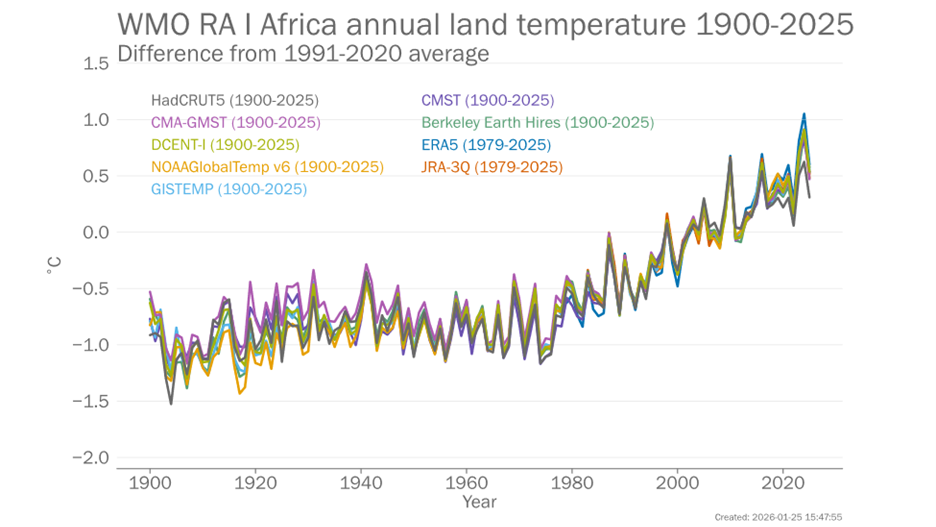
North Africa experienced the highest temperature anomalies, especially along the Mediterranean coasts of Algeria and Tunisia, while Southern Africa recorded relatively lower but still above-average temperatures.
“This report shows not only the scale of the risks, but also the growing importance of early warnings, climate services and coordinated action to protect lives and livelihoods,” she added.
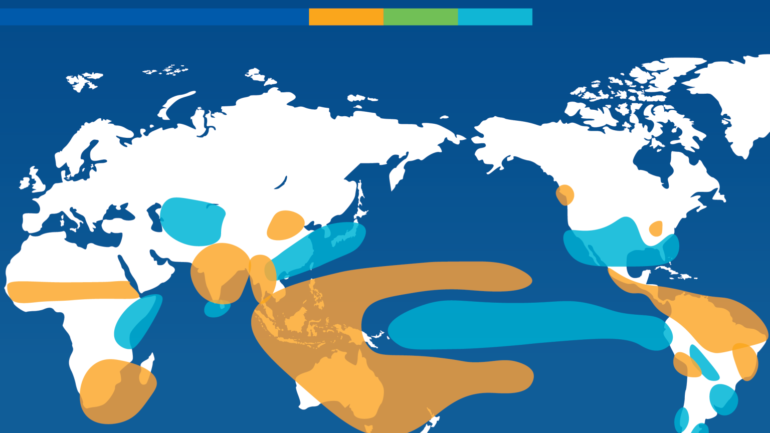
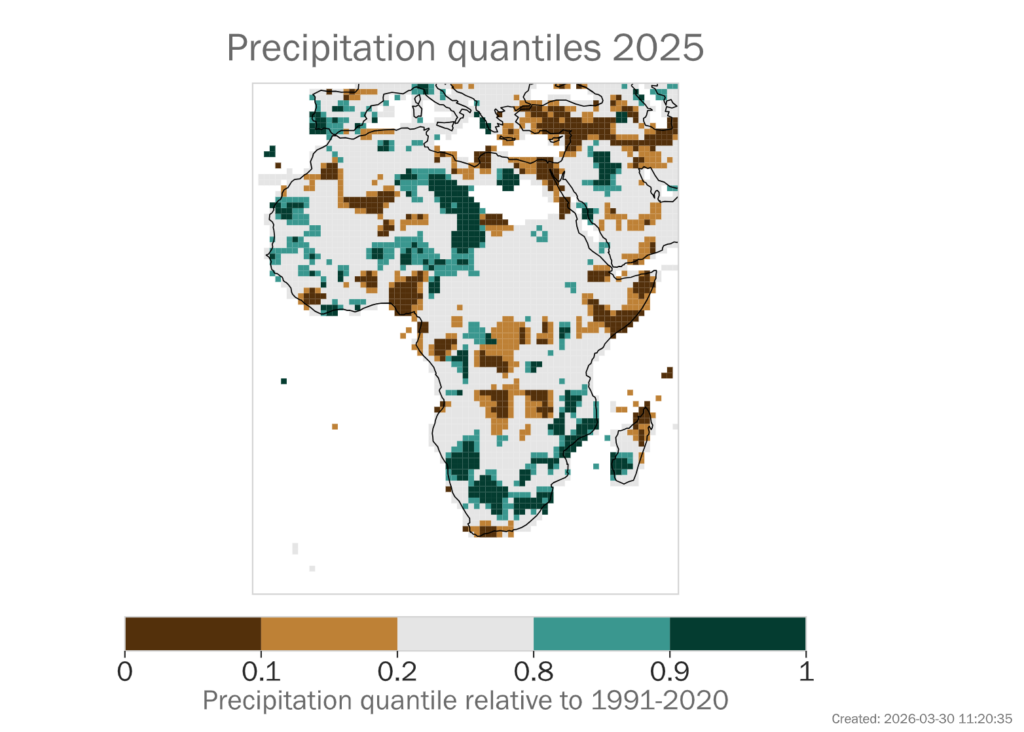
Rainfall patterns across the continent continue to shift unpredictably. While parts of the Sahel recorded above-normal rainfall for the second consecutive year, much of East Africa endured below-normal rainfall during both the long and short rainy seasons. Around the Horn of Africa, annual precipitation totals were unusually low.
Scientists warn that these erratic patterns are becoming more intense as climate change accelerates hydrological extremes across the continent.
North Africa continues to face worsening aridity and prolonged drought conditions, while Southern Africa has seen increases in heavy rainfall intensity and frequency in some regions.
The report also highlights the alarming collapse of Africa’s glaciers, a powerful symbol of the continent’s rapidly changing climate.
Africa’s glaciers have now lost more than 90 percent of their surface area since the late nineteenth century.
On Mount Kilimanjaro, Africa’s tallest mountain, glacier coverage has shrunk from 11.4 square kilometres in 1900 to less than one square kilometre in recent years despite occasional snowfall events.
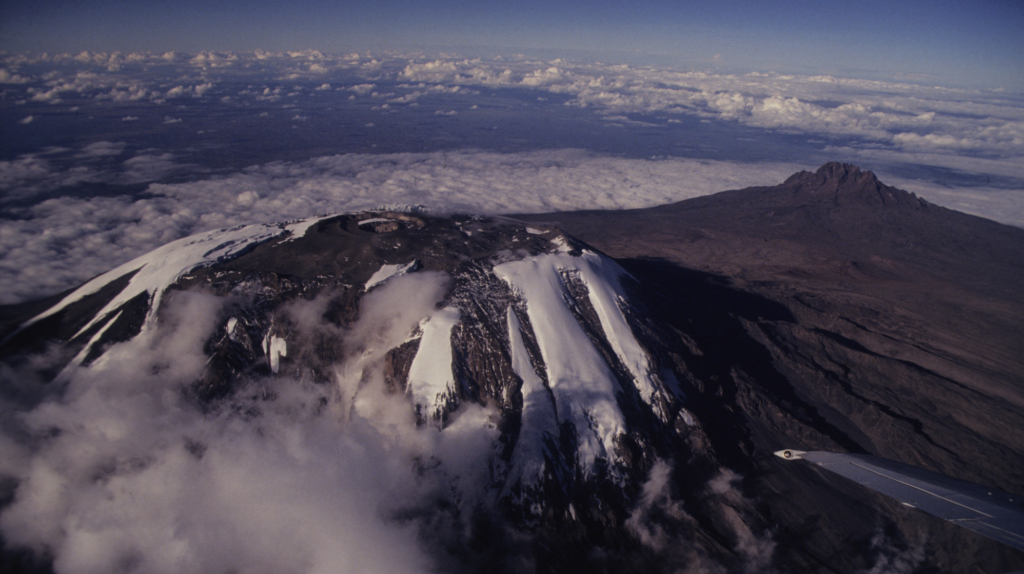
Scientists warn that glacier loss threatens regional water systems while increasing the risks of local hazards such as glacial lake outburst floods.
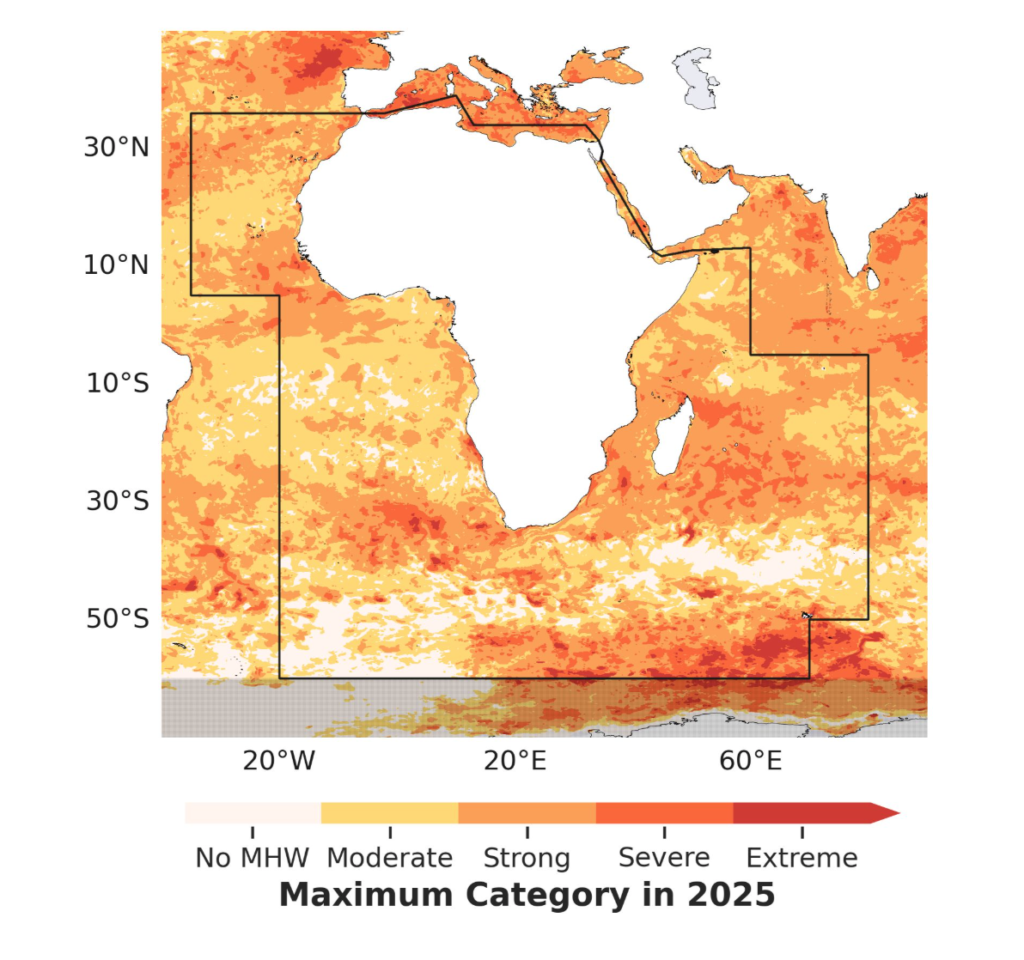
The oceans surrounding Africa are also undergoing profound changes. Sea surface temperatures and ocean heat content remained historically high in 2025 following record-breaking levels in 2023 and 2024. Marine heatwaves have become widespread, while ocean acidification continues to intensify across much of the region.
These changes are already affecting marine ecosystems and the livelihoods of coastal communities dependent on fisheries and ocean resources.
At the same time, sea levels along several African coastlines are rising faster than the global average.
According to the report, sea-level rise between 1999 and 2025 averaged about 4.2 millimetres per year along the Atlantic coast, 5.2 millimetres along the Indian Ocean coast, and 5.6 millimetres in the Red Sea region, all exceeding the global average rate of 3.6 millimetres annually.
The WMO warns that the growing intensity of climate hazards is exposing a major vulnerability across the continent: inadequate early warning systems.
Currently, fewer than 40 percent of African countries report having adequate multi-hazard early warning preparedness and response capabilities. Still, the report points to encouraging progress.
Several African countries are strengthening collaboration between meteorological agencies, disaster management authorities and local governments under the United Nations-backed Early Warnings for All initiative spearheaded by UN Secretary-General António Guterres.
The report includes case studies from Ghana, Nigeria, and South Africa showing how climate services and improved coordination are beginning to strengthen resilience against increasingly frequent and severe climate shocks.
Yet the broader warning remains unmistakable. Africa contributes only a small fraction of global greenhouse gas emissions, but it continues to face some of the harshest consequences of a warming planet.
From disappearing glaciers and rising seas to floods washing away homes and droughts devastating livelihoods, the continent is rapidly becoming one of the clearest frontlines of the global climate crisis.