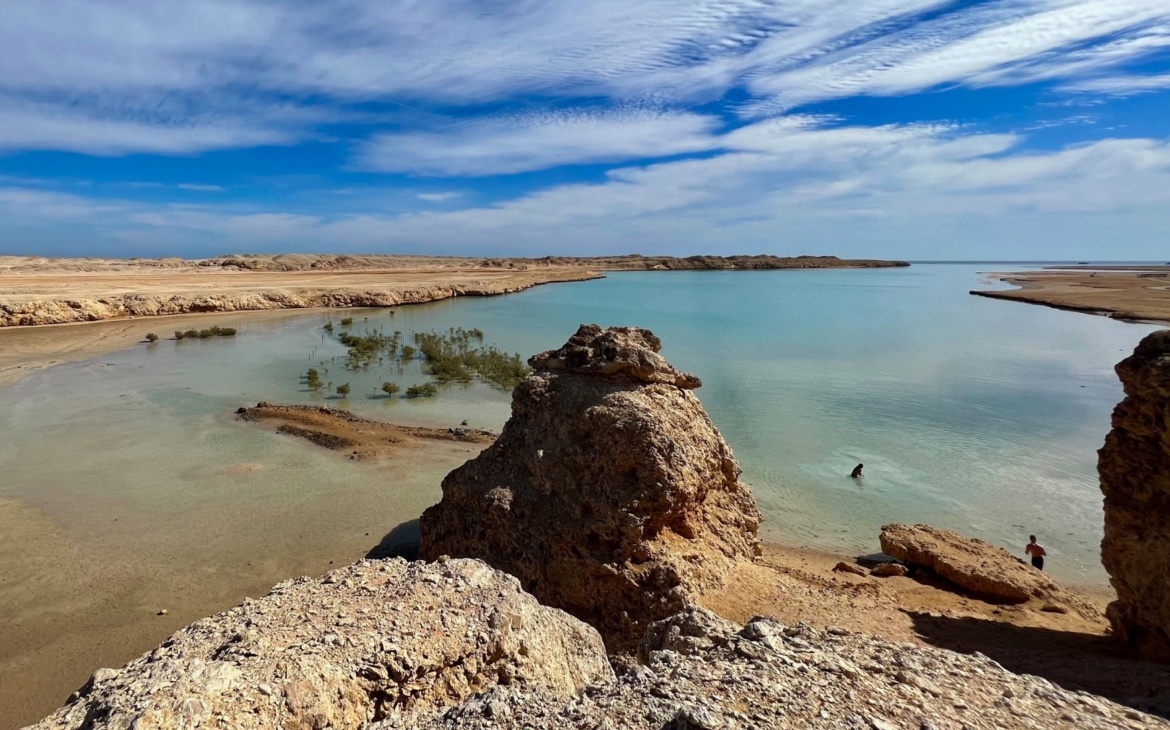
The Arab region had its hottest year on record in 2024. According to the inaugural World Meteorological Organization (WMO) report on the State of the Climate in the Arab Region, the rate of warming has accelerated in recent decades, accompanied by more intense heatwaves and droughts as well as extreme rainfall and storms.
Highlighting the urgent need to build resilience, invest in risk reduction and water security, the report further highlights that these climate threats intersect with ongoing socio-economic challenges such as rapid urbanization, conflict, poverty, and population growth.
“Temperatures are rising at twice the global average, with intense heatwaves that are pushing society to the limits. Human health, ecosystems, and economies can’t cope with extended spells of more than 50 °Celsius – it is simply too hot to handle,” said WMO Secretary-General Celeste Saulo.
Celeste further said that droughts are becoming more frequent and severe in one of the world’s most water-stressed regions. And at the same time, we have seen some disruptive and dangerous deluges.
The report also integrates regional climate projections from the Intergovernmental Panel on Climate Change, showing that average temperatures in 2024 were 1.08 °C above the 1991–2020 norm. Heatwaves grew longer, especially in North Africa and the Near East, with several countries recording temperatures above 50 °C.
Western North Africa faced worsening drought after six failed rainy seasons, while extreme rainfall and flash floods hit typically arid states such as Saudi Arabia, Bahrain and the UAE.
Extreme events in 2024 affected 3.8 million people and caused over 300 deaths, mostly from heat and floods. The report warns that the true costs are underestimated and notes an 83% rise in recorded disasters between 1980–1999 and 2000–2019.
Multi-hazard early warning systems are increasingly vital; about 60% of Arab countries have them, above the global average, but still insufficient. With severe water stress, many states are expanding water security measures, including desalination, wastewater reuse, dams, and improved irrigation.
The State of the Climate in the Arab Region 2024 report was compiled by the WMO in partnership with the Economic and Social Commission for Western Asia and the League of Arab States to inform decision-making in a climate-vulnerable region, which counts 15 of the world’s most water-scarce countries.
It is the first time that WMO, in collaboration with its partners, produced a State of the Climate report specifically for the Arab region, with more tailored information than its annual State of the Climate report in Asia and Africa reports.
Ahmed Aboul Gheit, Secretary-General of the League of Arab States, said it was a “qualitative step towards enhancing our collective understanding of climate patterns, associated risks and their social and economic impacts.”
Read Also: Week Lanina Possible in Coming Months, WMO Warns
Author Profile

- How can we learn if we don't question?
Latest entries
 COP3115 October 2026Pacific Leaders Call for Urgent Climate Action Ahead of COP31
 Agriculture13 October 2026Can the buffalo fix Kenya’s milk problem? Farmers say start with the feed bill
 Events12 October 2026Cybersecurity in the Floriculture Industry
 Opinion & Analysis8 October 2026Why Africa Must Look to What Already Exists in Its Blue Economy